


Understanding the Basics of Analog Signals

Understanding the Basics of Analog Signals
In today’s world, where digital technology seems to dominate, it’s easy to overlook the significance of analog signals. However, understanding analog signals is crucial for anyone interested in electronics, communication systems, or audio processing. This article will break down the basics of analog signals, explore their characteristics, and discuss their applications and advantages.
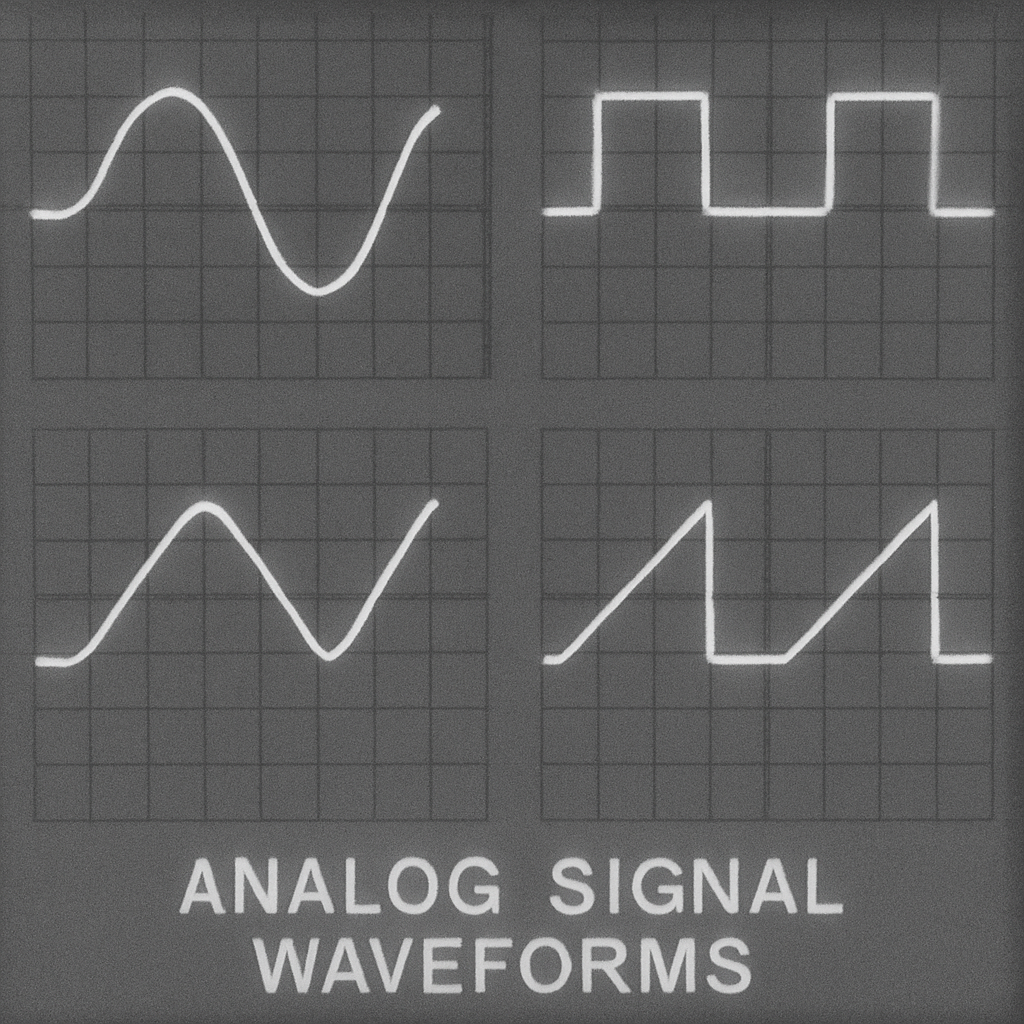
Analog signals are continuous signals that vary over time. Unlike digital signals, which have discrete values, analog signals can take on any value within a given range. This continuous nature allows them to represent changes in physical quantities, such as sound, light, temperature, or pressure, with high fidelity.
Characteristics of Analog Signals
Analog signals are characterized by their amplitude, frequency, and phase. These characteristics determine how the signal behaves and how it can be used in different applications.
- Amplitude: This refers to the height of the signal wave and represents the signal’s strength or intensity.
- Frequency: This indicates how often the signal oscillates over a given period. It’s measured in hertz (Hz) and determines the pitch of an audio signal or the color of a light signal.
- Phase: This describes the position of the waveform relative to time zero. Phase differences between signals can affect how they interact.
Analog Signal Types and Examples
Analog signals come in various forms, and they are used in numerous applications. Here are some common examples:
- Audio Signals: Sounds we hear, such as music or speech, are analog signals. Microphones convert sound waves into electrical signals that can be amplified, recorded, or transmitted.
- Radio Waves: These are used for broadcasting and communication. They carry information over long distances and can be modulated to encode different data types.
- Temperature Sensors: Devices like thermocouples produce analog signals representing temperature changes, which are then used to monitor and control environments.
Advantages of Analog Signals

Analog signals offer several advantages that make them valuable in various applications:
- High Fidelity: Because they are continuous, analog signals can capture and convey subtle nuances of sound or light more accurately than digital signals.
- Simplicity: Analog systems often have simpler designs, making them easier to build and maintain.
- Low Latency: Analog signals can be processed in real-time with minimal delay, which is crucial for applications like live audio or video broadcasting.
Analog Signal Processing
Processing analog signals involves manipulating them to improve their quality or extract useful information. This can include amplification, filtering, modulation, and demodulation. These processes are crucial for enhancing signal quality and preparing them for transmission or recording.
Amplification
Amplification increases the strength of an analog signal without altering its other characteristics. This is essential for ensuring signals can travel long distances without losing quality.
Newest in the store


Filtering
Filtering removes unwanted noise or interference from an analog signal. Different types of filters, such as low-pass, high-pass, and band-pass filters, can be used to isolate specific frequency ranges.
Modulation and Demodulation
Modulation involves altering a carrier signal’s properties (such as amplitude or frequency) to encode information. Demodulation is the reverse process, extracting the original information from the modulated signal. This is fundamental in radio and television broadcasting.
Analog vs. Digital: Understanding the Differences

by shamin kmrzmn (https://unsplash.com/@muhdshaminz)
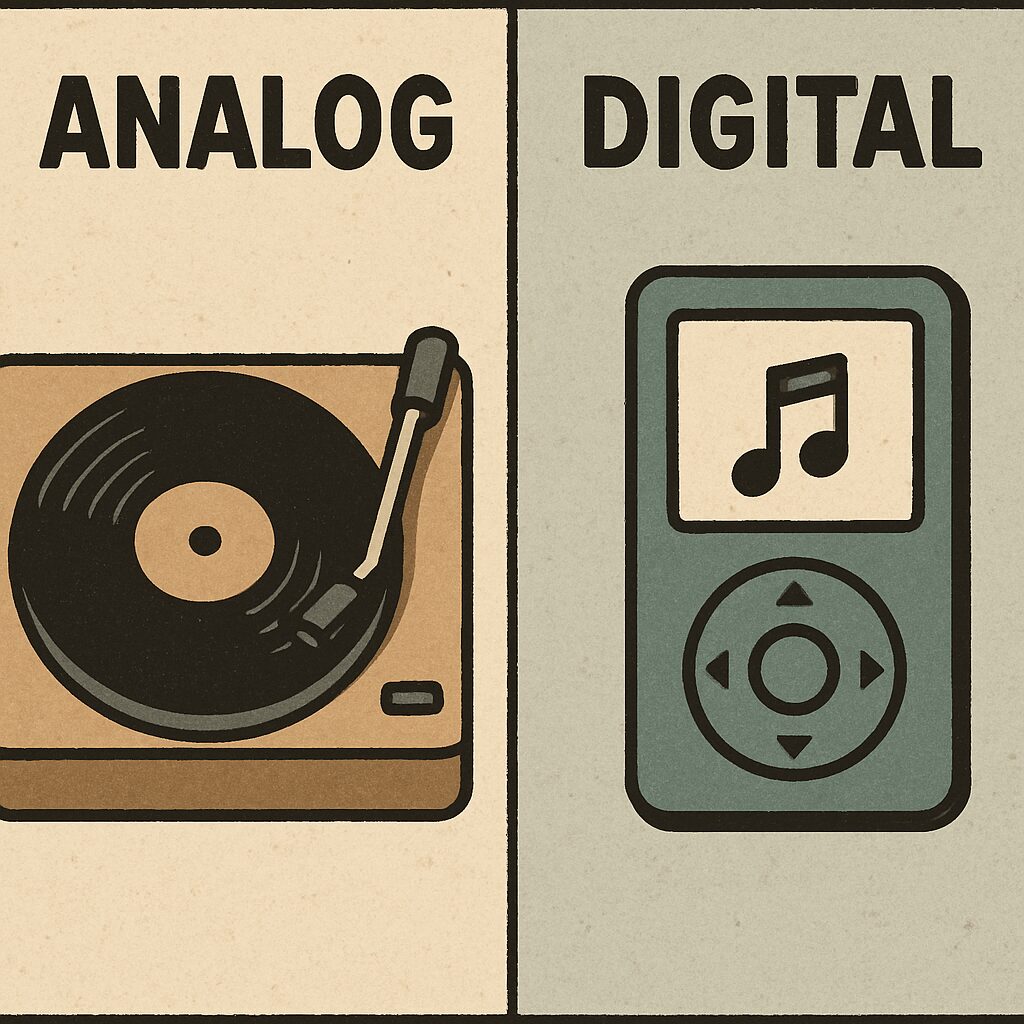
While digital signals have gained popularity due to their precision and ease of manipulation, analog signals still play a vital role in many areas. Understanding the differences between analog and digital signals can help you choose the right approach for your needs.
- Resolution: Digital signals have a finite number of values, while analog signals are continuous, allowing for higher resolution and detail.
- Noise Sensitivity: Analog signals are more susceptible to noise and interference, which can degrade their quality. Digital signals, however, are more robust and can be corrected for errors.
- Storage and Processing: Digital signals can be easily stored, processed, and transmitted using computers and digital devices. Analog signals require specialized equipment for similar tasks.
Applications of Analog Signals
Analog signals are used in various applications, from everyday devices to specialized equipment. Here are some notable examples:
- Television and Radio Broadcasting: Analog signals have been the backbone of traditional broadcasting systems, though digital formats are now more common.
- Medical Imaging: Analog signals are used in devices like MRI machines and X-rays to capture detailed images of the human body.
- Audio Equipment: Turntables, cassette players, and amplifiers all rely on analog signals to reproduce sound with high quality.
Conclusion
Analog signals are an essential part of our technological landscape, offering unique advantages in certain applications. By understanding their characteristics, processing techniques, and differences from digital signals, you can make informed decisions about their use in your projects. Whether you’re working with audio equipment, communication systems, or scientific instruments, analog signals continue to play a crucial role in delivering high-quality, real-time information.
Understanding and appreciating the role of analog signals can open up new possibilities in your work and help you create more effective and efficient systems.