


Understanding Instruction Sets: Key to Efficient Computing

Understanding Instruction Sets: Key to Efficient Computing
In today’s digital world, understanding the intricacies of computing technology is essential. One fundamental concept that underlies computer operations is the “instruction set”. This guide will walk you through the basics of instruction sets, their architecture, and their importance in computing. Instruction sets form the backbone of any computing device, dictating the capabilities and performance of processors, and by extension, the computers they power.
The importance of instruction sets cannot be overstated. They serve as the fundamental building blocks for software developers and hardware engineers alike, providing a language through which software can communicate with hardware. Whether you’re working with personal computers, smartphones, or embedded systems, a solid understanding of instruction sets will enhance your ability to develop efficient and powerful solutions.

What is an Instruction Set?
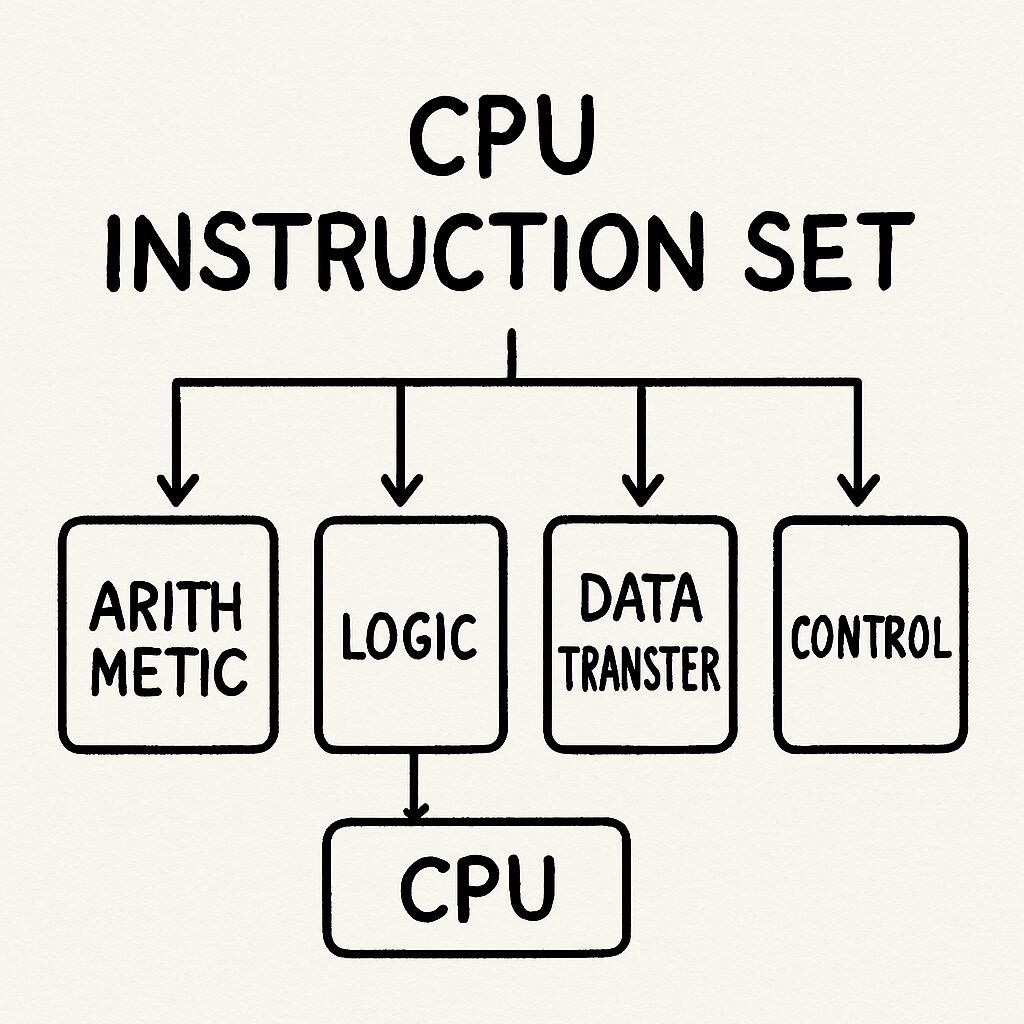
An instruction set is essentially a collection of commands that a computer’s processor can execute. These commands, also known as instructions, tell the computer how to perform specific tasks. The instruction set serves as the bridge between software and hardware, enabling the CPU to understand and execute software commands. It defines the repertoire of operations that the processor can perform, from basic arithmetic to complex control operations.
Instruction sets are integral to the design and functionality of processors. They determine how efficiently a processor can perform tasks, impacting the overall performance of the system. The design of an instruction set influences the complexity of the processor, the ease of programming, and the efficiency of code execution. As a result, instruction sets are a crucial consideration in the development of both hardware and software.
Importance of Instruction Set Architecture
The instruction set architecture (ISA) is a critical component of computer design. It defines the set of instructions that a processor can execute, as well as the data types, registers, addressing modes, and memory architecture. The ISA serves as the blueprint for how a processor operates, ensuring compatibility between software and hardware. By standardizing these elements, the ISA enables different generations of processors to execute the same code, promoting longevity and flexibility in software development.
Moreover, the ISA impacts the performance and efficiency of computing systems. A well-designed ISA allows for optimized performance by minimizing the number of instructions needed to perform a task and maximizing the speed at which these instructions can be executed. It also influences power consumption, which is especially critical in mobile and embedded systems where energy efficiency is paramount.
Types of Instruction Sets
There are two primary types of instruction sets: CISC and RISC. Each has its own philosophy and approach to processor design, leading to differences in performance, efficiency, and application suitability.
CISC: Complex Instruction Set Computer
CISC, or Complex Instruction Set Computer, is an architecture that allows a processor to execute complex instructions in a single step. This means that a single CISC instruction can perform multiple low-level operations. CISC architectures are known for their rich instruction sets and are commonly used in traditional desktop and laptop computers. They are designed to reduce the number of instructions per program by increasing the complexity of each instruction.
The complexity of CISC instructions can simplify the process of writing code, as fewer instructions are needed to perform complex tasks. However, this complexity can lead to longer execution times per instruction and increased power consumption, which can be a disadvantage in performance-critical or energy-constrained environments. Despite these challenges, CISC architectures remain popular due to their versatility and compatibility with a wide range of software applications.
RISC: Reduced Instruction Set Computer
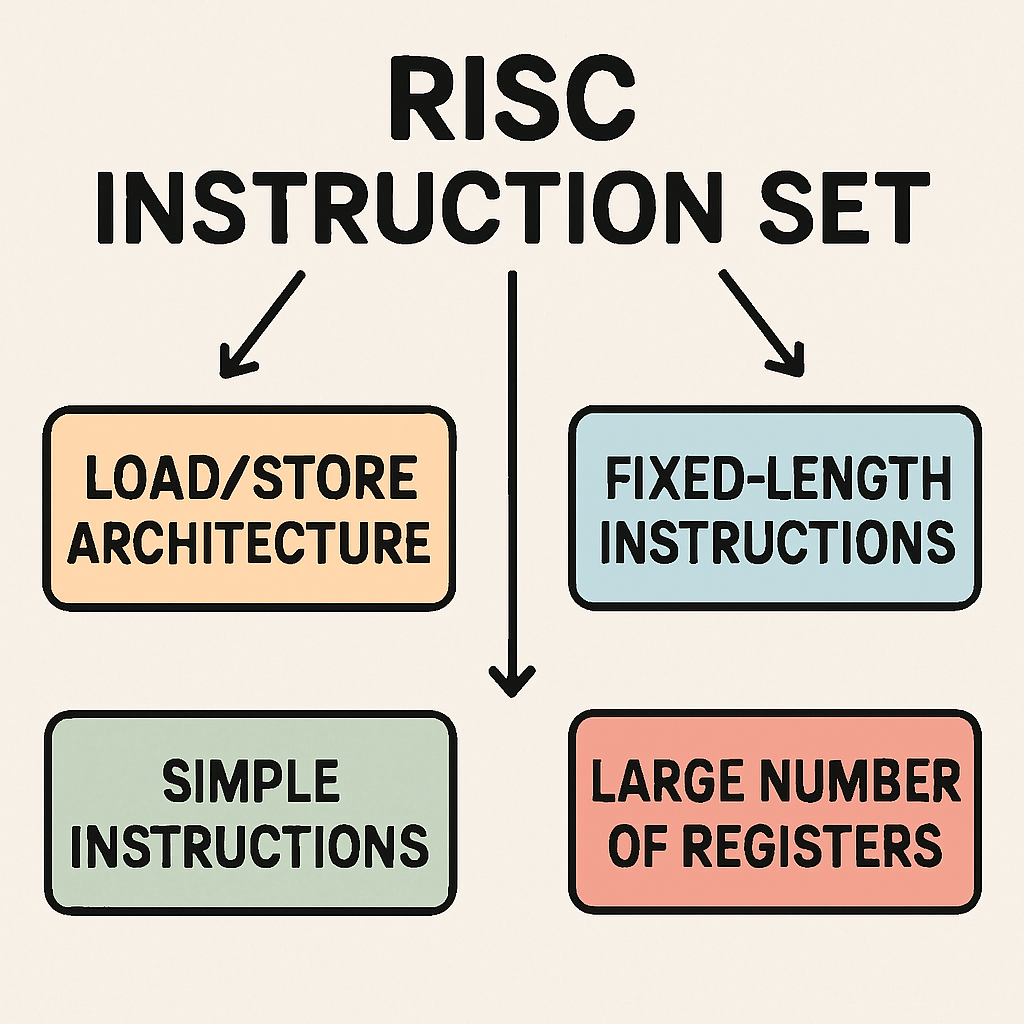
RISC, or Reduced Instruction Set Computer, takes a different approach by utilizing a smaller set of simpler instructions. RISC architectures focus on efficiency, with each instruction designed to execute in a single clock cycle. This simplicity allows for faster processing and is commonly used in mobile devices and embedded systems. The streamlined nature of RISC instructions enables high-performance execution and reduced power consumption, making them ideal for applications where speed and efficiency are critical.
The RISC philosophy emphasizes a minimalistic approach, which can lead to more instructions per program but allows for greater optimization by the compiler and faster execution times. RISC architectures are often favored in environments where real-time processing is essential, such as in smartphones and other portable devices. The efficiency of RISC systems has contributed to their widespread adoption in a variety of modern computing applications.
Instruction Set Examples
Let’s take a look at some specific examples of instruction sets used in various processors. Each example illustrates different architectural philosophies and use cases, highlighting the diversity and adaptability of instruction set designs.
LC-3 Instruction Set
The LC-3 (Little Computer 3) is a simplified instructional computer used primarily for educational purposes. Its instruction set includes basic operations such as addition, subtraction, and logical operations. The LC-3 instruction set helps students understand the fundamental concepts of computer architecture and programming. By focusing on simplicity, the LC-3 provides a clear and accessible platform for learning about instruction sets and computer operations.
Educational tools like the LC-3 are invaluable for introducing students to the world of computer architecture. By working with a simplified instruction set, learners can focus on grasping the underlying principles of computing without being overwhelmed by complexity. This foundational knowledge is crucial for students who aspire to become computer engineers, software developers, or IT professionals.
8051 Instruction Set
The 8051 microcontroller, developed by Intel, has an instruction set designed for control-oriented applications. It includes instructions for arithmetic operations, data transfer, bit manipulation, and control flow. The 8051 instruction set is widely used in embedded systems and industrial applications. Its versatility and reliability have made it a staple in environments where precise control and automation are essential.
Newest in the store


Embedded systems often require robust and efficient instruction sets to perform their specialized tasks. The 8051’s instruction set provides the necessary tools for developers to create responsive and reliable control systems. Its widespread adoption in industrial applications underscores the importance of instruction sets in enabling the functionality and performance of embedded devices.
AVR Instruction Set
The AVR instruction set is used in Atmel’s AVR microcontrollers. Known for their efficiency, AVR microcontrollers are popular in hobbyist projects and small-scale applications. The instruction set includes a variety of operations for handling data, controlling I/O, and managing program flow. The AVR architecture’s simplicity and power have made it a favorite among makers and DIY enthusiasts.
In the world of hobbyist electronics, the AVR instruction set offers a flexible and accessible platform for experimentation and innovation. Its ease of use and broad support make it an ideal choice for projects ranging from simple gadgets to complex robotics. The AVR’s popularity highlights the role of instruction sets in fostering creativity and innovation in the tech community.
Instruction Set of 8086
The 8086 microprocessor, developed by Intel, features a CISC architecture. Its instruction set includes a wide range of operations, including arithmetic, logical, and control instructions. The 8086 instruction set laid the foundation for the x86 architecture, which is still prevalent in modern computing. Its influence can be seen in the design of contemporary processors used in desktops, laptops, and servers.
The legacy of the 8086 instruction set is a testament to the enduring impact of well-designed architectures. By providing a comprehensive set of instructions, the 8086 enabled the development of a wide range of software applications, from operating systems to productivity tools. Its continued relevance in modern computing underscores the importance of instruction sets in shaping the technological landscape.
Assembly Language Instructions
Assembly language serves as a human-readable representation of machine code instructions. Each instruction in an assembly language corresponds to a specific operation in the processor’s instruction set. Programmers use assembly language to write low-level code that directly interacts with hardware. This close relationship with the hardware allows developers to optimize performance and efficiency in ways that are not possible with higher-level languages.
The use of assembly language is crucial in scenarios where precise control over hardware is required, such as in operating system development or performance-critical applications. While more challenging to learn and use than high-level languages, assembly language provides unparalleled access to the full capabilities of the processor. This makes it an invaluable tool for developers looking to push the boundaries of what is possible in computing.
Machine Code Instructions
Machine code instructions are the binary representation of assembly language instructions. These instructions are directly executed by the processor. While machine code is efficient, it is challenging for humans to read and write, which is why assembly language is often used as an intermediary. The translation from assembly language to machine code is a critical step in the execution of programs, ensuring that the processor can understand and carry out the desired operations.
Despite its complexity, machine code is the ultimate language of the processor. It represents the most fundamental level of software interaction with hardware, providing the basis for all computing operations. Understanding machine code, even at a basic level, can provide valuable insights into the inner workings of computer systems and enhance a developer’s ability to write efficient and effective code.
Designing an Instruction Set
Instruction set design is a crucial aspect of processor development. Designers must balance complexity, performance, and compatibility when creating an instruction set. A well-designed instruction set enables efficient execution of software while minimizing the processor’s power consumption and chip size. The design process involves careful consideration of various factors to ensure that the resulting instruction set meets the needs of both current and future applications.
The design of an instruction set can have far-reaching implications for the performance and capabilities of a processor. By carefully selecting and optimizing instructions, designers can create processors that offer superior speed, efficiency, and functionality. This process requires a deep understanding of both hardware and software, as well as the ability to anticipate future technological trends and requirements.
Factors to Consider in Instruction Set Design
- Simplicity vs. Complexity: A simpler instruction set can lead to faster processing, while a complex set can reduce the number of instructions needed for a task. Balancing these factors is essential for achieving optimal performance and efficiency.
- Compatibility: The instruction set must be compatible with existing software and hardware to ensure seamless integration. This involves maintaining support for legacy applications while also accommodating new technologies and standards.
- Performance: The design should optimize the processor’s speed and efficiency. This includes minimizing instruction execution time and maximizing throughput, as well as ensuring efficient use of resources such as memory and power.
- Scalability: The instruction set should accommodate future advancements in technology and software. This requires a forward-thinking approach that anticipates the needs of emerging applications and computing environments.

by Bernd 📷 Dittrich (https://unsplash.com/@hdbernd)
Conclusion
Understanding instruction sets is fundamental to grasping how computers operate. Whether you’re a student learning about the LC-3 instruction set, a developer working with the 8051 microcontroller, or a hobbyist using AVR microcontrollers, instruction sets play a vital role in computing. They are the key to unlocking the full potential of processors, enabling the development of a wide range of applications and technologies.
By exploring different instruction sets and their architectures, you gain insights into the design and functionality of processors. This knowledge empowers you to make informed decisions when developing software, designing hardware, or working on technology projects. As you deepen your understanding of instruction sets, you’ll be better equipped to tackle the challenges and opportunities presented by the ever-evolving world of computing.
With the rapid advancement of technology, the study of instruction sets remains a dynamic and exciting field. As processors evolve, so too will the instruction sets that drive them, shaping the future of computing. Staying informed about these developments will ensure that you remain at the forefront of technological innovation and continue to contribute to the advancement of computing technology.