


PIC Microcontrollers: Versatile Tools for Embedded Systems

PIC Microcontrollers: Versatile Tools for Embedded Systems

PIC microcontrollers have been a staple in the world of embedded systems for decades. Whether you’re a seasoned engineer or a hobbyist, understanding PIC microcontrollers can open up a world of possibilities for your projects. In this guide, we’ll explore the basics of PIC microcontrollers, their applications, and how they stack up against other microcontrollers like Arduino and ARM.
What Are PIC Microcontrollers?
PIC stands for Peripheral Interface Controller. These microcontrollers are developed by Microchip Technology and are known for their versatility and ease of use. PIC microcontrollers come in various sizes and capabilities, making them suitable for a wide range of applications, from simple projects to complex embedded systems.
History and Evolution of PIC Microcontrollers
PIC microcontrollers have a rich history dating back to the mid-1970s. Initially developed as a simple peripheral controller, they quickly evolved into more sophisticated devices. Over the years, advancements in technology have allowed PIC microcontrollers to become smaller, more powerful, and more energy-efficient. This evolution has been driven by the need for more complex functionalities in embedded systems, leading to the development of diverse models catering to different application needs.
Key Features and Architecture
At their core, PIC microcontrollers are small computing devices on a single chip. They consist of a central processing unit (CPU), memory, input/output (I/O) ports, and sometimes additional peripherals like timers and analog-to-digital converters. The architecture of PIC microcontrollers is designed to maximize efficiency and performance. Some key features include:
- CPU: The brain of the microcontroller, responsible for executing instructions. Modern PIC CPUs are designed to handle complex computations while maintaining low power consumption.
- Memory: Includes both program memory (Flash) and data memory (RAM). The architecture allows for efficient data management, crucial for real-time applications.
- I/O Ports: Allow the microcontroller to interact with external devices. These ports are versatile, supporting a wide array of peripheral devices.
- Peripherals: Additional features like timers, PWM generators, and communication modules. These peripherals enhance the functionality of the microcontroller, making it adaptable for various tasks.
Advantages of Using PIC Microcontrollers
PIC microcontrollers offer several advantages that make them a preferred choice in many applications. Firstly, they are cost-effective, providing a powerful solution at a lower price point compared to some competitors. Additionally, their low power consumption makes them ideal for battery-operated devices, ensuring longer operational life. The wide range of available models allows designers to select a microcontroller that perfectly matches their project requirements, from simple to complex systems.
Applications of PIC Microcontrollers
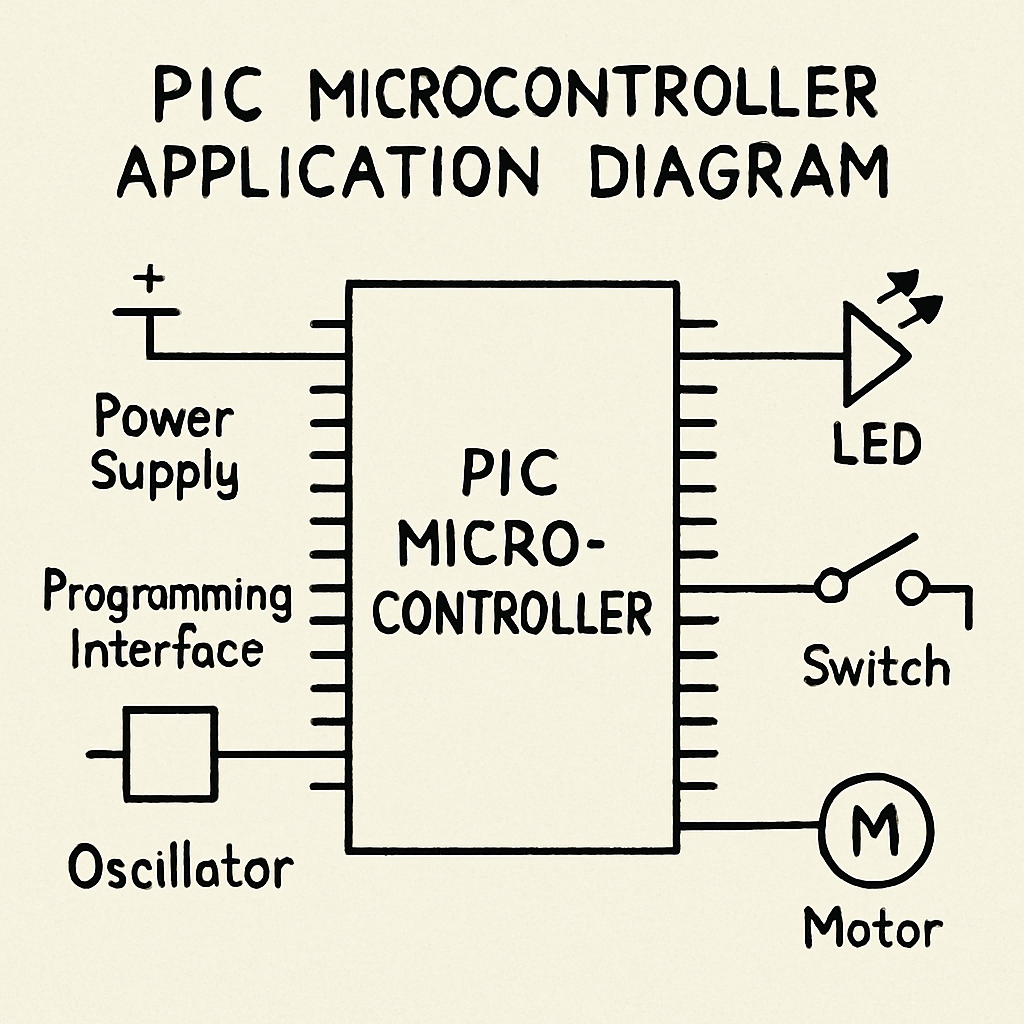
PIC microcontrollers are used in a variety of applications across different industries. Here are some common uses:
Consumer Electronics
PIC microcontrollers are often found in everyday consumer electronics like remote controls, alarm systems, and home appliances. Their low cost and reliability make them an ideal choice for these applications. In consumer electronics, the ability to perform precise control functions while maintaining low power consumption is crucial. PIC microcontrollers meet these demands, offering features like touch sensing and wireless communication capabilities, which are increasingly important in modern smart devices.
Automotive Industry
In the automotive world, PIC microcontrollers are used for tasks such as controlling engine functions, managing climate control systems, and handling vehicle diagnostics. Their robustness in harsh environments is a significant advantage. Automotive applications require microcontrollers that can withstand temperature extremes, vibrations, and electromagnetic interference. PIC microcontrollers are designed to meet these challenges, providing reliable performance for critical automotive systems.
Industrial Automation
PIC microcontrollers play a crucial role in industrial automation, where they are used to control machinery, manage process controls, and ensure efficient operation of production lines. In industrial settings, the ability to integrate with various sensors and actuators is vital. PIC microcontrollers offer extensive connectivity options, enabling seamless communication with different industrial devices, thus enhancing the automation process.
Robotics
For robotics enthusiasts, PIC microcontrollers provide a flexible platform for controlling motors, sensors, and other robotic components. Their programmability allows for customization and innovation. Robotics applications benefit from the precise control and real-time processing capabilities of PIC microcontrollers. Whether in hobby projects or advanced robotic systems, these microcontrollers enable the development of intelligent and responsive robots.
Healthcare Devices
In the healthcare sector, PIC microcontrollers are used in devices such as portable medical equipment, diagnostic tools, and patient monitoring systems. These devices require reliable and accurate performance. PIC microcontrollers offer the necessary precision and durability, making them suitable for critical healthcare applications. Their ability to interface with sensors and process data in real-time is crucial in delivering effective healthcare solutions.
Designing Embedded Systems with PIC Microcontrollers
Designing embedded systems with PIC microcontrollers involves understanding both the hardware and software aspects. Here’s a step-by-step guide to get you started:
Step 1: Choose the Right PIC Microcontroller
Selecting the appropriate PIC microcontroller depends on your project’s requirements. Consider factors like memory size, number of I/O ports, and additional peripherals needed. Analyzing the specific needs of your application is critical to making the right choice. For instance, a project requiring wireless communication might need a microcontroller with built-in RF modules, whereas a simple LED control project could use a basic model.
Step 2: Set Up Your Development Environment
You’ll need a development environment to write and upload code to your PIC microcontroller. MPLAB X IDE is a popular choice, offering a comprehensive set of tools for development and debugging. Setting up the development environment involves installing the necessary software and configuring the hardware connections. Familiarizing yourself with the IDE’s features, such as the simulator and code editor, will streamline the development process.
Step 3: Write Your Code
Programming PIC microcontrollers typically involves writing code in C or Assembly language. Start with simple tasks like blinking an LED to familiarize yourself with the microcontroller’s capabilities. As you gain confidence, you can tackle more complex projects, utilizing advanced features such as interrupts and communication protocols. Writing efficient and optimized code is crucial for maximizing the performance of your embedded system.
Step 4: Test and Debug
Testing is a crucial step in the development process. Use debugging tools to identify and fix any issues in your code. Simulators and in-circuit debuggers can be incredibly helpful. Testing should cover various scenarios to ensure the system behaves as expected under different conditions. Debugging tools allow you to step through your code, monitor variables, and diagnose hardware interactions, facilitating a thorough examination of your system’s functionality.Newest in the store


Step 5: Deploy and Optimize
Once your system is tested and debugged, the next step is deployment. Ensure that your system is optimized for its intended environment. This may involve fine-tuning the code for efficiency, minimizing power consumption, or enhancing the system’s response time. Regularly updating and maintaining the system post-deployment is also important to address any emerging issues or incorporate new features.
PIC vs. Arduino: Which Is Better?

by Alexander Andrews (https://unsplash.com/@alex_andrews)
When it comes to choosing between PIC microcontrollers and Arduino, the decision often depends on the project’s complexity and the user’s experience level.
Advantages of PIC Microcontrollers
- Cost-Effective: Generally cheaper than Arduino boards, especially for large-scale projects. This makes PIC microcontrollers an attractive option for budget-conscious projects.
- Low Power Consumption: Ideal for battery-operated devices. The energy efficiency of PIC microcontrollers extends the lifespan of battery-powered applications.
- Wide Range of Options: Available in various sizes and configurations to suit different needs. This diversity allows for tailored solutions across multiple industries.
Advantages of Arduino
- User-Friendly: Easy to use for beginners, with a large community and plenty of tutorials. Arduino’s simplicity makes it accessible to those new to electronics and programming.
- Rich Ecosystem: Offers a wide range of shields and libraries for various applications. The Arduino platform supports rapid prototyping with its extensive ecosystem of hardware and software resources.
- Rapid Prototyping: Simplifies the process of building and testing prototypes. The plug-and-play nature of Arduino components accelerates the development cycle, making it ideal for quick iterations.
Choosing the Right Platform
The choice between PIC and Arduino should consider factors such as the project’s technical requirements, budget constraints, and the developer’s expertise. For projects requiring high customization and efficiency, PIC microcontrollers may be the better choice. However, for educational purposes or rapid development, Arduino provides a straightforward and well-supported platform. Evaluating the specific needs of your project will guide you in making the best decision.
PIC Development Tools
To develop projects with PIC microcontrollers, you’ll need a set of development tools:
MPLAB X IDE
MPLAB X IDE is an integrated development environment for writing and debugging code. It offers a user-friendly interface and a wide range of features to assist in the development process. The IDE supports multiple PIC microcontroller families, providing comprehensive tools for code editing, project management, and debugging. Its compatibility with different compilers and plug-ins enhances its functionality, making it a versatile tool for developers.
MPLAB XC Compilers
MPLAB XC Compilers are a set of compilers for C and C++ programming languages. They provide efficient code optimization and are specifically designed for PIC microcontrollers. These compilers include features like advanced data types, flexible code generation options, and support for inline assembly, allowing developers to write high-performance applications. The compatibility with MPLAB X IDE ensures a seamless development experience.
PICkit
PICkit is a series of programmers/debuggers for uploading code to the microcontroller. It provides a reliable connection between the development environment and the physical device. PICkit tools offer features such as real-time debugging, in-circuit programming, and compatibility with various PIC microcontroller models. These tools are essential for testing and refining your projects, ensuring smooth and error-free operation.
Additional Tools and Resources
In addition to the primary development tools, various resources and accessories can enhance your development process. These include simulation software, third-party libraries, and community forums. Engaging with the PIC microcontroller community can provide valuable insights and support, helping you overcome challenges and optimize your projects. Leveraging these resources can significantly boost your productivity and innovation.
PIC Microcontrollers in Embedded Systems
In the realm of embedded systems, PIC microcontrollers are celebrated for their reliability and performance. They are often chosen for applications where stability and long-term availability are critical factors.
Reliability in Critical Applications
PIC microcontrollers are known for their robust performance in critical applications. Their design ensures stability and reliability, making them suitable for systems that require consistent operation over extended periods. This reliability is crucial in industries such as automotive, healthcare, and industrial automation, where system failure can have serious consequences.
Adaptability to Technological Advancements
As technology evolves, PIC microcontrollers continue to adapt, offering new features and capabilities to meet the demands of modern embedded systems. Their adaptability ensures that they remain relevant in a rapidly changing technological landscape. Continuous updates and enhancements by Microchip Technology keep PIC microcontrollers at the forefront of innovation, enabling them to support cutting-edge applications.
Longevity and Support
PIC microcontrollers benefit from strong manufacturer support and a long product lifecycle. Microchip Technology provides extensive documentation, development tools, and customer support, ensuring that developers have the resources they need to succeed. The longevity of PIC microcontrollers ensures that they remain a viable choice for long-term projects, providing stability and continuity for ongoing development.
Conclusion
PIC microcontrollers remain a powerful and versatile option for a wide range of applications. Whether you’re designing a simple gadget or a complex industrial system, understanding the principles and applications of PIC microcontrollers is invaluable. As technology evolves, PIC microcontrollers continue to adapt, offering new features and capabilities to meet the demands of modern embedded systems.
By exploring PIC microcontrollers, you can unlock new possibilities in your projects, harnessing the power of these tiny yet mighty devices. Whether you’re comparing them to Arduino or diving into the world of embedded systems, PIC microcontrollers offer a robust and reliable platform for innovation. Their continued relevance in the industry speaks to their effectiveness and potential to drive future technological advancements.