


Understanding the Basics of Electronic Components

Understanding the Basics of Electronic Components
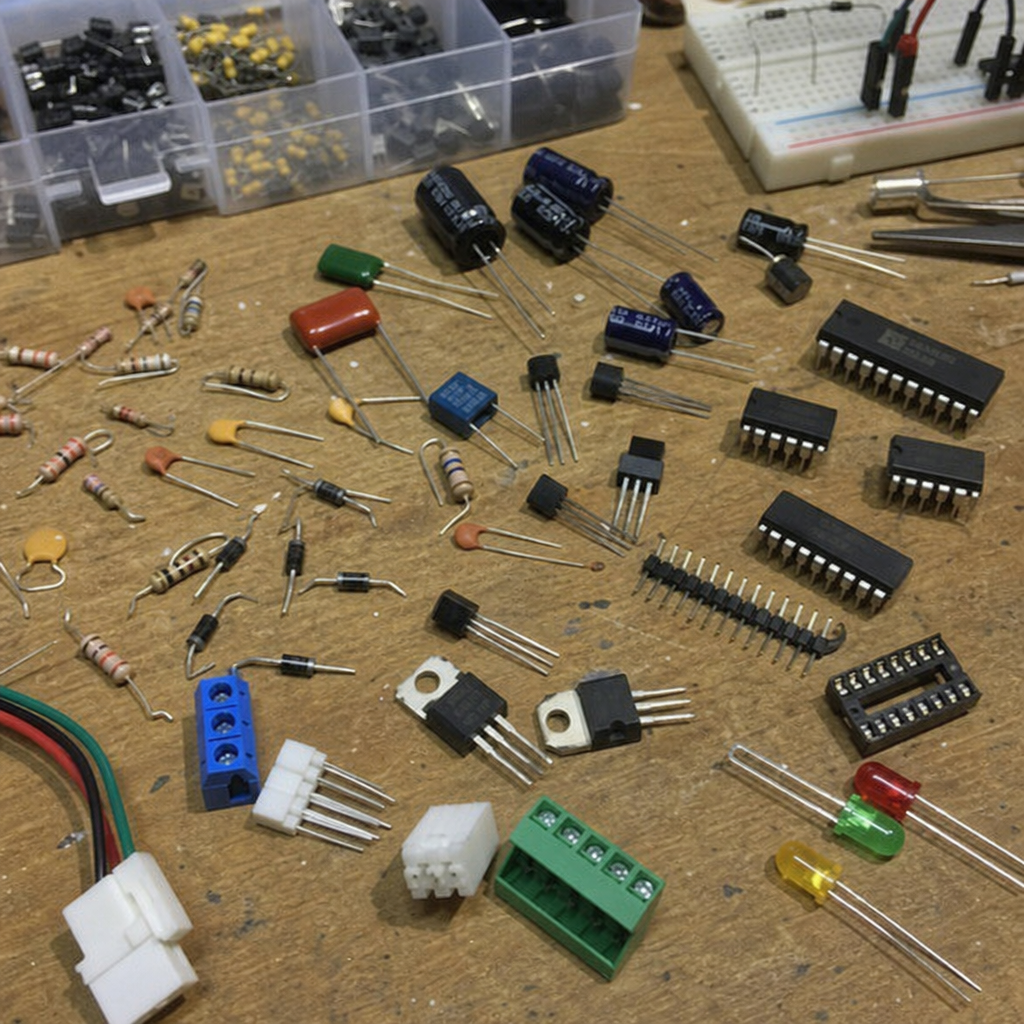
Electronic components are the building blocks that make modern electronic devices work, from simple LED indicators to advanced aerospace systems. Whether you are learning circuit design, managing procurement, or preparing for an electronic assembly project, understanding common parts and how they behave helps you make better technical and sourcing decisions. This guide explains the essential circuit components, practical sourcing considerations, and the role of quality, availability, and excess inventory in the wider electronics supply chain.
What are electronic components?
Electronic components are individual parts used to control, store, convert, protect, or direct electrical energy inside a circuit. They can be as simple as a resistor that limits current or as complex as an integrated circuit that performs thousands or millions of operations. When combined correctly, these circuit elements form the electronic hardware inside consumer products, industrial controls, medical equipment, communications systems, vehicles, and aerospace platforms.
The easiest way to understand them is to think of a circuit as a working system. Each part has a job. Some parts manage power, some process signals, some sense changes in the environment, and others connect or protect the assembly. A reliable circuit design depends on choosing the right electronic parts, placing them correctly, and ensuring they meet the performance requirements of the final product.

The main families of circuit components
Most electronic components fit into a few broad categories. Learning these groups gives you a practical map for reading schematics, discussing component sourcing, or troubleshooting electronic devices.
Passive components shape current and signals
Passive components do not amplify a signal or require a separate power source to perform their basic function. They influence how electricity flows through a circuit and are often the first parts beginners learn.
Common passive circuit components include:
- Resistors, which limit current, divide voltage, and help set operating conditions.
- Capacitors, which store electrical charge, smooth voltage changes, filter signals, and support timing circuits.
- Inductors, which store energy in a magnetic field and are often used in filters, power supplies, and radio-frequency circuits.
- Transformers, which transfer energy between circuits and can step voltage up or down in certain applications.
These parts may look simple, but their values, tolerances, voltage ratings, temperature behavior, and physical size matter. A resistor with the wrong power rating can overheat. A capacitor with an unsuitable voltage rating can fail. Small decisions at the component level can affect reliability across the entire electronic assembly.
Active components control and amplify
Active components can control current flow, amplify signals, switch power, or perform logic functions. They usually require power to operate and are central to most modern electronic devices.
Examples include:
- Diodes, which allow current to flow mainly in one direction and can be used for rectification, protection, and signal control.
- Transistors, which act as switches or amplifiers.
- Integrated circuits, often called ICs or chips, which can contain logic gates, processors, memory, amplifiers, sensors, or power-management functions.
- Voltage regulators, which help provide stable power to sensitive parts of a circuit.
Active parts often carry more detailed specifications than simple passive parts. Pin configuration, package type, operating voltage, frequency range, thermal performance, and lifecycle status can all influence whether a part is suitable.
Electromechanical parts connect the circuit to the real world
Electromechanical parts create the physical interface between electrical signals and mechanical action. They are especially important in products that users touch, plug in, move, or mount.
These components include switches, relays, connectors, terminals, sockets, buttons, fuses, and cable assemblies. In many designs, a connector may seem less exciting than a processor, but it can be a critical point of failure if it is not matched to the environment. Vibration, moisture, repeated mating cycles, current rating, and mechanical strain all need attention.
Sensors and specialty parts detect change
Sensors convert physical conditions into electrical signals. They can detect light, temperature, pressure, motion, humidity, magnetic fields, and many other inputs. A light-dependent resistor, or LDR, is a familiar example used in light-sensing circuits.
Searches such as “ldr price philippines electronic components” show how buyers often compare local pricing, availability, and part types before purchasing. The right LDR is not only about price. It also depends on resistance range, response time, package size, and how it will be used in the circuit.
Why component specifications matter
Electronic materials and component construction influence how a part performs under real conditions. Two parts may share the same basic value but behave differently when exposed to heat, vibration, humidity, voltage spikes, or long operating hours.
For example, a capacitor is not defined only by capacitance. It also has a voltage rating, tolerance, equivalent series resistance, temperature rating, dielectric material, polarity, package style, and expected operating life. In the same way, a resistor is not simply “10 ohms.” Its tolerance, wattage, temperature coefficient, and mounting type all matter.
When reviewing a datasheet, pay special attention to:
-
Electrical rating Confirm voltage, current, resistance, capacitance, frequency, or logic-level requirements.
-
Tolerance and accuracy Decide how much variation the circuit can accept without affecting performance.
-
Temperature range Match the part to the environment where the final product will operate.
-
Package and footprint Ensure the component fits the printed circuit board layout and assembly process.
-
Lifecycle status Check whether the part is active, nearing end-of-life, obsolete, or difficult to obtain.
-
Compliance and documentation Consider material declarations, traceability, and industry requirements where applicable.
These details are especially important in regulated or high-reliability industries. Aerospace electronic components, for instance, may require stricter documentation, environmental performance, traceability, and supplier controls than parts used in a basic hobby project.
How do electronic components work together in circuit design?
Electronic components work together by forming paths that control voltage, current, timing, signals, and power. A circuit design usually starts with a goal, such as lighting an LED, charging a battery, reading a sensor, or processing data, then combines suitable circuit elements to achieve that goal safely and reliably.
A simple sensor circuit may use a resistor and LDR to create a changing voltage, a transistor or IC to interpret the signal, and an output device such as an LED, relay, or microcontroller input. A power supply circuit may use diodes, capacitors, inductors, regulators, and protection devices to convert and stabilize energy. In more complex systems, many smaller circuits are connected into one coordinated electronic assembly.
Good design is not only about making something function once on a bench. It is about making it work repeatedly, within limits, under the conditions expected in the field. That means designers think about electrical noise, heat, component aging, manufacturing tolerances, and what happens when a user connects the wrong cable or exposes the product to a harsh environment.
Practical examples of common components
Beginners often learn faster when parts are connected to real use cases. Below are everyday examples that show how familiar electronic parts appear in practical products.
-
Resistors in LED circuits A resistor limits current so an LED does not draw more than it can safely handle. Without it, the LED may become too bright, overheat, or fail.
-
Capacitors in power supplies Capacitors help smooth voltage changes and reduce ripple. This is useful when sensitive chips need steady power.
-
Diodes in polarity protection A diode can help prevent damage if power is connected in the wrong direction, depending on the circuit approach.
-
Transistors as switches A small control signal can use a transistor to switch a larger load, such as a motor, relay, or lighting circuit.
-
Connectors in modular products Connectors make it possible to assemble, service, or upgrade a product without permanently soldering every connection.
-
Sensors in automated systems Sensors allow electronic devices to respond to light, temperature, movement, pressure, or position.
These examples show why component selection is both technical and practical. A part must fit the schematic, the board, the assembly method, the operating environment, and the purchasing plan. Newest in the store


The role of electronic assembly
Electronic assembly is the process of turning individual electronic components into a working product or subassembly. It may include printed circuit board fabrication, solder paste application, component placement, reflow soldering, hand soldering, inspection, testing, wiring, enclosure integration, and final quality checks.
The assembly process affects component choices. Surface-mount parts are common in compact modern products, while through-hole parts may still be useful for connectors, high-power parts, mechanical strength, prototyping, or repair. Some components are sensitive to moisture, heat, static electricity, or handling, so they need proper packaging and process controls.
Designers and sourcing teams should communicate early with assembly partners. A part that looks ideal on paper may create delays if it has an unusual footprint, long lead time, limited supply, or handling requirements that do not fit the planned production process. When procurement, engineering, and manufacturing work together, the result is usually fewer surprises.
Sourcing components with confidence
Electronic components sourcing is the process of finding, verifying, purchasing, and managing the parts needed for design, production, maintenance, or repair. It sounds straightforward, but real-world sourcing can become complex when availability changes, parts become obsolete, or a design depends on a specific manufacturer and package.
Reliable component sourcing begins with a clear bill of materials. A good bill of materials should identify manufacturer part numbers, approved alternates, package details, quantities, required documentation, and any quality or compliance needs. Vague descriptions such as “10k resistor” may be enough for a quick prototype, but they are not enough for controlled production.
A practical sourcing checklist
Use this checklist before placing an order or approving a substitute:
- Confirm the exact manufacturer part number, not just a generic description.
- Check whether the part is active, obsolete, or not recommended for new designs.
- Review datasheets for electrical, thermal, and mechanical compatibility.
- Compare package type, footprint, polarity, and pinout.
- Ask whether alternates are approved by engineering.
- Consider lead time, minimum order quantity, and future availability.
- Verify supplier reputation, documentation, and traceability expectations.
- Inspect packaging, labels, date codes, and condition when parts arrive.
- Keep records for future builds, repairs, and audits.
This approach is useful whether you are buying a few parts for a prototype or managing production quantities through component suppliers.
Finding hard-to-find and obsolete parts
Hard to find electronic components can slow down repairs, delay production, or force redesigns. Parts become hard to find for many reasons: manufacturer discontinuation, sudden demand, allocation, regional availability, long factory lead times, or a design that depends on an older package style.
When a part becomes difficult to source, the best first step is to define what is truly required. Sometimes the exact part is mandatory. Other times, an electrically and mechanically equivalent substitute may be acceptable after engineering review. The risk is assuming that a similar-looking part will behave the same.
For hard-to-find items, consider these options:
-
Check approved alternates If the design already allows substitutes, this may be the fastest route.
-
Review the datasheet carefully Compare critical ratings, timing, temperature range, pinout, and package details.
-
Work with reputable suppliers Avoid choosing only by the lowest price, especially for scarce or high-value parts.
-
Request documentation where needed Traceability, test reports, or certificates may matter for regulated applications.
-
Plan a redesign when supply risk is too high A redesign may cost time upfront but reduce long-term sourcing problems.
Hard-to-find sourcing is also where counterfeit risk becomes more important. Scarcity can attract unreliable listings, unknown stock, or parts with unclear history. Careful inspection, supplier qualification, and documentation help reduce that risk.
What should you know before choosing component suppliers?
Before choosing component suppliers, know what level of reliability, documentation, availability, and support your project requires. A hobby build, a classroom project, a commercial product, and an aerospace system do not carry the same sourcing risk, so the supplier selection process should match the application.
For standard parts, broadline distributors can be convenient because they offer many categories in one place. For specialized or obsolete parts, a sourcing partner with market knowledge may be more useful. For production programs, consistency, communication, and long-term support often matter as much as unit cost.
Buyers sometimes search phrases such as “best electronic components distributors near me in australia” or “best electronic components distributors near me in france” when they want local availability, faster shipping, or regional support. Those searches can be a helpful starting point, but location should not be the only factor. It is also important to compare supplier reputation, inventory transparency, return policies, technical support, documentation, and whether the supplier can support repeat purchases.
A good supplier relationship helps you move beyond one-time buying. It can support lifecycle planning, alternative recommendations, shortage management, and better visibility when supply conditions change.
Quality, traceability, and risk management
Quality in electronic components is about more than whether a part works today. It includes whether the part is authentic, stored correctly, suitable for the environment, documented properly, and consistent from one build to the next.
Traceability matters most in industries where failure has serious consequences or where compliance records are required. Aerospace electronic components, industrial controls, transportation systems, and certain medical or defense-related products often need more rigorous controls than ordinary consumer gadgets. That can include approved vendor lists, lot records, inspection steps, and clear handling procedures.
Risk management also includes design choices. Engineers can reduce sourcing risk by selecting parts with multiple sources, avoiding unnecessary custom parts, approving alternates early, and reviewing lifecycle status before production begins. Procurement teams can help by monitoring lead times, identifying shortage risks, and keeping communication open with engineering.
Managing excess inventory responsibly
Excess stock is common in electronics. A company may have leftover parts after a redesign, canceled build, forecast change, product phase-out, or minimum order quantity purchase. Instead of letting unused inventory sit on shelves, many businesses look for ways to sell excess electronic components responsibly.
Selling excess inventory can help recover value, free storage space, and return usable electronic materials to the supply chain. However, it should be done carefully. Clear part numbers, quantities, packaging details, condition, date codes, and documentation make inventory easier to evaluate. Parts that are damaged, poorly stored, mixed, or missing labels are much harder to place.
If you plan to sell excess electronic components, prepare the inventory before contacting buyers:
- Separate parts by manufacturer part number.
- Keep original packaging when possible.
- Record quantities accurately.
- Note date codes, lot codes, and packaging condition.
- Identify moisture-sensitive or electrostatic-sensitive items.
- Avoid mixing similar-looking parts without verification.
- Be transparent about storage history and documentation.
A clean, organized inventory list saves time and improves confidence for everyone involved.
Design-for-sourcing is a smarter habit
Many sourcing problems begin during design. If a circuit depends on a rare, single-source, long-lead-time, or soon-to-be-obsolete part, purchasing teams may struggle later. Design-for-sourcing means considering availability and supply risk while the product is still flexible enough to change.
This does not mean engineers should choose only the most common parts. It means every selection should be intentional. If a specialized component is necessary, the team should understand why, document the decision, and plan for availability. If a standard part will work, choosing a widely available option may reduce future pressure.
Useful habits include:
- Reviewing lifecycle status before finalizing a design.
- Adding approved alternates to the bill of materials.
- Choosing package sizes that are practical for assembly.
- Avoiding unnecessary over-specification.
- Considering regional availability for planned production locations.
- Communicating with sourcing teams before release.
This approach connects engineering creativity with supply chain reality. The result is a product that is not only functional but also easier to build, maintain, and scale.
Better component decisions start with fundamentals
Understanding electronic components gives you a stronger foundation for design, sourcing, assembly, repair, and inventory management. Once you know what each part does, how specifications affect performance, and why supplier choice matters, you can make decisions with more confidence.
The key takeaway is simple: every component has both an electrical role and a supply chain story. A good part must work in the circuit, fit the assembly, meet quality expectations, and be available when needed. By treating electronic parts as practical design choices rather than generic items on a list, you can build more reliable electronic devices and avoid many common sourcing problems.