


Advantages of Film Resistors in Circuits

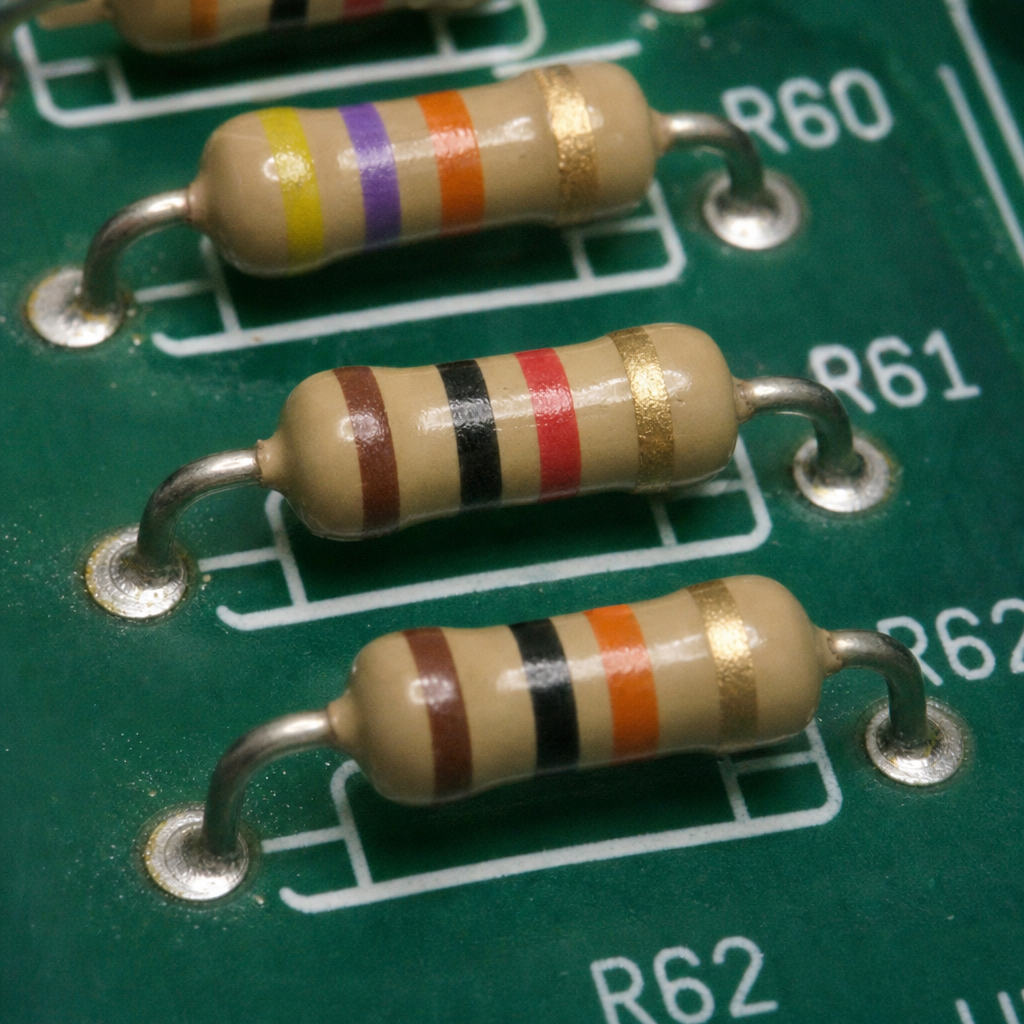
Advantages of Film Resistors in Circuits
Film resistors are a dependable choice for circuits that need stable resistance, predictable behavior, and clean electrical performance. They are used across analog, digital, power, audio, measurement, and control designs because they offer a strong balance of precision, reliability, availability, and cost. This article explains how film resistors work, why they are often preferred, and how to think about carbon resistors vs metal film options when choosing parts for a design.
What makes film resistors useful in circuits?
Film resistors are useful because they can deliver consistent resistance values with better stability and lower electrical noise than many older resistor constructions. Instead of relying on a solid lump of resistive material, they use a thin resistive film deposited on an insulating body, then trimmed to achieve the desired value. That structure makes them practical for circuits where resistance accuracy, temperature behavior, signal cleanliness, and long-term dependability matter.
A resistor may look like a simple component, but its performance affects far more than whether current is limited. In many circuits, a resistor helps set gain, define timing, bias a transistor, divide voltage, protect an input, balance a signal, or shape a filter response. If the resistor value drifts, generates noise, or changes under heat, the circuit can become less accurate or less predictable.
That is where film resistors earn their place. They are common enough for everyday designs, but refined enough for applications that need tighter electrical behavior. Designers often reach for them when they want a component that behaves as expected without turning resistor selection into a major engineering compromise.

How film resistor construction supports better performance
The key feature of a film resistor is its controlled resistive layer. A thin film of resistive material is deposited on a ceramic or other insulating substrate. The manufacturer then adjusts the resistance, often by trimming the film pattern, so the finished part meets its target value and tolerance.
This construction gives film resistors several practical advantages. The resistive path can be made uniform, which helps reduce random variation from part to part. The substrate provides mechanical support and helps manage heat. The trimmed film pattern allows manufacturers to offer many resistance values while maintaining predictable performance.
In a real circuit, this can mean fewer surprises. A bias network is more likely to land near the intended operating point. A filter is more likely to behave close to its calculated response. A sensing circuit is less likely to lose accuracy because the resistor itself is unstable.
Film construction also supports a wide range of packages and ratings. Engineers can find film resistors for compact surface-mount boards, through-hole prototypes, general electronics, industrial controls, instrumentation, audio circuits, and higher-voltage or higher-power positions. The exact performance depends on the specific part, but the construction style gives designers a broad and useful starting point.
The main advantages of film resistors
Film resistors are popular because they improve several small but important details at once. In simple circuits, those benefits may just make the design more robust. In precision circuits, they can be essential.
Better tolerance for more accurate circuits
Tolerance tells you how close the actual resistance is likely to be to the printed value. A tighter tolerance helps when the resistor value directly affects circuit behavior. Film resistors are widely available in tighter tolerances than many basic carbon composition parts, making them a practical choice for designs that need dependable results.
Consider a voltage divider used to feed an analog-to-digital converter. If the resistor values are not close to the intended ratio, the measured voltage can be off. In an amplifier, resistor tolerance can affect gain. In a timing circuit, it can influence delay or frequency. Choosing film resistors can reduce that built-in uncertainty.
Not every circuit needs high precision, of course. A pull-up resistor on a digital input may work well across a broad resistance range. But when the value matters, tighter-tolerance film resistors make the design easier to control.
Stronger stability over time
A resistor’s printed value is only part of the story. The value can shift because of heat, humidity, electrical stress, aging, soldering, or repeated operation. Film resistors are generally chosen when designers want better long-term stability than low-cost carbon options may provide.
This matters in equipment expected to perform consistently over months or years. A calibration circuit, feedback loop, sensor interface, or reference network can gradually lose accuracy if its resistors drift. Even a small change can matter if the circuit depends on ratios or thresholds.
Film resistors help reduce that risk. They are not immune to stress, and every datasheet still matters, but their construction is well suited to applications where stable behavior is part of the design goal.
Lower noise for cleaner signals
All resistors produce some thermal noise, but construction can add extra noise beyond that unavoidable baseline. Film resistors are often preferred in low-noise circuits because their resistive element tends to be more uniform and controlled than carbon-based alternatives.
Noise matters most when signals are small. Microphone preamps, sensor inputs, measurement equipment, audio stages, and precision analog circuits can all be affected by resistor noise. In those designs, a resistor is not just a passive current limiter. It becomes part of the signal path.
Using film resistors can help preserve signal clarity. This is especially relevant when comparing carbon film vs metal film resistors, because metal film parts are often selected for lower noise and higher precision roles.
Improved temperature behavior
Resistance can change with temperature. This is measured by the temperature coefficient of resistance, often shortened to TCR. A lower TCR means the resistor value changes less as the circuit warms up or cools down.
Film resistors, especially metal film types, are widely used where temperature stability matters. That can include power supplies, test instruments, sensor conditioning circuits, automotive electronics, and outdoor or industrial equipment. If a resistor sits near a warm regulator, transistor, transformer, or power component, temperature behavior becomes more important.
Good layout still matters. A stable resistor can only do so much if it is placed directly beside a hot component without airflow or thermal consideration. But starting with a film resistor gives the circuit a better chance of maintaining its intended behavior across operating conditions.
Predictable performance in analog and mixed-signal designs
Analog circuits often depend on relationships between components. A feedback resistor and input resistor set amplifier gain. Two resistors establish a reference divider. A resistor and capacitor define a filter corner or timing constant. When resistor performance is predictable, the whole circuit is easier to design, test, and troubleshoot.
Film resistors provide that predictability in a cost-effective way. They are common enough for high-volume designs yet capable enough for more demanding applications. That is why they show up in everything from simple control boards to precision measurement systems.
In mixed-signal circuits, where digital switching and analog measurement share the same board, predictable passive components help reduce avoidable sources of error. The resistor will not fix poor grounding or noisy layout, but it can prevent the passive network from becoming another weak point.
Film resistor types used in modern circuits
There are several film resistor types, and each has strengths that make it suitable for different design goals. The most common categories include carbon film, metal film, metal oxide film, thick film, and thin film resistors. Choosing between them depends on accuracy, noise, voltage, power, temperature, package, and cost.
Carbon film resistors
Carbon film resistors use a carbon-based resistive layer. They are often used in general-purpose electronics where cost and availability are important, and where ultra-tight precision is not required. They can be a practical choice for hobby projects, simple consumer circuits, and non-critical positions.
Compared with metal film resistors, carbon film parts usually offer less precision and may produce more noise. However, they still have a place in many circuits. For current limiting, simple biasing, indicator LEDs, and basic signal paths, a carbon film resistor can be entirely adequate.
The important point is context. Carbon film is not automatically “bad,” and metal film is not automatically required. The right choice depends on what the resistor is doing in the circuit.
Metal film resistors
Metal film resistors use a metallic resistive film, typically chosen for better tolerance, lower noise, and improved temperature stability. They are a common default in circuits where accuracy and consistency matter. Designers often use them in audio equipment, instrumentation, control systems, feedback networks, reference dividers, and analog signal paths.
When people compare metal film resistors vs carbon film, metal film usually wins for precision and noise-sensitive work. The tradeoff is that metal film parts may cost more than basic carbon film options, though in many designs the difference is small compared with the benefit.
Many component manufacturers offer metal film families, and engineers may encounter product lines such as Vishay metal film resistors when sourcing parts for professional designs. As always, the specific datasheet should guide the final decision, because ratings and performance vary by series.
Metal oxide film resistors
Metal oxide film resistors are often selected for applications that need durability under heat, surge, or higher-voltage stress. They are related to metal film in the broad sense that they use a film-based resistive element, but they are usually chosen for ruggedness rather than maximum precision.
These parts can be useful in power supplies, snubbers, protection circuits, and other positions where the resistor may face demanding electrical conditions. They may not be the first choice for the lowest-noise precision signal path, but they can be excellent where resilience is the priority.
Thick film and thin film resistors
Thick film and thin film resistors are especially common in surface-mount technology. Thick film resistors are widely used for general-purpose applications because they are affordable, compact, and available in many values. Thin film resistors are often selected when tighter tolerance, better stability, and lower noise are needed in compact packages.
The distinction matters in modern PCB design. A compact board may contain hundreds of chip resistors, and the designer must decide where a standard thick film part is enough and where a thin film part is worth specifying. A sensor front end may justify thin film resistors, while digital pull-ups and LED current limiters may not.
Carbon resistors vs metal film: which should you choose?
Choose carbon-based resistors for non-critical, cost-sensitive, general-purpose positions, and choose metal film resistors when precision, low noise, stability, or temperature behavior matters. That simple rule covers many practical design decisions. The best answer still depends on the circuit function, because the same resistor value can have very different importance in different locations.
The phrase carbon resistors vs metal film can refer to older carbon composition resistors, carbon film resistors, or a general comparison between carbon-based and metal film technologies. In most modern design discussions, the practical comparison is often carbon film vs metal film resistors. Metal film typically offers tighter tolerance, lower noise, and better stability, while carbon film often remains useful where cost and basic function are the main concerns.
If you are choosing between carbon vs metal film resistors, start by asking what happens if the resistor value changes, adds noise, or warms up. If the answer is “almost nothing,” a carbon film part may be fine. If the answer is “the circuit becomes inaccurate, noisy, or unstable,” metal film is the safer choice.Newest in the store


Use this quick decision guide:
- Use metal film for precision dividers. Reference voltages, ADC scaling, and calibration networks benefit from stable, accurate resistance ratios.
- Use metal film in low-noise signal paths. Audio inputs, sensor amplifiers, and measurement circuits can be sensitive to resistor noise.
- Use metal film in feedback networks. Amplifier gain and control-loop behavior depend heavily on resistor values.
- Use carbon film for simple current limiting. LEDs, basic transistor biasing, and non-critical pull-up or pull-down functions often do not need premium resistor performance.
- Use rugged film types for stressful locations. Power supply startup paths, surge-limited nodes, and heat-prone areas may need metal oxide or other specially rated parts.
- Check the datasheet for every critical position. Package size, voltage rating, power rating, tolerance, TCR, and pulse behavior can matter as much as resistor type.
Metal film vs carbon film resistors in real circuit roles
The best way to understand metal film vs carbon film resistors is to look at common circuit roles. The comparison becomes clearer when you connect component characteristics to actual design outcomes.
Voltage dividers and reference networks
A voltage divider seems simple, but its accuracy depends on resistor values and ratios. If the divider feeds a comparator, microcontroller ADC, voltage reference, or feedback pin, tolerance and temperature drift can affect the circuit’s decision-making. In these locations, metal film resistors are often the more appropriate choice.
Carbon film resistors may still work in non-critical dividers. For example, a divider used only to detect a broad voltage range may tolerate loose values. But if the divider defines a threshold or measurement scale, better resistor stability becomes valuable.
Audio and low-level signal circuits
In audio and low-level analog stages, noise and consistency matter. A resistor in the input path, feedback loop, or equalization network can influence the sound, gain, or channel matching. Metal film parts are frequently preferred because they support cleaner and more predictable signal behavior.
This does not mean every resistor in an audio product must be metal film. A power indicator LED resistor is not part of the audio path. But for small-signal sections, carbon film vs metal film resistors is a meaningful comparison, and metal film is often the practical upgrade.
Power supplies and control circuits
Power supplies use resistors for startup, feedback, sensing, discharge, compensation, and protection. Some of these roles are precision-sensitive, while others are stress-sensitive. A feedback divider may benefit from metal film precision, while a high-stress position may require a resistor designed for pulse, voltage, or temperature demands.
This is where resistor selection goes beyond basic type names. A standard metal film resistor may be excellent in one location but unsuitable for a surge-heavy node. A metal oxide film resistor or another specialized part may be better for rugged service.
Digital support components
Digital circuits use many resistors for pull-ups, pull-downs, series damping, address selection, and current limiting. In many of these positions, the exact resistor technology is less critical than value, size, and assembly compatibility. Thick film chip resistors are common here because they are compact and economical.
Still, film resistor performance can matter in mixed-signal digital boards. A resistor connected to a precision sensor, oscillator, reference input, or high-speed line should be selected with more care than a simple logic pull-up.

Practical selection factors beyond resistor type
Resistor type is important, but it is only one part of the selection process. A well-chosen resistor matches the electrical, thermal, mechanical, and manufacturing needs of the circuit. Even a high-quality film resistor can fail or drift if it is used outside its intended rating.
Tolerance
Tolerance should match the circuit’s accuracy requirement. If a resistor sets a precise gain, threshold, or reference ratio, choose a tighter tolerance. If it only limits current in a non-critical branch, a wider tolerance may be acceptable.
Avoid paying for precision where it does not improve the product. A good design uses better parts where they matter and standard parts where they are enough.
Temperature coefficient
Temperature coefficient becomes important when the circuit operates across a wide temperature range or when the resistor sits near heat-producing components. A low-TCR resistor helps keep the value stable as conditions change. This is one reason metal film and thin film resistors are common in precision applications.
Also consider resistor matching. In some circuits, two resistors drifting together may be less harmful than one drifting differently from the other. Matched networks or carefully selected resistor types can help when ratios matter more than absolute values.
Power rating and derating
Every resistor has a power rating, but good design practice often avoids running parts at their absolute limit. Heat can accelerate drift, affect nearby components, and reduce reliability. Choosing a suitable power rating and allowing margin helps the circuit last longer.
Remember that small surface-mount resistors have limited heat dissipation. A resistor that looks electrically correct on paper may run hot in a compact package. Layout copper, airflow, ambient temperature, and duty cycle all influence real performance.
Voltage rating
High resistance values in high-voltage circuits can exceed a resistor’s voltage rating even when power dissipation seems low. This is a common trap. Always check both voltage and power limits, especially in dividers, discharge paths, sensing networks, and mains-adjacent circuits.
If voltage stress is high, designers may use multiple resistors in series or select parts with appropriate voltage ratings. Film resistors are available in many ratings, but the correct choice must come from the datasheet.
Noise and signal level
Noise performance matters most when the signal is small or the circuit has high gain. In these cases, metal film or thin film resistors may improve performance compared with noisier alternatives. In high-level or digital sections, the benefit may be less noticeable.
Think about where the resistor sits in the signal chain. A noisy resistor before a high-gain amplifier can be much more problematic than a similar resistor at a low-impedance output.
Package and assembly requirements
Through-hole film resistors are convenient for prototyping, repair, and some rugged designs. Surface-mount film resistors are better suited for compact, automated production. The package also affects power handling, parasitic behavior, layout density, and manufacturing cost.
For professional designs, availability matters too. It is wise to choose resistor values and packages that can be sourced reliably, with acceptable alternates. Product families such as Vishay metal film resistors, along with equivalent offerings from other manufacturers, are often evaluated based on datasheet fit, availability, lifecycle, and purchasing requirements.
Common mistakes when using film resistors
Film resistors make circuit design easier, but they do not remove the need for good engineering judgment. Many resistor-related issues happen because the part was chosen only by resistance value and package size.
Avoid these common mistakes:
- Ignoring power dissipation. Calculate how much power the resistor will convert to heat, then choose a rating with practical margin.
- Checking power but not voltage. A resistor can be within its power limit while exceeding its maximum working voltage.
- Using precision parts everywhere. Metal film resistors are valuable, but not every circuit node needs tight tolerance or low noise.
- Forgetting temperature effects. Hot components nearby can shift resistor values and reduce reliability.
- Overlooking noise in high-gain circuits. A small amount of resistor noise can become significant after amplification.
- Assuming all film resistors behave the same. Carbon film, metal film, metal oxide, thick film, and thin film parts can have different strengths.
- Skipping datasheet review for critical roles. The resistor type gives a clue, but the datasheet gives the real operating limits.
These mistakes are easy to avoid with a short selection checklist. Before releasing a design, confirm the resistor’s value, tolerance, TCR, power rating, voltage rating, package, environmental limits, and availability. For critical circuits, also consider noise, matching, pulse performance, and long-term stability.
When film resistors are worth the upgrade
Film resistors are worth the upgrade when resistor behavior has a visible effect on circuit performance, reliability, or user experience. If a circuit must measure accurately, amplify cleanly, switch at the right threshold, maintain calibration, or operate across temperature changes, the resistor technology matters.
For simple circuits, the upgrade may not be necessary in every location. A practical design does not treat all resistors as equally important. Instead, it separates critical and non-critical positions, then assigns the right type where it brings real value.
A useful approach is to mark resistors by function during schematic review:
- Critical accuracy parts: feedback, gain setting, references, dividers, sensing, calibration.
- Critical noise parts: low-level inputs, high-gain stages, audio paths, sensor front ends.
- Critical stress parts: surge paths, discharge resistors, startup circuits, high-voltage dividers, warm areas.
- General-purpose parts: pull-ups, pull-downs, indicators, simple current limits, non-critical biasing.
Once you group resistors this way, selection becomes clearer. Metal film and thin film parts can be reserved for precision and low-noise roles. Metal oxide or other rugged film types can be used where stress is the concern. Carbon film or thick film parts can serve well in ordinary positions.
This balanced method keeps costs sensible while improving the parts of the circuit that most affect performance.
Film resistors support better design decisions
The advantage of film resistors is not only that they are accurate or quiet. It is that they give designers more control. With the right film resistor, the circuit is more likely to match calculations, pass testing, remain stable over time, and behave consistently from one build to the next.
That control is valuable at every stage. In prototyping, stable resistors make troubleshooting easier because fewer variables are moving around. In production, consistent parts help reduce variation between boards. In the field, good resistor choices support long-term reliability and fewer performance surprises.
The comparison of carbon film vs metal film resistors is therefore less about declaring one universal winner and more about choosing intentionally. Carbon film has a place in simple, cost-sensitive circuits. Metal film earns its place in precision, low-noise, and temperature-sensitive designs. Other film resistors types fill in the gaps when power, voltage, size, or ruggedness becomes the priority.
Key takeaway
Film resistors are a smart choice when a circuit needs stable, predictable, and practical resistance performance. They offer advantages in tolerance, noise, temperature behavior, and long-term consistency, especially when compared with many basic carbon-based options. For most designs, the best strategy is to use metal film resistors where accuracy and low noise matter, carbon film or thick film parts where basic function is enough, and specialized film types where heat, voltage, or stress demands extra attention.
By treating resistors as performance components rather than afterthoughts, you can build circuits that are easier to tune, easier to manufacture, and more dependable in real use.