


Choose the Best Brushless Motor Controller for Optimal Performance

Brushless DC Motor Controller Selection Guide
A brushless DC motor controller tells a BLDC motor when to power each phase, how fast to spin, and how much torque to make. Without a brushless dc motor controller, even a good brushless motor will not run well. It needs timed switching, not direct power. This guide shows how a brushless motor controller works, which specs matter, and how to choose the right controller for dc brushless motor use.
What a brushless DC motor controller does
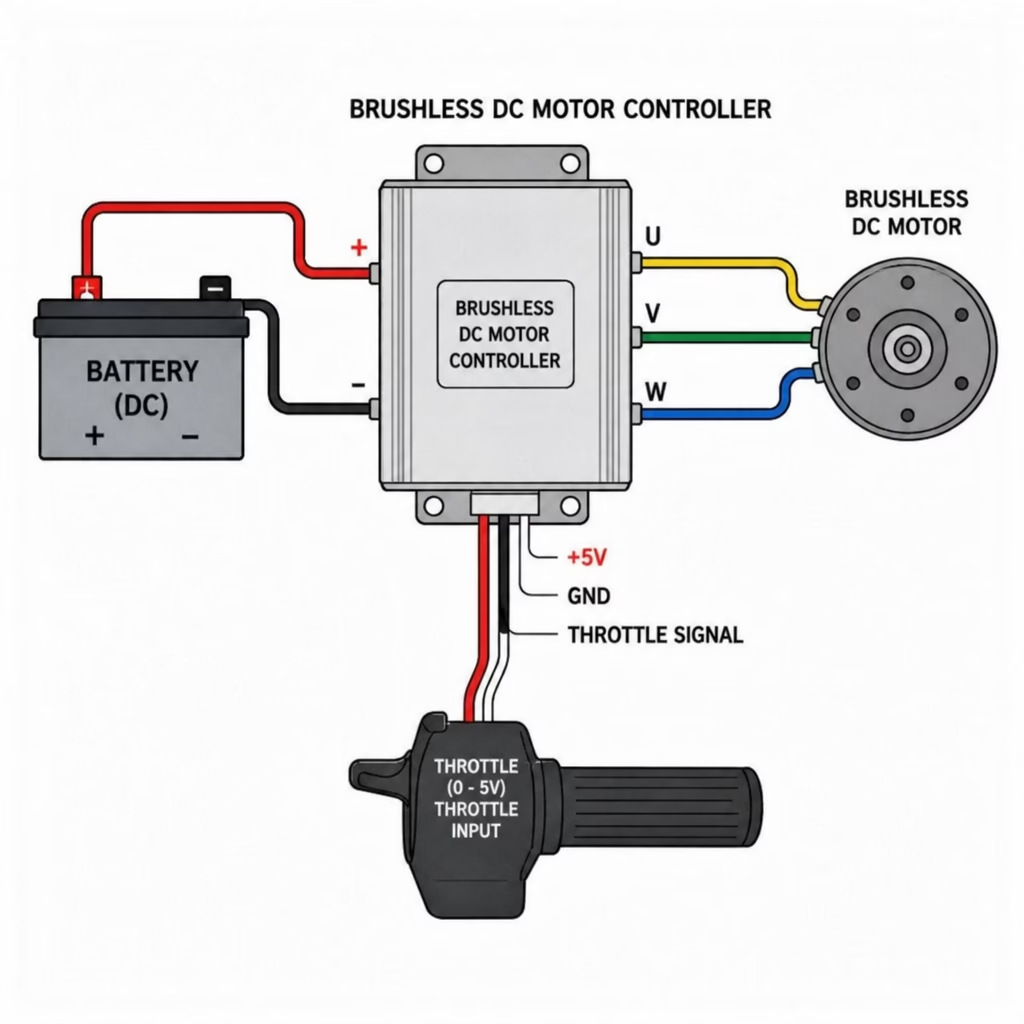
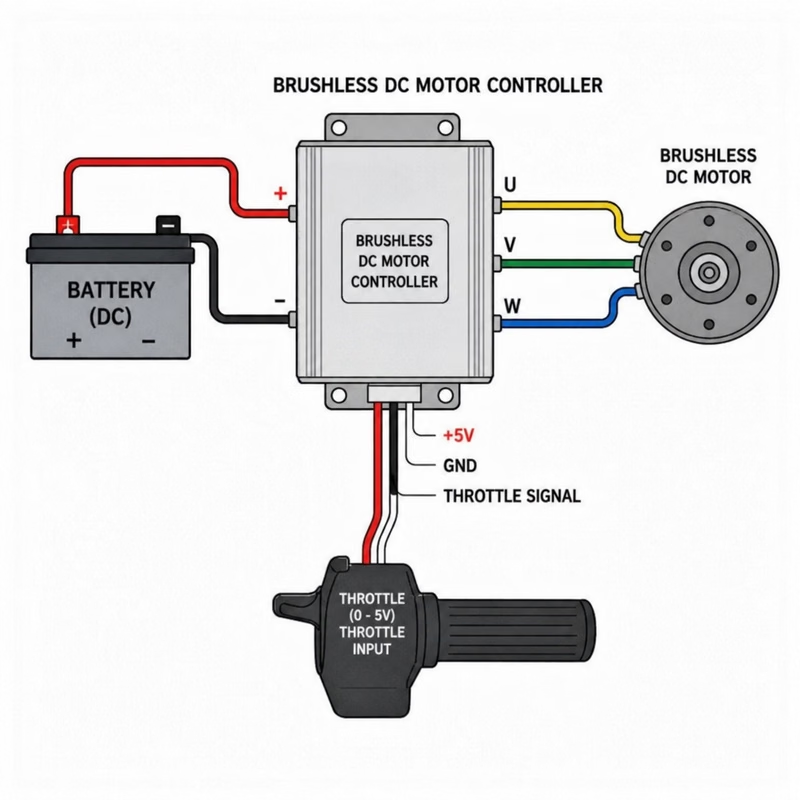
A brushless dc motor controller turns DC power into timed pulses for the motor windings. It replaces the brushes used in older DC motors with electronic switching, often through MOSFETs or similar parts. A motor control circuit reads rotor position, throttle input, current demand, and safety signals.
The controller does more than start the motor. It also handles startup, ramp-up, braking, reversing, heat, overcurrent, low voltage, and speed control. A basic dc motor driver may only switch a brushed motor on and off. A dc brushless motor controller must time several phases in the right order.
For many products, the controller is what makes the motor feel smooth. A good speed control system can help a scooter speed up cleanly, keep a fan quiet at low speed, or let an automation unit hold output under changing load.
The main parts of a BLDC control system
A complete brushless dc motor and controller setup usually includes the motor, power source, controller, command input, and feedback. These parts work together. If you ignore one, you can get weak output, too much heat, or bad starts.
Key parts include:
- Power input: The battery or DC supply, such as 24V, 36V, or 48V, must match the controller’s rated range.
- Power stage: MOSFETs or power transistors switch current to the motor phases.
- Control logic: An MCU or dedicated IC sets timing, speed response, and safety behavior.
- Position feedback: Hall sensors, encoders, or sensorless methods help the controller find rotor position.
- Command input: A throttle, pot, PWM signal, analog voltage, or digital interface tells the controller the target speed or torque.
- Protection features: Current limit, thermal shutoff, low-voltage cutoff, and short-circuit protection help prevent damage.
In small products, these parts may live inside one electronic speed controller. In larger systems, the motor controller circuit may be separate so it can cool better and be easier to service.
Sensored and sensorless controllers serve different needs
A bldc controller can use sensors, no sensors, or both. Sensored designs use Hall sensors or other feedback in the motor to find rotor position. That gives clear data at startup and at low speed, which helps when the load is heavy.
Sensorless controllers estimate rotor position from the motor phase signals. They cut wiring and motor complexity, but startup can be less stable when the load is high. Many fans, pumps, and fast rotating devices use sensorless control because they do not need strong zero-speed torque.
When choosing a brushless motor driver, start with how the motor begins to move. A light fan blade, a wheel on flat ground, and a conveyor with material all place different demands on the same size motor. If the machine must start under load, a sensored dc brushless controller is often the safer choice.
How voltage ratings affect controller choice
Voltage rating decides whether the controller can safely run from the planned battery or DC supply, and it strongly affects speed potential. A 24v brushless dc motor controller is common in small mobility, fan, pump, and automation systems. A brushless dc motor controller 36v or 48V unit is often used when more power or speed is needed. The controller’s rated range should match the real supply range, including full charge voltage, not just the label.
For example, a 48V battery system may rise above 48V when fully charged. That means a 48v brushless dc motor controller needs enough headroom for real use. Product pages may also say brushless dc motor controller 48v, but the key detail is still the supported input range and current limit.
Voltage alone does not set power. Current, cooling, motor winding design, duty cycle, and load also matter. A higher-voltage controller paired with the wrong motor can still run badly, and an undersized controller may overheat even if the voltage looks right.
Current, power, and heat are practical limits
Current rating is one of the most important specs for a brushless motor controller because current is tied to torque and heat. Controllers often have a continuous current rating and a peak current rating. Continuous current is what the controller can handle for long runs. Peak current is only for a short burst during speed-up or load spikes.
Heat is the detail people often ignore. A controller in open air may survive loads that would overheat the same unit inside a sealed box. If the machine runs for long periods, pulls heavy loads, or works in warm air, choose a controller with margin.
A practical selection checklist looks like this:
- Match the voltage range to the battery or DC supply, including max charge voltage.
- Confirm motor phase current needs rather than using wattage alone.
- Check continuous current for the real duty cycle, not just peak output.
- Plan cooling and mounting before you finish the enclosure.
- Verify connector and phase wiring match the motor.
- Confirm feedback type: sensored, sensorless, encoder, or hybrid.
- Review protection for overload, low voltage, stall, and heat events.
This checklist works for a small dc brushless motor controller for a fan or a larger unit for mobility or machinery.
Speed control depends on the job
A speed control system can be simple or advanced. Some controllers take a basic throttle signal and change motor speed. Others use closed-loop control. In that setup, the controller compares the target speed with the actual feedback and corrects for load changes.
Open-loop control works well when exact speed is not critical. For example, a ventilation fan may only need a few speed steps. Closed-loop control is better when the machine must keep speed steady under changing resistance, such as a pump with changing flow or a fixture that needs repeatable motion.
Control methods may include:
- PWM speed control: Efficient switching changes the power sent to the motor.
- Analog voltage input: A 0–5V signal sets speed or throttle.
- Digital communication: UART, CAN, or similar links allow monitoring and setup.
- Torque or current control: Useful when force matters more than exact speed.
- Regen or dynamic braking: Helpful in mobility and rotating-load systems when the setup supports it.
The best electronic speed controller is not always the one with the most features. It is the one that matches how the machine must start, run, slow down, and protect itself.
Common uses for brushless DC motor controllers
Brushless motors are popular because they can give efficient operation, compact size, long life, and precise control. The controller is what makes those gains useful in real equipment. From battery devices to industrial systems, the right match can improve smoothness, noise, and response.Newest in the store


Typical uses include electric bikes, scooters, fans, blowers, pumps, robotics, medical equipment, power tools, automated doors, small conveyors, and model vehicles. In hobby and RC work, the term electronic speed controller is very common. In engineering and product design, terms like bldc controller, brushless motor driver, or motor controller circuit may be used.
The label changes by industry, but the core job stays the same. The controller takes DC input and manages the motor phases so the rotor turns in a controlled, efficient, and predictable way.
Choosing the right controller for your motor
Start with fit, then refine for performance. The motor’s rated voltage, phase current, sensor type, pole count, speed range, and load should guide the choice. If you already have a motor, check the wiring, Hall sensor layout, rated RPM, and current needs before you buy a controller.
A simple comparison can help:
| Application need | Better controller choice |
|---|---|
| Light fan or pump | Sensorless controller may be enough |
| Heavy start load | Sensored BLDC controller is usually better |
| Battery mobility system | Controller with low-voltage cutoff and braking support |
| Precise speed under load | Closed-loop speed control system |
| Compact product design | Integrated brushless motor driver with heat planning |
| Higher-power 48V setup | Properly rated 48v brushless dc motor controller with current margin |
Avoid choosing only by listed wattage. Sellers may rate wattage in different ways, and the number may not show cooling, peak time, or safe continuous use. Look at the full spec sheet when you can.
What mistakes should you avoid when wiring or sizing a controller?
The most common mistakes are mixing up voltage, using too little current capacity, ignoring heat, and assuming any controller will fit any BLDC motor. A brushless dc motor controller 36v cannot be used on a 48V system, and a 24v brushless dc motor controller may fail fast if it is tied to a higher-voltage battery. A motor may also run badly if Hall sensor wiring, phase order, or control input type is wrong.
Be careful with connectors and wire size. Phase wires carry high current, and weak connectors can heat up under load. Signal wires for Hall sensors or throttles also need the right polarity and a firm connection, even though they carry much less current.
Before full-power testing, raise speed step by step and watch for noise, vibration, fast heating, or fault behavior. If the motor jerks, spins backward, or draws too much current with little movement, stop and check the wiring and controller setup.
The controller is the heart of BLDC performance
A brushless DC motor is only as useful as the brushless dc motor controller driving it. The controller handles commutation, speed commands, torque response, protection, and the feel of the machine. Whether you are comparing a compact dc motor driver, a flexible bldc controller, or a higher-power dc brushless controller, the best choice comes from matching voltage, current, feedback, load, and cooling.
If you treat the brushless motor controller as part of the whole system rather than an add-on, selection gets much easier. Define the load, confirm the power source, understand the motor feedback, and choose a controller with enough electrical and heat margin to run well.
Q&A
Question: Why can’t a brushless DC motor be connected directly to a battery or DC supply?
Short answer: A BLDC motor needs timed switching of its phases, not just direct power. The controller turns DC input into the right pulse order for the motor windings, using rotor position, throttle demand, current limits, and safety signals to keep the motor starting, speeding up, braking, and running properly.
Question: When should I choose a sensored controller instead of a sensorless controller?
Short answer: A sensored controller is usually better when the motor must start under load or run smoothly at low speed. Hall sensors or other feedback give the controller clear rotor position data at startup. Sensorless controllers can work well for lighter loads, fans, pumps, and high-speed rotating devices, but they may struggle more with heavy zero-speed torque demands.
Question: Is matching the voltage label, such as 24V, 36V, or 48V, enough when selecting a controller?
Short answer: No. The controller’s rated input range must match the real supply range, including full charge voltage. For example, a 48V battery may be higher than 48V when fully charged, so a 48v brushless dc motor controller needs enough voltage headroom. Current rating, cooling, motor design, duty cycle, and load also affect whether the controller is suitable.
Question: Why is continuous current more important than peak current for many applications?
Short answer: Continuous current shows what the controller can handle during normal long-term operation, while peak current is only for short bursts during speed-up or load spikes. If a controller is chosen mainly for peak current and then used under heavy sustained load, it may overheat, especially in a sealed enclosure or warm environment.
Question: What should I check before full-power testing a new BLDC controller setup?
Short answer: Check voltage range, phase wiring, Hall sensor or feedback wiring, connector fit, wire size, control input type, and cooling. Start at low speed and increase in steps while watching for noise, vibration, rapid heating, reverse rotation, jerking, or fault behavior. If any of those occur, stop and review the wiring and controller setup before continuing.