


Optimal Brushless Motor Controller Guide

Brushless Motor Controller Guide
Brushless DC motors are often chosen when a system needs efficient motion, smooth speed control, and long service life, and a good brushless dc motor controller is the part that turns those benefits into usable output by managing speed, torque, direction, braking, and protection. Whether the setup uses a compact 24v brushless dc motor controller, a brushless dc motor controller 36v platform, or a 48v brushless dc motor controller, the controller is what keeps the motor responsive, safe, and practical for real work.
What does a brushless motor controller do?
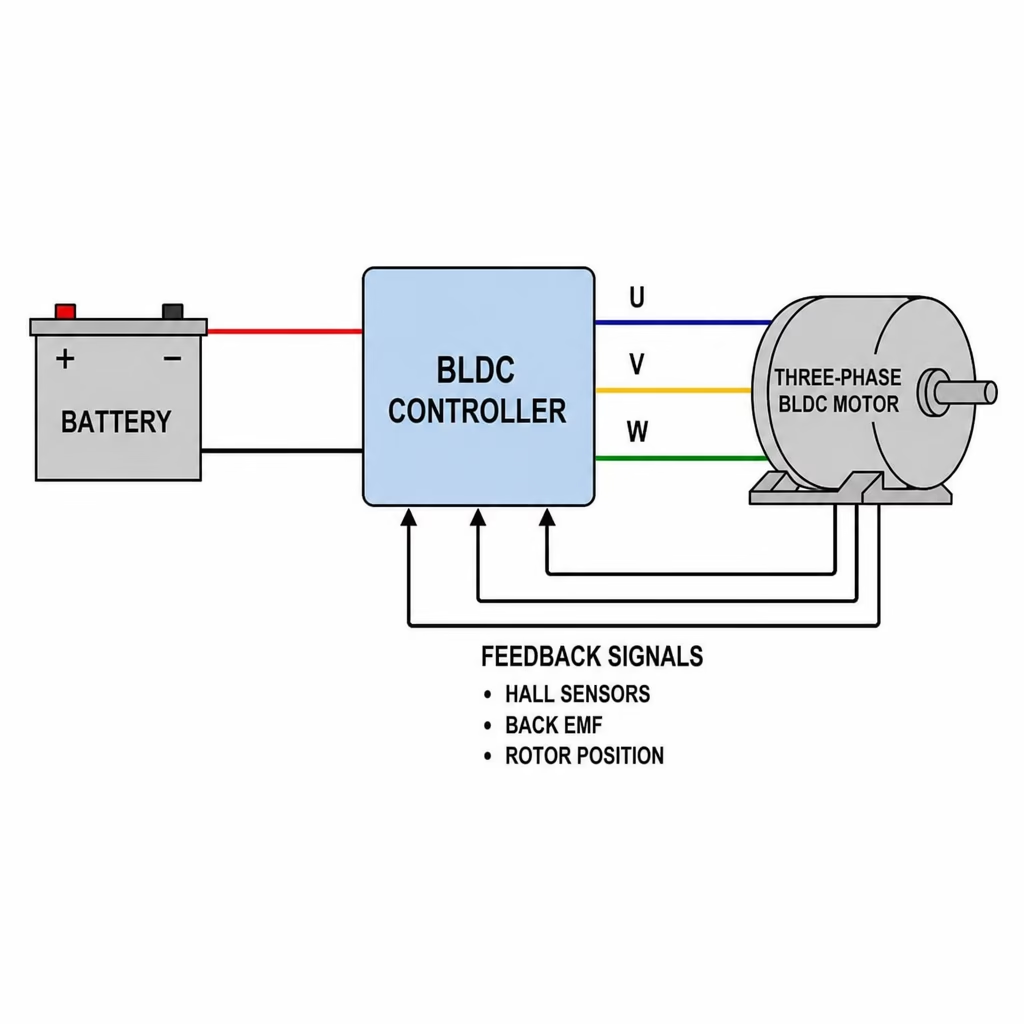
A brushless motor controller is the unit that powers and times a BLDC motor. Because a brushless motor has no brushes to switch current between windings, the controller handles that work with electronics. It uses sensors to know rotor position and sends current pulses to keep the rotor moving.
In practical use, the controller sits between the power source, the user command, and the motor. It may accept a throttle signal, a speed reference, an MCU command, or an automation input, then convert that request into controlled motor output. That is why a controller for dc brushless motor systems is often seen as both a power stage and a control layer.
In many product sheets, the same device is also called a brushless motor controller, brushless motor driver, brushless controller, electronic speed controller, bldc controller, bldc motor controller, dc motor driver, dc motor controller, motor speed controller, or dc brushless controller, depending on whether the focus is power delivery, feedback, or communication.
Why electronic commutation matters
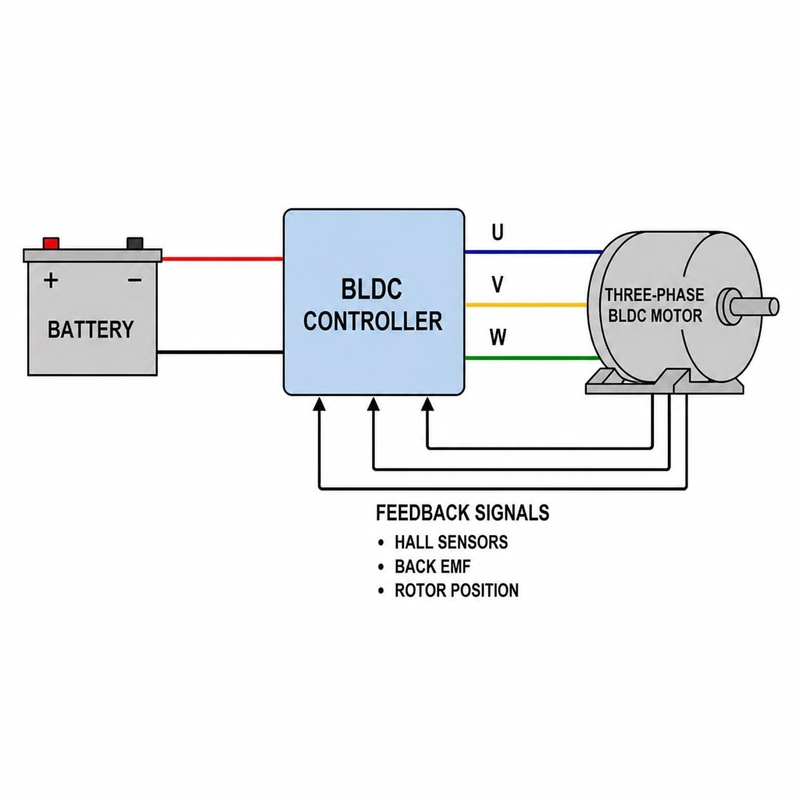
One major gain of a brushless dc motor controller is that it replaces friction-based commutation with electronic switching. In a brushed motor, brushes and a commutator move current by contact, which creates wear, noise, and energy loss. In a brushless motor and controller system, switching is handled by power semiconductors inside the motor controller circuit.
That change lowers loss and upkeep. The controller energizes the right windings at the right time, which improves torque and cuts heat. In battery systems, that can mean longer runtime; in industrial or nonstop systems, it can mean cooler and steadier operation.
A modern brushless controller can also change its switching as speed and load shift, and instead of simply adding power it manages current flow. That is why the brushless dc motor and controller pair is more flexible than a simple on/off motor circuit.
Better speed control across many uses
A brushless motor driver gives designers fine control of motor speed. Instead of depending only on supply voltage, a BLDC controller can use PWM and feedback to tune output smoothly. That lets the motor speed up, slow down, and hold a target speed with far better consistency.
That matters in e-bikes, fans, pumps, robots, conveyors, medical devices, automatic doors, and small EVs. A speed control module can be the difference between a motor that only spins and a system that feels stable, smooth, and easy to use.
Common speed-control gains include:
- Smoother starts: The controller can ramp current slowly instead of jolting the load.
- Stable low-speed use: Feedback control helps reduce stall risk and uneven spin.
- Fast speed-up: Current limits and control rules can deliver torque when needed.
- Controlled slow-down: Some controllers support braking for safer stops.
- Repeatable output: The same command can produce the same motor action across runs.
For products where user feel matters, smooth control is crucial. It affects noise, shake, comfort, quality, and safety. In that sense, the brushless dc motor controller is not just a drive stage; it is part of the user experience.
Why voltage matching matters in controller choice
Voltage matching matters because the controller, motor, and supply must stay within the same electrical limits. People often use a 24v brushless dc motor controller in low-voltage systems where size and safety matter. People often use a 36v or 48v brushless DC motor controller when they need more power or higher speed for the job. Using the wrong range can cut performance, trip faults, or damage parts.
The key issue is system fit. A brushless DC motor controller 48V model is not inherently better than a 24V model unless the motor, battery, wiring, load, and heat design are specifically built for it. Higher voltage can lower current for the same power, which may improve efficiency, but it also calls for the right insulation, connectors, MOSFET ratings, capacitors, and safety margin.
When comparing controller options, look at:
- Nominal voltage range — Confirm whether the controller is made for 24V, 36V, 48V, or a wider input range.
- Current rating — Check both continuous and peak current.
- Motor fit — Match phase setup, sensor type, and control method.
- Thermal limits — Look at airflow, heatsinks, and room temperature.
- Control inputs — Check throttle, analog, PWM, UART, CAN, or other input needs.
- Protection features — Look for overcurrent, low voltage, surge, stall, and heat protection.
A good dc brushless controller helps protect the motor and keeps the machine working as planned.
More torque control and smoother motion
A well-made motor control circuit does more than spin the motor. It manages current to the windings, which directly shapes torque. That matters when a load changes fast, such as a wheel climbing a hill, a pump facing pressure changes, or a robot joint shifting.
With the right brushless motor driver, the system can supply enough torque for the load without overfeeding current. That balance improves smoothness and lowers heat. It also helps avoid sudden motion that can damage parts or make a product harder to control.
Some controllers have sensors like Hall sensors, while others use sensorless methods to determine rotor position. Sensor-based designs can work well at startup and low speed. Sensorless designs can reduce wiring and simplify the motor build. The best choice depends on the load, speed range, cost target, and reliability needs.
Longer service life and less upkeep
One major reason engineers choose BLDC tech is lower wear. Since there are no brushes rubbing on a commutator, there are fewer wear parts in the motor. The brushless dc motor controller adds to that by taking over commutation with electronics.
That is useful in equipment that is hard to reach or expected to run often. Fans inside enclosures, small pumps, mobility tools, and automated gear all gain from fewer service points. Less brush dust, less contact wear, and fewer sparks can make the system cleaner and more reliable.
The controller also helps life span by managing electrical stress. A quality dc motor driver can limit high current, shut down in unsafe states, and block deep low-voltage use in battery systems. These features do not replace good design, but they add important protection layers.
Quieter operation and better user feel
Noise is not just about the motor; it also depends on how the controller drives it. A good electronic speed controller can reduce harsh starts, pulsing, and shake. In consumer products, mobility systems, office gear, and HVAC devices, quiet operation can be a major gain.
Newest in the store


Control style matters here. Basic six-step commutation is simple and common, while more advanced methods can create smoother current waveforms. That can mean less torque ripple and lower vibration, depending on the motor and load.
Even in industrial use, smoother motion helps. Less shake can lower stress on bearings, brackets, belts, couplings, and fasteners. A better controller supports both comfort and life span.
Built-in protection makes systems safer
A BLDC controller is often chosen not only for performance, but also for the protection it can provide. Motors can face stalled loads, wiring faults, low batteries, high heat, and sudden demand spikes. A simple motor controller circuit may not handle those cases well unless it has built-in protection.
Useful protection features may include:
- Overcurrent protection to limit damaging current spikes.
- Overheat shutdown or derating to protect power parts.
- Low-voltage protection to help stop deep battery drain.
- Surge protection for supply or regen events.
- Stall detection to lower risk when the motor cannot turn.
- Soft-start control to reduce mechanical and electrical shock.
These protections play a crucial role when using the controller in mobile gear, battery-powered machines, or products used by everyday people. They should still have correct wiring, fusing, enclosure design, and testing support.
How do you choose the right controller for your motor?
Choose a controller by starting with the motor and the job it must do, then match the electrical ratings, feedback method, current capacity, control input, and protection features. You should never pick a DC brushless motor controller by voltage alone. The load, duty cycle, environment, and safety needs all shape the right choice.
A practical selection process looks like this:
- Define the load. Identify the needed speed range, start torque, speed-up, and braking behavior.
- Confirm the motor data. Review voltage, phase current, power rating, sensor wiring, and connector needs.
- Choose the controller voltage class. Decide whether the job calls for 24V, 36V, 48V, or another range.
- Size the current rating. Leave room for start-up, hill climbs, pressure spikes, or other peak demands.
- Check the environment. Think about heat, dust, moisture, shake, and enclosure airflow.
- Plan integration. Make sure the controller accepts the command signals your product or machine can give.
This helps avoid the common mistake of pairing a strong motor with a too-small controller, or placing a good controller in a system that cannot cool it well.
A compact controller can simplify product design
Another gain of modern controllers is integration. Many designers can use a pre-made speed controller instead of building a motor control circuit from scratch. That can cut development time and simplify wiring, especially in prototypes, small machines, and product upgrades.
That said, ready-made does not mean plug-and-play without review. The chosen brushless motor controller still must match the motor type, voltage, current, and control needs. Documentation, connector quality, config options, and thermal design all matter.
For custom products, a dedicated controller may offer better packaging, communications, diagnostics, or firmware behavior. For simpler uses, an off-the-shelf dc motor driver may be enough. The right answer depends on cost, custom fit, compact size, certification plans, or long-term service.
Takeaway
A brushless DC motor becomes much more useful when paired with the right controller. The controller handles electronic commutation, improves efficiency, manages speed and torque, supports quieter operation, and adds protection against common electrical and heat problems. Matching the controller to the motor and use case is crucial for reliable work, whether it’s a 24V, 36V, or 48V system.
If you are choosing a controller, think past voltage and power numbers. Review the load, control method, current rating, feedback type, cooling, and protection features. Selecting the right brushless DC motor controller is crucial. It transforms motor power into reliable motion.
Q&A
Question: Is a higher-voltage brushless DC motor controller always the better choice?
Short answer: No. A 48V controller is not automatically better than a 24V or 36V unit, because the best voltage depends on the entire system: motor, battery or supply, wiring, connectors, thermal design, and load profile. Higher voltage can reduce current for the same power, but only when the rest of the system is built for it.
Question: Why check current rating as well as voltage rating?
Short answer: Voltage shows the electrical range, but current rating shows how much torque power the controller can safely deliver. Size the controller for both continuous current and peak current, especially when the motor must start under load, climb a hill, handle pressure spikes, speed up fast, or brake. An undersized controller may overheat, trip, or fail to deliver enough torque.
Question: What is the difference between sensor-based and sensorless BLDC control?
Short answer: Sensor-based controllers use parts such as Hall sensors to know rotor position, which can help startup and low-speed work. Sensorless controllers infer rotor position from the motor’s electrical behavior, which can cut wiring and simplify the motor build. The better choice depends on speed range, load behavior, cost target, reliability needs, and startup torque.
Question: How does a BLDC controller help extend motor and system life?
Short answer: A BLDC controller reduces the need for mechanical commutation and manages electrical stress. It can limit high current, use soft starts, detect stalls, protect against low voltage or surge, and shut down or derate at high heat. These steps help lower wear, heat, shake, and damage, supporting longer life when paired with good system design.