


Capacitor Fan Guide: Types, Wiring, Troubleshooting, and Replacement (Pakistan)

Capacitor Fan Guide: Types, Wiring, Troubleshooting, and Replacement (Pakistan)
A fan capacitor helps a ceiling, pedestal, or exhaust fan start smoothly and keep running at the right speed. In Pakistan, where fans work hard through long summers, a weak capacitor can make a fan slow, noisy, or completely dead. This guide explains the main capacitor fan types, basic wiring ideas, common faults, and safe replacement steps in clear, practical language.
What does a fan capacitor do?
A fan capacitor stores and releases electrical energy to create the phase shift a single-phase fan motor needs to start and run. Without the correct capacitor, the motor may hum, rotate slowly, need a manual push, or overheat. In simple terms, the capacitor gives the fan motor the electrical “push” it needs to move efficiently.
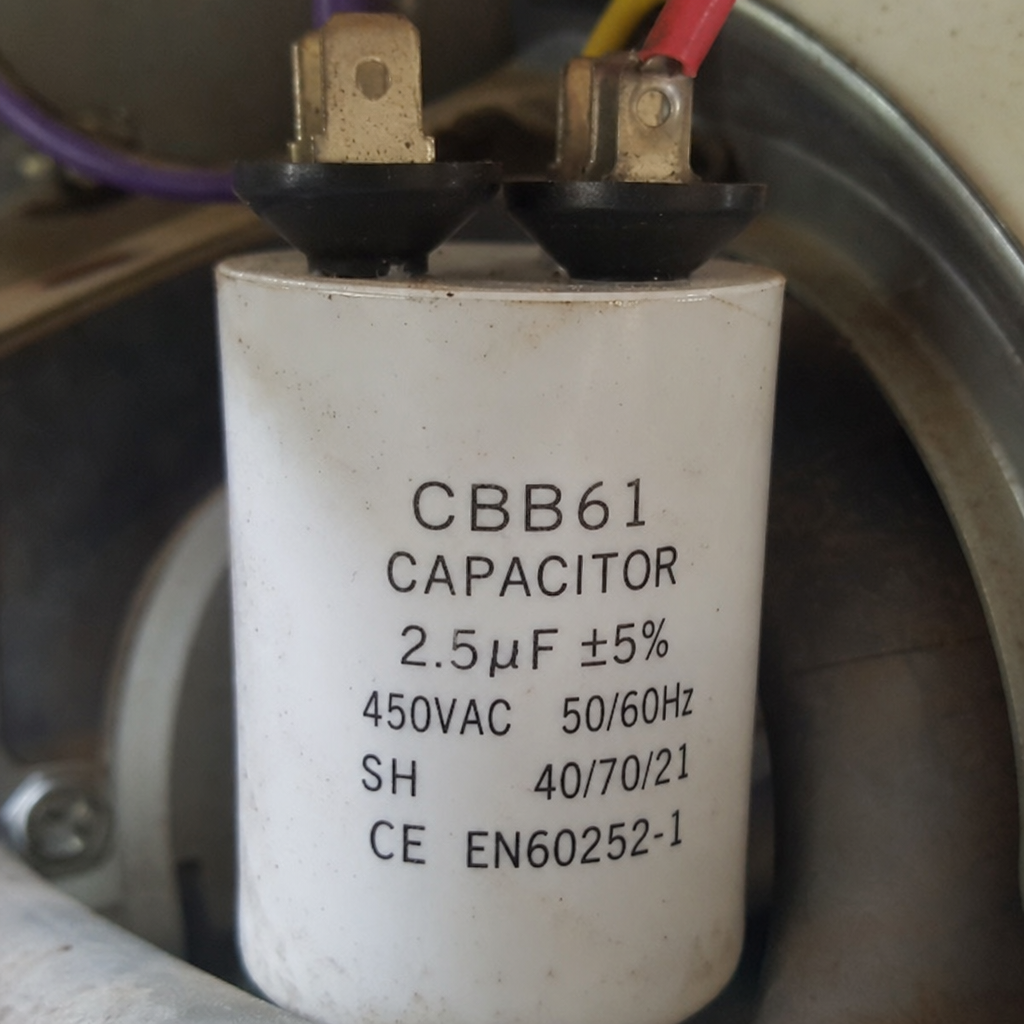
Most household fans in Pakistan use AC power, so the capacitor must be rated for AC motor use and matched to the fan’s requirements. The value is usually printed on the old capacitor in microfarads, shown as µF or MFD. Replacing it with a random value is risky because the wrong rating can reduce performance or damage the motor.

Common capacitor fan types used in homes
Fan capacitors may look similar, but they are not all the same. The correct type depends on the fan design, motor size, and how speed control is handled.
Run capacitors
Run capacitors are the most common in ceiling fans. They stay connected while the fan operates and help maintain smooth rotation. If a run capacitor becomes weak, the fan may still move, but it often runs slower than normal, especially on higher speed settings.
Start capacitors
Start capacitors provide a stronger boost during startup and are more common in some larger motors than in ordinary ceiling fans. They are usually connected only for a short time. If the start capacitor fails, the motor may hum but fail to begin rotating.
Dual or multi-value capacitors
Some fans and speed-control setups use capacitors with more than one value or multiple wires. These may support different speed stages or compact wiring layouts. When replacing this type, wire identification matters because each terminal may serve a different function.
Regulator-related capacitors
Older fan regulators and some speed-control systems may also rely on capacitive control. A speed issue is not always caused by the fan’s main capacitor, so it is worth checking whether the regulator, switch, wiring, or capacitor is actually at fault.
Capacitor ratings that matter
The most important rating is capacitance, usually written as 1.5µF, 2.5µF, 3.5µF, or another value depending on the fan. Always match the value printed on the original capacitor unless the fan manufacturer specifies a different approved replacement.
Voltage rating also matters. A replacement capacitor should have an equal or higher AC voltage rating than the original, not a lower one. For many household fans, capacitors are commonly marked for AC motor use, and choosing a proper fan-rated capacitor is safer than using a general electronic capacitor.
When shopping in Pakistan, ask for a fan capacitor by value, voltage rating, and wire count. If the old part is burnt or unreadable, take the fan model details or the damaged capacitor to a qualified technician or electrical shop. Guessing may seem quick, but it can create more faults.
How is a fan capacitor wired?
A typical ceiling fan capacitor is wired in series with the motor’s auxiliary winding, helping the motor create the magnetic phase difference needed for rotation. In practical terms, the capacitor usually connects between the fan’s winding wires and the supply or regulator circuit, depending on the fan design.
However, wire colors are not universal. One fan may use red, black, and yellow wires, while another may use a different arrangement. Never assume that two fans have the same wiring just because they look similar.
Before touching any wiring:Newest in the store


- Switch off the fan from the wall control.
- Turn off the relevant breaker if possible.
- Confirm power is off with a tester.
- Take a clear photo of the existing capacitor connections.
- Label wires before disconnecting them.
- Avoid touching bare conductors or damaged insulation.
If you are unsure, call an electrician. A capacitor fan repair involves mains voltage, and a small wiring mistake can cause shock, short circuits, or motor damage.
What are the signs of a bad capacitor?
A bad capacitor usually shows itself through startup and speed problems. The fan may hum without rotating, start only when pushed by hand, spin slowly on all settings, or stop after running for a while. Sometimes the capacitor body looks swollen, cracked, oily, or burnt.
Common symptoms include:
- Fan hums but blades do not move.
- Fan starts after a manual push.
- Speed is much slower than before.
- Fan runs unevenly or loses torque.
- Capacitor feels damaged, swollen, or leaking.
- Burning smell appears near the fan canopy or regulator.
These symptoms can also come from worn bearings, weak supply, faulty regulators, loose wiring, or damaged windings. A capacitor is a common cause, but it is not the only cause. Good troubleshooting means checking the simple possibilities first before replacing parts.
Safe troubleshooting steps before replacement
Start with a visual inspection. Look at the capacitor, wire joints, terminal blocks, regulator, and fan canopy for heat marks, loose connections, or broken insulation. If anything looks burnt, stop and get professional help.
Next, check whether the blades rotate freely by hand when the power is off. If the blades feel stiff, the problem may be mechanical rather than electrical. Dust buildup, dry bearings, or bent blade brackets can make the motor work harder and look like a capacitor fault.
A technician can test the capacitor with a capacitance meter. If the reading is far below the printed value, replacement is usually needed. Without a proper meter, replacement based only on symptoms is possible, but it is less reliable.
Replacing a fan capacitor the right way
Use the old capacitor as your reference. Match the capacitance value, choose a suitable AC voltage rating, and select the same wire style or terminal type where possible. A physically similar part is not enough; the printed specifications are the key.
Basic replacement checklist:
- Turn off power completely and verify it is off.
- Open the fan canopy or capacitor compartment carefully.
- Photograph the original wiring from more than one angle.
- Note the capacitor value, voltage, and number of wires.
- Disconnect the old capacitor without pulling on weak wires.
- Install the new capacitor in the same connection pattern.
- Insulate joints properly and secure the capacitor.
- Restore power and test the fan at different speeds.
If the new capacitor becomes hot, the fan still hums, or the breaker trips, switch off power immediately. The issue may be incorrect wiring, a faulty replacement, or a deeper motor problem.
Buying tips for Pakistan
In local electrical markets, capacitor quality can vary. Choose a properly marked capacitor from a reliable shop, and avoid parts with unclear printing, damaged casing, or no rating information. If your fan is from a known brand, using the recommended capacitor value is the safest approach.
It also helps to carry the old capacitor with you. Shopkeepers can match the µF value, voltage rating, wire count, and size more accurately when they can see the original part. For rental homes, offices, and shops where fans run for many hours daily, a better-quality capacitor is usually worth choosing.
Key takeaway
A capacitor fan issue is often simple, but it should still be handled carefully. The right capacitor helps the fan start properly, run smoothly, and maintain speed, while the wrong one can create heat, noise, or motor failure. Match the printed rating, document the wiring before removal, and involve a qualified electrician whenever the wiring is unclear or unsafe.