


Understanding High Voltage Safety Protocols

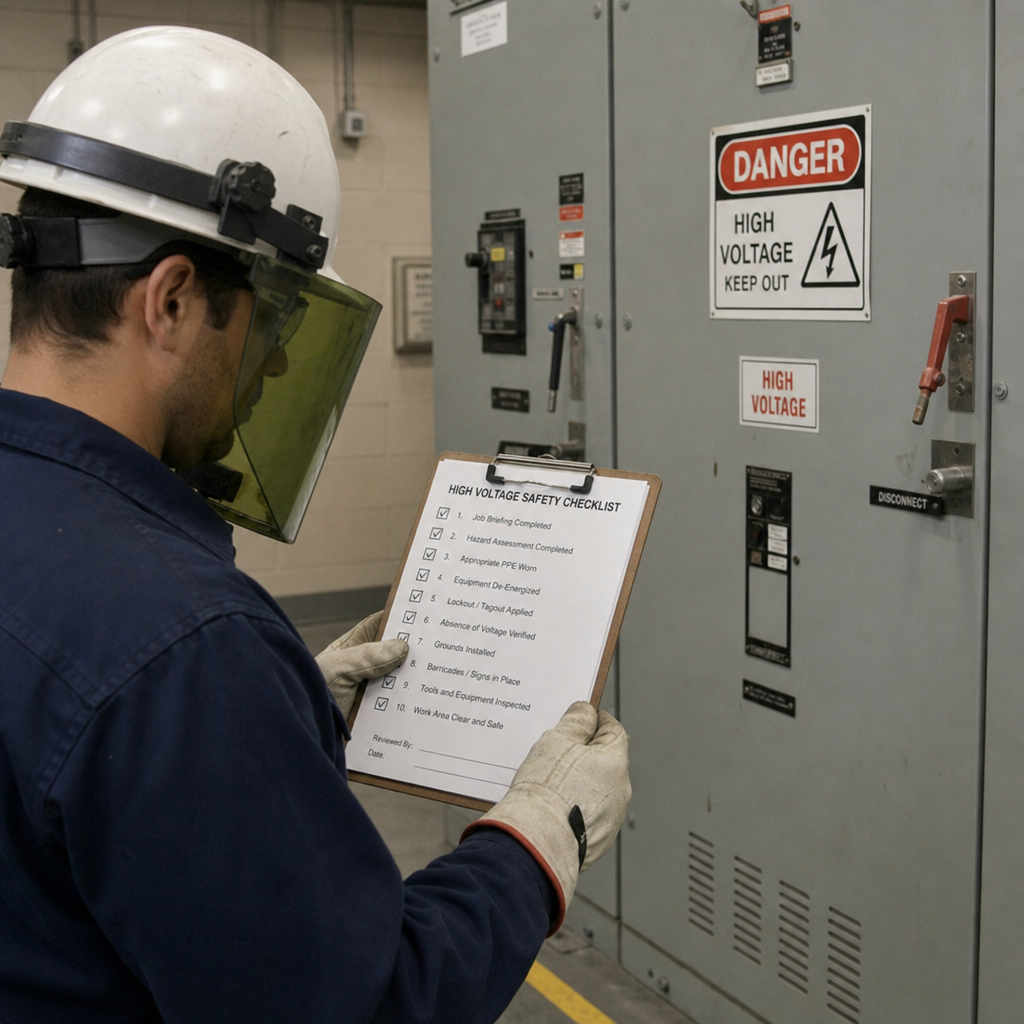
Understanding High Voltage Safety Protocols
High voltage work demands discipline, planning, and respect for stored energy. Whether you manage high voltage systems, specify high voltage equipment, or support teams that maintain high voltage cables, safety protocols help turn a serious hazard into a controlled work environment. This article explains the practical foundations of high voltage safety, from planning and isolation to testing, signage, insulation, and team communication.
What makes high voltage safety different?
High voltage safety is different because the hazard is not limited to direct contact. Arcing, flashover, stored charge, induced voltage, insulation failure, and equipment misidentification can all create dangerous conditions before anyone touches a conductor. A safe approach therefore depends on a complete system: trained people, documented procedures, verified isolation, suitable protective equipment, and clear control of the work area.
In everyday language, “high voltage” often means any electrical level capable of causing severe injury, equipment damage, or fire. In technical environments, the threshold may be defined by company policy, jurisdiction, equipment type, or industry standard. Because definitions vary, teams should never rely on assumptions. If a task involves high voltage power, high voltage transmission, a high voltage dc power supply, or energized test equipment, it should be treated as a planned, controlled activity.
The key point is simple: high voltage work is not just “electrical work with bigger numbers.” It involves more energy, greater separation requirements, stricter access control, and more serious consequences if a procedure is skipped.
The core principles behind safe high voltage work
Strong protocols begin before tools come out. The safest teams use repeatable habits that make hazards visible, reduce ambiguity, and prevent shortcuts during stressful or time-sensitive jobs.
A practical high voltage safety program usually includes:
- Planning before access: Define the scope, identify energy sources, review drawings, and confirm who is responsible for each step.
- De-energization whenever possible: Work should be performed on de-energized equipment unless there is a justified, approved reason not to.
- Isolation and lockout: Disconnect, lock, tag, and verify all sources that could energize the work area.
- Test before touch: Use properly rated instruments to confirm absence of voltage, then treat equipment cautiously because stored charge may remain.
- Discharge and grounding: Capacitors, long cable runs, and high voltage dc power supply circuits can retain energy after shutdown.
- Controlled boundaries: Keep unqualified people away from the work zone with barriers, labels, and supervision.
- Clear communication: Everyone involved should know the status of the equipment, the work sequence, and the emergency plan.
These principles apply across many high voltage applications, including laboratories, industrial plants, utilities, transportation systems, medical equipment support areas, and research facilities. The exact procedure may differ, but the discipline does not.

Planning turns risk into manageable work
Good planning is one of the most effective safety controls because it catches problems before people are exposed. A maintenance task can become risky if drawings are outdated, cables are mislabeled, stored energy is overlooked, or a nearby system can backfeed the circuit. Planning gives the team time to ask the uncomfortable questions while the situation is still calm.
For organizations coordinating high voltage project management Winnipeg work or similar regional infrastructure projects, planning also helps align contractors, facility owners, engineers, and safety personnel. The same principle applies in any location: high voltage project management should include technical review, site access control, permit requirements, environmental conditions, and emergency response coordination.
A pre-work briefing should cover:
- The exact equipment involved: Identify panels, cabinets, cables, transformers, test sets, and adjacent systems.
- The energy sources: Include primary feeds, secondary feeds, standby power, induced voltage, stored charge, and control circuits.
- The switching sequence: Confirm who operates each device and how status will be verified.
- The tools and instruments: Use meters, probes, leads, grounding devices, and personal protective equipment rated for the task.
- The limits of approach: Establish who may enter the area and what conditions must exist before entry.
- The emergency plan: Confirm communication methods, rescue responsibilities, and first-aid readiness.
Planning should be written clearly enough that another qualified person can understand the intent. If the plan depends on someone “just knowing” what to do, it is not yet a strong safety protocol.
Isolation, lockout, and verification are the safety backbone
Isolation is the process of separating equipment from every source of electrical energy. Lockout and tagging communicate that the equipment must not be operated. Verification proves that the isolation worked. All three are necessary because none of them is enough alone.
A switch may be open but mislabeled. A lock may be installed on the wrong disconnect. A tag may be ignored if it is unclear. A conductor may appear inactive while a capacitor remains charged. Verification closes the gap between what the team believes and what the equipment is actually doing.
For high voltage systems, verification should be performed with properly rated equipment and by qualified personnel. The instrument should be checked before and after use to confirm it is functioning. On high voltage dc power supply circuits, discharge time and stored energy require special attention because voltage may not disappear immediately when input power is removed.
The work area should not be released until the team has confirmed the equipment condition, installed required grounds where appropriate, and communicated the status to everyone involved. When work is complete, restoration should follow a controlled sequence so locks, grounds, tools, covers, and personnel are accounted for before energization.
Why are signs, labels, and boundaries so important?
Signs, labels, and boundaries are important because they prevent accidental access, reduce confusion, and remind people that invisible electrical energy may be present. A danger high voltage sign is not a substitute for isolation or training, but it is a vital layer of communication. It tells workers, visitors, and emergency responders that the area requires special awareness and controlled entry.
Good labeling is specific. It identifies the equipment, the hazard, the voltage class when appropriate, and the access restrictions. Generic warnings are better than silence, but they can lose impact if every cabinet says the same thing without useful context.
Boundaries should match the risk. A temporary work zone may need cones, barricade tape, insulated barriers, or a controlled entry point. A permanent installation may need locked enclosures, interlocks, warning lights, and posted procedures. In testing areas, boundaries are especially important because high voltage testing may involve temporary wiring, exposed terminals, unusual configurations, and changing conditions.
A simple rule helps: if someone unfamiliar with the task could walk into the area and misunderstand the hazard, the boundary and signage are not strong enough.
Equipment condition matters as much as procedure
Even a careful procedure can fail if the equipment is damaged, contaminated, underrated, or poorly maintained. High voltage equipment depends on spacing, insulation, grounding, mechanical integrity, and environmental control. Dust, moisture, sharp edges, cracked insulation, loose terminations, and aging components can all increase risk.
High voltage insulation deserves particular attention because it is often the barrier between normal operation and failure. Insulation can degrade through heat, vibration, electrical stress, chemical exposure, moisture, ultraviolet light, or mechanical abrasion. In high voltage cables, damage may be hidden under jackets, shields, or terminations, so visual inspection is only one part of the picture.
Routine checks may include:
- Inspecting cables, connectors, bushings, and enclosures for visible damage.
- Confirming covers, guards, doors, and interlocks are intact.
- Checking for moisture, tracking marks, carbonization, corrosion, or contamination.
- Verifying that grounding and bonding connections are secure.
- Removing unused conductive objects, tools, and debris from equipment areas.
- Reviewing maintenance history for recurring faults or unexplained trips.
The goal is not to create paperwork for its own sake. The goal is to notice weak signals before they become high-energy failures.Newest in the store


Testing requires extra control
High voltage testing can be one of the most hazardous activities because it often creates abnormal conditions on purpose. A test may energize equipment that is normally enclosed, apply voltage above operating levels, or connect temporary leads that do not have the same protection as permanent installations. That is why testing should be treated as a separate controlled operation, not a quick add-on to maintenance.
Before testing begins, the team should define the test objective, the expected voltage and current levels, the test duration, and the pass or stop criteria. Test leads should be routed to reduce trip hazards, accidental contact, and unintended coupling with nearby circuits. The area should be cleared of unnecessary personnel, and one person should be responsible for authorizing energization.
For devices such as a high voltage amplifier or a high voltage dc power supply, controls should be set to a safe starting condition before output is enabled. Output indicators should be visible, emergency shutoff should be accessible, and stored charge should be discharged after the test. If the test setup changes, the team should pause and review the new configuration rather than assuming the original controls still apply.
High voltage engineering teams often use detailed test procedures because small setup changes can have large effects. That discipline is worth adopting even for routine work.

Digital systems still need electrical isolation
Modern high voltage applications often include sensors, controllers, data acquisition systems, and networked equipment. These low-voltage digital connections can create unexpected paths if isolation is not considered. High voltage ethernet isolation, fiber links, isolated converters, and proper grounding strategies help protect people and sensitive electronics from fault energy, ground potential differences, and noise.
It is easy to focus on the large conductors and overlook communication cables. Yet a network cable connected between two pieces of equipment can bridge areas with different electrical references. In some systems, that can damage equipment or create a touch hazard during faults.
Practical controls include using isolation-rated communication hardware, separating control wiring from high voltage cables, following manufacturer installation guidance, and avoiding improvised adapters. When in doubt, the question should not be “Will the data connection work?” It should be “Will it remain safe under fault conditions?”
Common mistakes that weaken high voltage protocols
Many incidents do not begin with reckless behavior. They begin with small assumptions that stack together: a cabinet thought to be dead, a test lead left connected, a missing label, a rushed restart, or a worker who did not hear that conditions changed. Strong protocols are designed to catch those assumptions.
Watch for these common weak points:
- Treating experience as a substitute for verification: Skilled people still need meters, checklists, and peer review.
- Skipping the briefing for “simple” jobs: Familiar work can become hazardous when site conditions change.
- Using underrated tools or leads: Test equipment must match the voltage, environment, and task.
- Ignoring stored energy: Capacitors and long cable systems can remain dangerous after shutdown.
- Allowing unclear ownership: Every switching, testing, and restoration step needs a responsible person.
- Leaving temporary setups undocumented: Temporary wiring can become confusing quickly, especially across shifts.
- Relying on a single control: Safety works best when isolation, grounding, barriers, signage, and communication support each other.
The best teams make it easy to stop work. If something does not match the drawing, label, procedure, or expected reading, the safest action is to pause and resolve the discrepancy.
How should teams build a practical safety checklist?
Teams should build a high voltage safety checklist around the actual work sequence: plan, isolate, verify, perform, test, restore, and review. A useful checklist does not replace qualified judgment, but it helps people remember critical steps when the task is complex or time pressure is high. It should be short enough to use, specific enough to matter, and flexible enough to fit different high voltage systems.
A practical checklist can include:
- Before work: Scope confirmed, drawings reviewed, hazards identified, roles assigned, emergency plan understood.
- Before access: Sources isolated, locks and tags applied, absence of voltage verified, stored energy discharged, grounds installed where required.
- During work: Boundaries maintained, only authorized personnel present, tools controlled, conditions monitored, changes communicated.
- Before testing: Test plan approved, area cleared, warning signs posted, equipment settings confirmed, emergency stop available.
- Before restoration: Personnel clear, tools removed, covers secured, grounds removed in the correct sequence, status communicated.
- After completion: Equipment observed, documentation updated, lessons captured, temporary labels or barriers removed when safe.
This structure keeps the checklist connected to real actions instead of becoming a generic form. It also supports consistent training because new team members can see how safe work is supposed to unfold.
Separating electrical safety from unrelated “high voltage” searches
The phrase high voltage appears in many contexts online, and not all of them relate to electrical safety. Someone searching for a high voltage cleaner may be looking for a product name, a pressure washer, or an electrical cleaning method. Someone searching for a high voltage detox drink is likely looking for a consumer beverage or supplement, not high voltage engineering information.
For technical teams, this distinction matters because unclear language can create confusion in documentation, procurement, and training. If a document concerns high voltage power, high voltage transmission, high voltage insulation, or high voltage testing, it should use precise electrical terms. Clear wording helps readers understand whether the subject is a real electrical hazard, a branded product phrase, or an unrelated consumer search term.
SEO content can include these phrases naturally, but safety documentation should never blur the meaning. In a work environment, “high voltage” should always trigger careful thought, controlled access, and respect for the hazard.
Building a culture of high voltage safety
Procedures are essential, but culture determines whether people follow them when no one is watching. A strong safety culture encourages workers to ask questions, report damaged equipment, challenge unclear instructions, and pause when something feels wrong. It treats near misses as learning opportunities rather than reasons to hide information.
Leaders can support that culture by giving teams enough time to plan, providing proper tools, keeping drawings and labels current, and involving qualified personnel in procedure development. Engineers, technicians, project managers, and supervisors all see different risks. When their perspectives are combined, the protocol becomes more realistic and more likely to be used.
Training should also be practical. Instead of relying only on classroom definitions, teams benefit from walking through real equipment, reviewing previous issues, practicing communication, and understanding why each step exists. People are more likely to follow a rule when they understand the hazard it controls.
Final takeaway
High voltage work can be performed safely when it is planned, isolated, verified, communicated, and controlled. The essentials are straightforward: respect the energy, use qualified people, maintain high voltage equipment, label hazards clearly, test carefully, and never let routine create complacency.
Whether the task involves high voltage cables, a high voltage amplifier, high voltage ethernet isolation, or a complex high voltage transmission environment, the safest protocol is the one people can understand and consistently apply. Slow down, confirm the details, and make safety the first deliverable of every high voltage job.