


Difference Between DHT11 and DHT22: 7 Key Checks

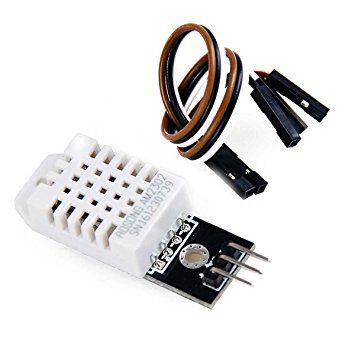
Last checked: 18 October 2026. Product prices and availability, where shown, are a snapshot of Epro listings checked on this date. Confirm the live listing before ordering.
The main difference between DHT11 and DHT22 is measurement capability: the traditional DHT22 covers a wider temperature and humidity range and offers better temperature accuracy, while the DHT11 is often chosen for low-cost introductory projects. Neither is a precision laboratory instrument simply because its output is digital.

Compare the exact sensor or breakout, not only the color of its plastic case. Manufacturers and module vendors can supply different revisions. Use the following figures as a comparison of the common versions described by Adafruit, then check the datasheet supplied with your purchase.
Difference between DHT11 and DHT22 at a glance
| Characteristic | Traditional DHT11 | DHT22 / AM2302 |
|---|---|---|
| Temperature range | 0–50°C | −40 to 80°C |
| Typical stated temperature accuracy | ±2°C | ±0.5°C |
| Humidity range | 20–80% RH | 0–100% RH |
| Stated humidity accuracy | About ±5% RH | About ±2–5% RH |
| Maximum sampling rate in this reference | Once per second | Once every two seconds |
Source: Adafruit’s DHT11, DHT22 and AM2302 overview. These are specification references, not measurements of Epro stock. Relative-humidity accuracy expressed in percentage points should not be confused with a percentage of the displayed number.
1. Match the range to the environment
A basic indoor temperature display may fall comfortably inside a DHT11’s range. A location that can fall below freezing needs a sensor rated for that temperature. The DHT22’s wider stated range does not make an exposed board waterproof, weatherproof or suitable for condensation.
2. Separate resolution from accuracy
A program can print several decimal places even when the sensor cannot measure to that precision. Accuracy describes how close a reading may be to the true value under specified conditions; resolution describes the output increments. Do not advertise a project’s accuracy based on the formatting in Serial Monitor.
3. Check how quickly you need fresh readings
The DHT22’s better range does not mean faster sampling. A two-second polling interval is a sensible initial choice for either device with common libraries. If you need fast response for a dynamic process, investigate sensor response time and another sensor family instead of polling a DHT faster than specified.
4. Inspect module wiring before swapping
Many bare four-pin DHT devices use a similar connection pattern, but three-pin breakout layouts vary. Check VCC, signal and ground labels. Also check any data-line pull-up resistor. A module powered at 5V can pull its data signal to 5V, which matters for ESP32 and Raspberry Pi inputs.
Newest in the store


5. Change the library’s sensor type
With a compatible DHT library, replacing a DHT11 with a DHT22 normally requires selecting the correct sensor type in code. Physical wiring alone does not tell the library how to decode a different device. Start from DHT11 Arduino wiring and code guide, then change the model definition and verify its recommended interval.
6. Compare the actual package cost
At the time of checking, example Epro listings were DHT11 — PKR 220, DHT22 module — PKR 650 and wired AM2302 sensor — PKR 930. These are different packages, not controlled like-for-like quotations. Confirm the current price, included cable or board, and pin arrangement before ordering.
A wired sensor can be mechanically convenient without automatically being electrically better for your project. Longer wiring can introduce signal and power issues. Establish reliable operation on a short connection before extending it.
7. Consider reliability and calibration needs
For a classroom demonstration, a low-cost sensor can be sufficient. For equipment control, valuable stored goods or compliance records, assess calibration, long-term drift, environmental protection and failure detection. A more capable sensor family may be the better choice than either DHT option.
Frequently asked questions
Which is better for an Arduino beginner?
Both can work with common libraries. Choose the DHT11 for a basic cost-sensitive demonstration, or the DHT22 when its broader range and stated accuracy are useful.
Can I use a DHT22 as a medical thermometer?
No. A hobby humidity sensor is not a medical thermometer and should not be presented as one.
Does a 100% humidity range mean waterproof?
No. Measurement range is different from an enclosure’s ingress-protection rating and tolerance of liquid water.