


Reed Switch: 7 Checks for Magnets, Modules and Door Projects

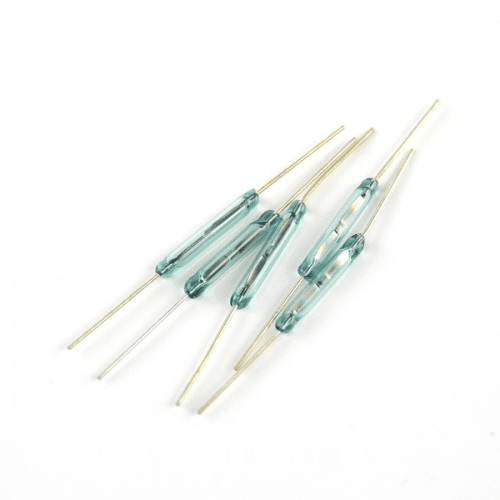
A reed switch changes contact state in a magnetic field. It is useful for simple position and magnet-presence projects, but a bare glass contact, a three-pin sensor board and an enclosed door contact are not interchangeable packages.
Choose the mechanical arrangement first, then the electrical interface. This guide focuses on low-voltage sensing and explains what to verify before ordering. It does not claim a measured operating distance or certified security performance.

Reed switch prices and package choices
| Listed item | Price (PKR) | Project role |
|---|---|---|
| Magnetic Reed Switch 14mm Glass Tube in Pakistan | 60 | Bare 14 mm glass contact; verify its contact behaviour |
| KY-021 Mini Reed Switch Module | 99 | KY-021 three-pin module |
| 2 wire NO NC Magnetic Reed Sensor Signal Switch for Door Access Control in Pakistan | 240 | Enclosed magnetic door-contact listing with magnet |
Price snapshot: Epro listings checked on 18 October 2026. Confirm the current price, availability, delivery charges and package quantity on the linked page before ordering. These are dated listing prices, not a quotation or an independent performance test.
The bare glass switch suits careful bench experiments. The KY-021 module adds a PCB interface. The enclosed magnetic contact is mechanically different and may be easier to mount on a demonstration door or lid.
1. Confirm normally open or normally closed behaviour
Normally open and normally closed describe a contact’s state under its specified normal condition, usually with the operating magnet absent for a simple reed contact. Product titles sometimes combine both terms, so read the detailed description and verify the actual supplied item.
For an unpowered continuity check, observe the contact with the magnet removed and then brought near. The linked door-contact description specifies open without the magnet and closed with it nearby. Do not assume that behaviour applies to every magnetic switch in the catalog.
2. Separate the contact from a powered module
A bare two-lead reed contact does not need a VCC supply pin. In a simple Arduino input circuit it can connect between the input and ground while a pull-up defines the open state. A powered three-pin module uses its own labelled supply, ground and signal terminals.
The KY-021 listing describes a resistor-equipped module for 3.3–5 V use. Follow the supplied board’s labels and confirm its output behaviour. Applying bare-switch two-wire instructions to a three-pin module can leave the interface wrong or short a supply.
3. Choose the magnet and mounting together
Operating distance depends on magnet strength, orientation, the contact’s sensitivity and the surrounding materials. A gap measured with one magnet and approach direction is not a universal detection radius.
Test the intended positions before drilling holes or fixing an enclosure permanently. Check both approach and withdrawal, as the release point may differ from the operating point. Nearby steel, a shifted magnet or a loose lid can change the result.Newest in the store




4. Protect a glass switch from mechanical stress
Support the leads when forming them rather than transferring bending force into the glass seal. Avoid twisting the body or clamping it tightly. The SparkFun reed-switch hookup guide is a useful reference for a basic contact-and-pull-up demonstration.
For a mounted project, an enclosed part may reduce accidental handling of the fragile glass. That does not establish an environmental sealing or impact rating. Check the manufacturer’s actual rating if moisture, vibration or outdoor exposure matters.
5. Use contacts as signals, not general power switches
A stated voltage or current rating is not permission to drive any load up to both headline numbers simultaneously. Switching power, load type and transient effects matter. A hobby contact should not directly control household mains or an inductive load in this beginner project.
Use a low-current controller input for the first test. Driving a motor, solenoid or relay coil needs an appropriate interface and protection arrangement, not merely a contact inserted into an arbitrary load circuit.
6. Account for contact bounce
A single physical movement can produce several rapid electrical transitions. If software counts every raw transition, it may report many openings from one movement. A debounce period can make a slow lid demonstration easier to interpret.
Debouncing also limits response to rapid repeated events. A simple 25 ms stable-state filter is not a validated high-speed wheel counter. Match the sensing method and processing to the application’s timing requirements instead of treating one starter sketch as universal.
7. Describe the result honestly
A magnetic contact detects the field arrangement, not whether a door is securely locked. An extra magnet can affect it, and a broken wire can resemble an open contact in a simple unsupervised circuit. Do not describe that circuit as a certified alarm.
For a slow educational input, follow the reed switch Arduino wiring and debounce example. Verify the unpowered contact state first, use the correct package wiring and test the intended mounting repeatedly before building the rest of the project around it.