


Buzzer Price in Pakistan: 7 Active and Passive Checks

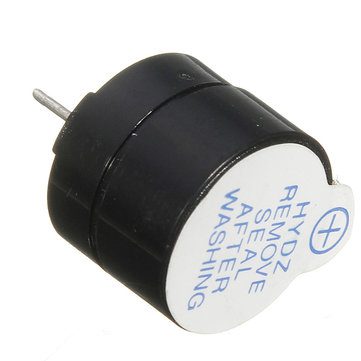
A buzzer price in Pakistan comparison should distinguish the sounder type before comparing cost. An active buzzer can produce its own tone from an appropriate DC supply, while a passive sounder needs a changing drive signal to create a sustained tone.
Those parts can look similar but behave differently in a project. The right choice depends on supply voltage, current, the desired sound and whether the board includes a driver rather than just a convenient connector.

Buzzer price in Pakistan and package choices
| Listed item | Price (PKR) | Project role |
|---|---|---|
| Super Loud 5V Active Alarm Buzzer Beeper | 35 | Small 5 V active buzzer listing |
| KY006 Small Miniature Passive Buzzer Module in Pakistan | 80 | KY-006 passive sounder on a small PCB |
| Piezo Piezoelectric Transducer Sensor: Piezo Disk Buzzer in Pakistan | 20 | Bare piezoelectric transducer disc |
Price snapshot: Epro listings checked on 18 October 2026. Confirm the current price, availability, delivery charges and package quantity on the linked page before ordering. These are dated listing prices, not a quotation or an independent performance test.
The active buzzer and passive module are not equivalent audio interfaces. A piezo disc is a different physical transducer package again. Check the complete specification and connection method instead of selecting solely by the lowest listed price.
1. Decide whether pitch control is needed
An active buzzer contains an oscillator, so its basic use is on/off sound at the device’s own tone. A passive sounder needs an alternating signal; changing that drive frequency can change the resulting pitch within the part’s useful response.
The Freenove buzzer tutorial explains the active/passive distinction. A melody sketch intended for a passive sounder should not be expected to produce the same notes from an active buzzer with its own oscillator.
2. Match the rated voltage
The small active Epro listing specifies a 5 V rated device with a stated operating range. Choose the normal rated arrangement rather than treating the edge of that range as a brightness-style volume setting.
A larger alarm advertised for 12 V or a broader supply range is not automatically interchangeable with a 5 V sounder. Check the actual part label and data before connecting it to a low-voltage controller circuit. Never apply a higher alarm supply directly to a GPIO pin.
3. Check current before direct GPIO drive
The active listing gives a maximum rated current of 30 mA. That is enough to require a careful controller-output review rather than assuming a bare sounder should be powered directly by an Uno or ESP32 signal pin.
Newest in the store


A transistor or suitable driver separates the logic signal from the sounder’s supply current. The controller still needs appropriate current-limiting and a common reference for a non-isolated driver. A sounder connected to a small PCB is not necessarily a buffered module.
4. Read the module’s actual pin functions
The KY-006 listing describes ground, an unused centre pin and a signal connection. Do not assume that three header positions always mean separate VCC, GND and a transistor-isolated control input. Follow the actual circuit and current requirements.
Likewise, the orientation of a two-pin sounder or a transistor’s leads should be checked from markings and documentation. A generic photograph does not establish the pin order of every package sold under a similar name.
5. Treat loudness claims as conditional
Sound pressure depends on supply, drive frequency, measurement distance, mounting and the sounder’s construction. A catalog decibel figure under stated conditions is not a guarantee of perceived loudness in every enclosure or room.
Use short tests with the sounder away from ears. A higher quoted number is not always desirable for a desk project. For alarms involving safety or accessibility, use an appropriately specified and validated system rather than assuming a hobby buzzer meets a required standard.
6. Budget for the complete circuit
Include the driver, resistors, suitable supply and connectors when comparing project cost. An electromagnetic load can require appropriate transient suppression; a piezo sounder has different electrical behaviour. Identify the actual load before copying a schematic.
For an active on/off indicator, a simple transistor switch may be sufficient when correctly designed. For music or a richer sound, a suitable passive transducer and drive method may be more appropriate. Neither is automatically a substitute for an audio speaker system.
7. Start with brief, harmless beeps
Follow the buzzer code in Arduino guide for a documented 5 V active sounder with an external switching transistor. It demonstrates on/off timing, not calibrated loudness, melody generation or a certified warning device. Confirm the circuit first, then decide whether the project’s real requirements call for a different sounder.