


Electric Motor Basics: Types, Control & Efficiency

What is a motor
A simple motor definition is this: a motor is a device that converts energy into mechanical motion. In the case of an electric motor, that energy comes from electricity, and the motion usually appears as rotation through a shaft. That rotation can spin a fan, drive a pump, move a conveyor, turn a saw blade, or power a small ride-on toy.
The concept is straightforward, but the engineering can be highly refined. Motor design must balance speed, torque, heat, noise, durability, size, cost, and motor efficiency. A motor that works well in a cordless tool may not be suitable for an industrial compressor, even if both rely on the same broad principle.
The core parts that make an electric motor work
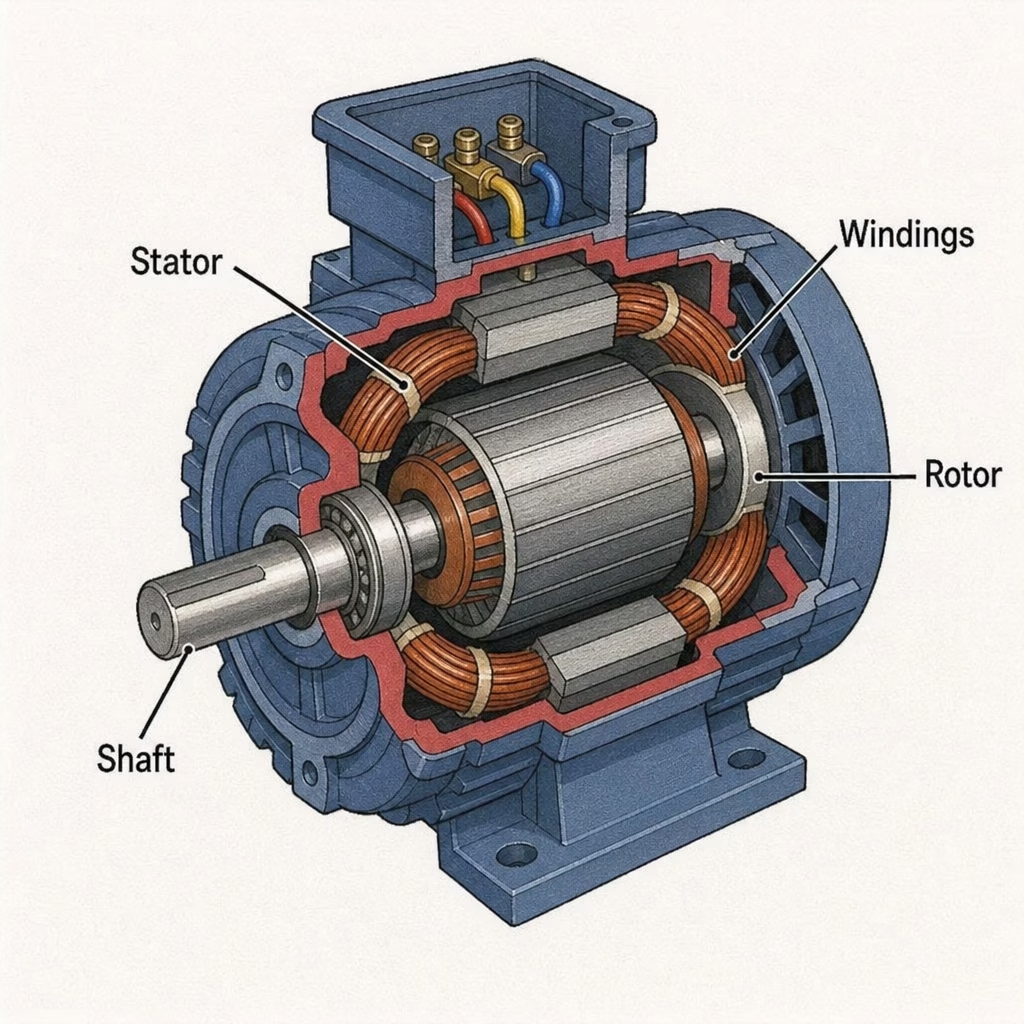
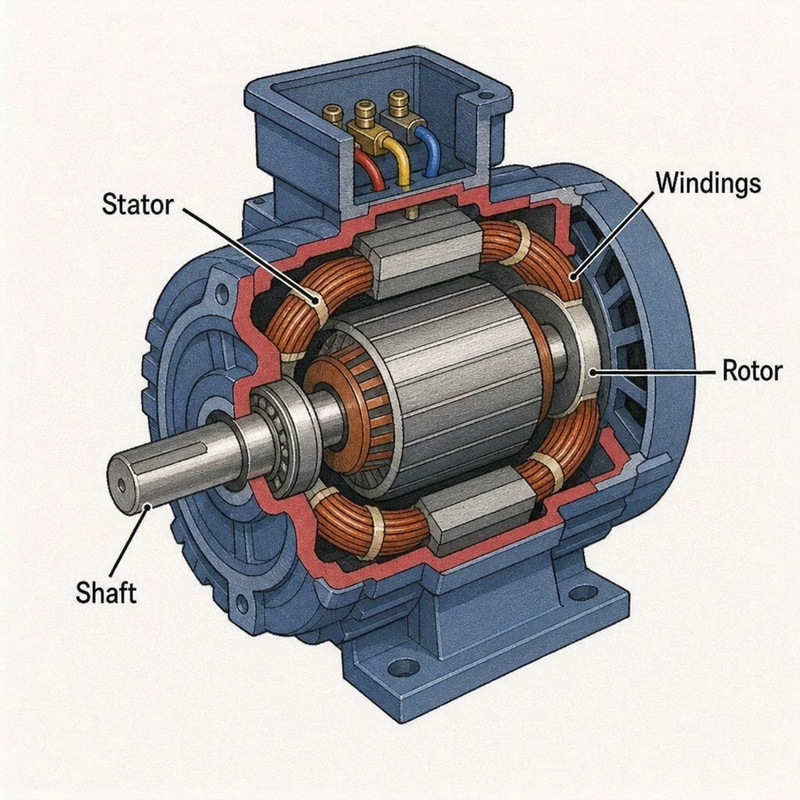
Most electric motors include a few major components. The exact layout changes by motor types, but the function of each part remains similar. When these components work together, electrical input becomes controlled mechanical output.
Key parts include:
- Stator: The stationary section that creates or supports a magnetic field.
- Rotor: The rotating section that turns inside the motor.
- Shaft: The output piece connected to the rotor, used to transfer motion.
- Windings or coils: Conductive wire that carries current and helps generate magnetism.
- Bearings: Support the shaft and allow smooth rotation.
- Housing: Protects internal parts and helps with alignment, cooling, and safety.
- Commutator or electronic controller: Used in certain designs to manage current flow and rotation.
In basic terms, the motor uses magnetic forces to create movement. When electric current flows through coils, it produces a magnetic field. That field interacts with another magnetic field, creating force on the rotor. With the right motor control method, the rotor continues turning in a predictable direction.
How does motor control affect performance?
Motor control affects performance by regulating how a motor starts, stops, changes speed, reverses direction, and responds to load. Good control reduces wasted energy, protects components, improves safety, and helps the motor deliver the right amount of torque at the right time. Poor control can cause overheating, vibration, inefficient operation, or premature wear.
For simple devices, motor control may be as basic as an on-off switch. A household fan, for example, may use fixed speed settings. More advanced systems use variable speed drives, sensors, electronic controllers, or software-based automation to fine-tune output.
This matters because many motor applications do not need full power all the time. A pump may only need to run at partial speed during low-demand periods. A blower motor may benefit from gradual ramp-up instead of sudden startup. Industrial equipment may need precise acceleration to protect belts, gears, or product flow.
Strong motor control can improve:
- Startup behavior by reducing electrical and mechanical shock.
- Speed accuracy by matching output to the task.
- Energy use by avoiding unnecessary full-speed operation.
- Equipment life by reducing heat, stress, and vibration.
- Process consistency by keeping motion predictable.
Common motor types and where they are used
There are many motor types, but most users only need a practical understanding of the major categories. Each type has strengths, trade-offs, and typical uses. The right choice depends on the job rather than on one design being universally best.
AC motors
AC motors run on alternating current and are widely used in homes, commercial buildings, and industry. They are common in fans, pumps, compressors, conveyors, and HVAC equipment. Many AC motors are valued for durability, simplicity, and suitability for continuous operation.
Induction motors are a familiar AC design. They can be rugged and dependable, especially in steady-speed applications. When paired with a variable frequency drive, they can also deliver more flexible speed control.
DC motors
DC motors run on direct current and are often used where variable speed and compact design are important. They appear in battery-powered tools, small appliances, robotics, vehicles, and toys. A small electric motor saw or hobby machine may use DC motor technology because it can provide responsive speed control in a portable format.
Brushed DC motors use physical brushes and a commutator to switch current. Brushless DC motors use electronic control instead, often improving efficiency and reducing brush-related wear. That is why product descriptions sometimes highlight brushless designs, as in a search phrase like “freddo toys 24v mercedes maybach g650 brushless motor ride-on.” In that context, the brushless motor is part of the product’s drive system rather than a separate industrial component.
Stepper and servo motors
Stepper motors move in defined increments, making them useful for positioning tasks. They are common in 3D printers, small CNC systems, camera equipment, and automation devices. They are not always the most efficient choice for every job, but they are helpful when controlled movement matters.
Servo motors combine a motor with feedback control. They are designed for accurate position, speed, or torque control. Servo systems are common in robotics, manufacturing equipment, and precision machinery.
Motor applications in everyday life and industry
Motor applications are everywhere, even when the motor is hidden. In a home, motors may run ceiling fans, refrigerators, washing machines, garage doors, vacuum cleaners, and power tools. In a vehicle, motors may support cooling, window movement, seat adjustment, wipers, pumps, and electric drive systems.
Commercial and industrial settings rely on motors even more heavily. Motors move air through ventilation systems, drive production lines, circulate water, power elevators, and operate packaging machines. A single facility may use hundreds of motors in different sizes and duty cycles.
Understanding the application helps determine the correct motor design. A blower motor needs to move air reliably, often for long periods. A saw motor must handle cutting load, heat, and sudden changes in resistance. A conveyor motor may need steady torque and dependable uptime. The operating environment also matters: dust, moisture, vibration, and temperature all affect motor performance.

Why does motor efficiency matter?
Motor efficiency matters because inefficient motors waste electricity as heat, raise operating costs, and can shorten equipment life. Even small efficiency differences become meaningful when a motor runs for many hours or supports a critical process. Better efficiency can also reduce cooling demands and improve overall system reliability.
Efficiency is not only about the motor itself. The full system matters. A highly efficient electric motor can still waste energy if it is oversized, poorly controlled, misaligned, or connected to an inefficient load. For example, a fan system with restricted airflow may force the motor to work harder than necessary.Newest in the store


To support motor efficiency, consider these practical steps:
- Match the motor size to the actual load instead of oversizing by habit.
- Use appropriate motor control for variable-demand applications.
- Keep ventilation openings clean to reduce overheating.
- Align shafts, belts, and couplings correctly.
- Replace worn bearings before they create drag or vibration.
- Review the entire driven system, not just the motor nameplate.
The goal is not always to buy the most advanced motor technology available. The goal is to choose and maintain a system that performs the required work with minimal waste and avoidable stress.
Practical motor maintenance basics
Motor maintenance is about preserving reliable operation before failure occurs. Many problems begin small: a bearing becomes noisy, dust blocks cooling, a belt slips, or electrical connections loosen. If ignored, those minor issues can grow into downtime, safety concerns, or expensive motor repair.
A basic maintenance routine should include visual, mechanical, and electrical checks. Listen for unusual sounds, feel for abnormal vibration, and look for signs of heat, corrosion, dust buildup, or damaged insulation. Keep records of inspections so changes are easier to spot over time.
Useful maintenance habits include:
- Keep the motor clean. Dirt can trap heat and interfere with cooling.
- Check mounting hardware. Loose bolts can cause vibration and misalignment.
- Inspect belts and couplings. Poor tension or alignment wastes energy and damages parts.
- Monitor temperature. Excess heat is a common warning sign.
- Lubricate correctly. Too little or too much lubrication can both create problems.
- Protect against moisture. Water intrusion can damage windings and bearings.
- Verify electrical connections. Loose or corroded connections can reduce performance and increase risk.
Not every motor should be opened or serviced by a general user. If the equipment is large, safety-critical, under warranty, or connected to high voltage, it is better to involve a qualified technician.
When motor repair makes sense
Motor repair makes sense when the motor’s condition, replacement cost, downtime impact, and application requirements justify restoring it. Repair may involve bearing replacement, rewinding, cleaning, balancing, insulation work, or correcting mechanical damage. In other cases, replacement is more practical, especially for small low-cost motors or outdated units.
Warning signs that a motor needs attention include repeated tripping, burning smells, excessive heat, reduced speed, unusual noise, vibration, weak starting, or visible damage. A blower motor that starts slowly or squeals may have bearing or capacitor issues. A tool motor that loses power under load may have brush, winding, control, or thermal problems.
Before choosing repair or replacement, ask:
- Is the motor correctly sized for the load?
- Did another system problem cause the failure?
- Are parts available?
- Would a newer design improve efficiency or reliability?
- How costly is downtime compared with repair time?
A good repair decision looks beyond the failed component. If poor alignment, blocked airflow, or incorrect control caused the issue, simply repairing the motor may only delay the next failure.
Reading motor-related terms carefully
Motor terminology can be confusing because the same word appears in technical, automotive, consumer, and administrative contexts. A search for “motor” might lead to electric machines, vehicles, companies, government forms, or product listings. That is why context matters.
For example, “address change department of motor vehicles” is about updating records with a government agency, not electric motor technology. Phrases such as “associated motor holdings,” “combined motor holdings,” or “combined motor services” may refer to organizations or business names, depending on the context. They should not be confused with motor design, motor maintenance, or technical service unless the source clearly says so.
When researching parts or services, include the application, voltage, horsepower or wattage, frame size, brand, and equipment model if available. A specific search such as “blower motor for furnace model” is much more useful than a broad search for “motor.” Precision helps avoid mismatched components and unnecessary delays.
The future of motor technology
Motor technology continues to improve because industries want better efficiency, smarter control, and lower maintenance demands. Brushless designs, improved materials, advanced sensors, and connected monitoring systems are changing how motors are selected and managed. Instead of waiting for failure, some systems can track vibration, temperature, and operating patterns to support preventive maintenance.
Still, the fundamentals remain important. A smart controller cannot fully compensate for poor sizing, weak installation, or neglected maintenance. The best results come from combining sound motor design, appropriate control, and consistent care.
For homeowners, that may mean recognizing when a noisy fan motor needs attention. For technicians, it may mean diagnosing the system around the motor, not just the motor itself. For business owners, it may mean treating motors as productivity assets rather than invisible background equipment.
Key takeaways
Electric motors are essential because they convert electrical energy into useful motion across countless tools, machines, and systems. Understanding the difference between motor types, control methods, applications, and maintenance needs makes it easier to protect performance and make smarter repair or replacement decisions.
If you remember only a few points, keep these in mind:
- A motor turns energy into motion; an electric motor uses electricity to do it.
- Motor performance depends on design, load, control, installation, and maintenance.
- Motor efficiency is a system issue, not just a nameplate rating.
- Routine motor maintenance can prevent many avoidable failures.
- Motor repair should address the root cause, not only the visible symptom.
- Search terms involving “motor” can refer to technical parts, vehicles, companies, or agencies, so context is essential.
Whether you are looking at a small tool, a blower motor, or a critical industrial drive, the basics give you a better starting point. The more clearly you understand the job the motor must do, the easier it becomes to choose, use, and maintain it well.