


How to Calculate Power Rating Accurately

How to Calculate Power Rating Accurately
Calculating a power rating accurately helps you choose equipment safely, compare appliances fairly, and avoid overloading circuits or under-sizing energy systems. Whether you are checking a toaster power rating, reviewing a solar power rating, or comparing an under sink water heater power rating Ireland homeowners may encounter, the same core idea applies: power tells you how quickly electrical energy is used or supplied.
The good news is that most everyday power rating calculation tasks are simple once you know which numbers to look for. This guide explains the formulas, the labels, the common mistakes, and the practical checks that make understanding power ratings much easier.
What does power rating mean?
A power rating is the amount of electrical power a device is designed to consume, carry, or produce under stated operating conditions. It is usually shown in watts, abbreviated as W, or kilowatts, abbreviated as kW, where 1 kW equals 1,000 W.
For appliances, the rating helps estimate energy use and circuit demand. For power supplies, generators, solar panels, heaters, motors, and similar equipment, it also tells you whether the product can handle the load you expect from it. A rating is not always the exact amount of power used every second; it is often a maximum, nominal, or tested value based on specific conditions.
That distinction matters. A kettle, toaster, or heater may draw close to its rated wattage when actively heating. A fridge, computer, pump, or washing machine may vary widely during startup, standby, and normal operation. Accurate calculation starts with knowing which type of device you are dealing with.

The basic power rating formula
The standard power rating calculation depends on what information you already have. In direct current circuits, the formula is straightforward:
Power = Voltage × Current
In simple terms, watts equal volts multiplied by amps. If a device runs at 230 volts and draws 5 amps, the estimated power is 1,150 watts.
For many household calculations, this formula is enough. However, alternating current systems can involve power factor, especially with motors, compressors, pumps, and some electronic equipment. In those cases, real power may be lower than apparent power, and the calculation may need an added power factor value.
Useful formulas include:
- Watts: volts × amps
- Kilowatts: watts ÷ 1,000
- Amps: watts ÷ volts
- Single-phase AC real power: volts × amps × power factor
- Energy use in kWh: kilowatts × hours of use
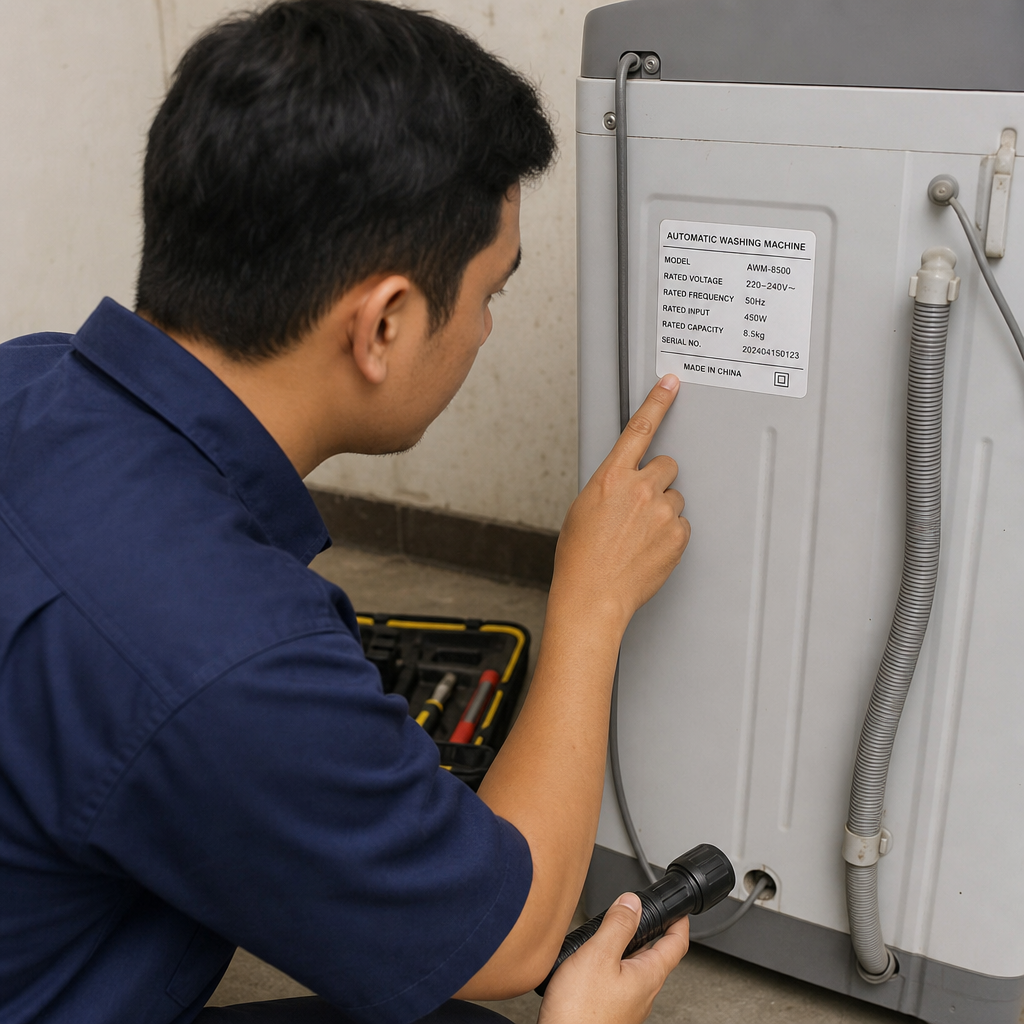
For most consumers, the label or manual will give the safest working figure. Use calculation to verify, compare, or estimate where the rating is missing or unclear.
How do you calculate power rating accurately?
To calculate power rating accurately, identify the device voltage, current draw, and operating conditions, then apply the correct formula for the circuit type. For a simple appliance, multiply volts by amps; for equipment with motors or reactive loads, include the power factor if it is provided.
A practical process looks like this:
- Find the voltage. Check the appliance label, plug, user manual, inverter output, or system specification.
- Find the current. Look for amps, often marked as A. If only watts are shown, you may not need to calculate power at all.
- Check whether the rating is input or output. Chargers, inverters, heaters, and power supplies may list both.
- Apply the correct formula. Use watts = volts × amps for basic DC or simple resistive loads.
- Adjust for power factor when needed. If the product lists PF, multiply by that number for real power.
- Add safety margin. Do not design systems to run constantly at their absolute limit.
- Compare with circuit capacity. Make sure the load is suitable for the socket, cable, breaker, inverter, or generator.
Accuracy is less about doing complex maths and more about using the right input values. A calculation based on the wrong voltage, startup current, or output rating can look precise while still being misleading.
Appliance examples make the numbers clearer
Everyday appliances are the easiest place to practise understanding power ratings because their labels are usually accessible. Take a toaster power rating as an example. If a toaster is rated at 900 W, it uses about 0.9 kW while heating. If it runs for 10 minutes, the energy use is roughly 0.15 kWh because 0.9 kW multiplied by one-sixth of an hour equals 0.15 kWh.
A small water heater is another useful example because heating water requires significant power. When comparing an under sink water heater power rating Ireland buyers may see on product labels, pay attention to both the wattage and the electrical installation requirements. A compact unit may still need a dedicated circuit depending on its rating, usage pattern, and local electrical rules.
Solar equipment works from the opposite direction. A solar power rating usually describes output under standard test conditions, not guaranteed production at every moment. A panel rated at 400 W may produce less during cloudy weather, poor orientation, shading, high temperatures, or early and late daylight hours.
Common examples to review include:
- Toasters and kettles: usually close to rated power when heating.
- Water heaters: high power demand, often requiring careful circuit checks.
- Fridges and freezers: variable use, with startup surges and cycling.
- Power tools: may draw more under load than at idle.
- Solar panels: rated output depends strongly on sunlight and installation conditions.
- Inverters and generators: must be sized for continuous load and startup surge.
These examples show why one number rarely tells the full story. The rating is the starting point, not the whole electrical design.
Input rating, output rating, and efficiency
A frequent source of confusion is the difference between input and output power. Input power is what a device takes from the electrical supply. Output power is what it delivers as useful work, heat, light, charging capacity, or mechanical movement.
No device is perfectly efficient. Some energy is lost as heat, sound, friction, or electronic conversion loss. That means output power is often lower than input power, especially in chargers, motors, inverters, and power supplies.
For example, if a power supply delivers 100 W to a device but is not perfectly efficient, it may draw more than 100 W from the wall. This is why using output power alone can understate the actual load on a circuit or battery system.Newest in the store


When checking a label, look for wording such as:
- Input: what the device draws from the supply.
- Output: what the device provides to another device or load.
- Rated power: the standard operating power under defined conditions.
- Maximum power: the upper limit, often not intended for continuous use.
- Continuous rating: what equipment can sustain over time.
- Peak or surge rating: short-term capacity, often important for motors.
For safe planning, continuous and input ratings are usually more useful than promotional peak figures.
Why are power ratings sometimes different in real use?
Power ratings differ in real use because appliances do not always operate at full load, and environmental conditions can affect performance. Labels are based on defined tests, while homes, workshops, vehicles, and solar installations introduce variables that change actual consumption or output.
A heater is fairly predictable because its job is to convert electricity into heat. A fridge is less predictable because it cycles on and off. A solar panel depends on sunlight. A motor depends on load, speed, and startup demand.
The most common reasons for variation include:
- Duty cycle: the device switches on and off rather than running continuously.
- Startup surge: motors and compressors briefly draw extra current.
- Temperature: heat can reduce efficiency or output in some equipment.
- Load level: tools, pumps, and motors use more power when working harder.
- Voltage variation: supply voltage affects current and performance.
- Installation quality: cable length, connection quality, ventilation, and shading all matter.
This is also why two products with similar wattage can behave differently. Understanding power ratings means looking at how the device works, not just copying the largest number on the label.
A simple checklist before choosing equipment
Before buying or installing electrical equipment, use a quick checklist to make the rating meaningful. This is especially helpful when comparing heaters, kitchen appliances, backup power systems, and solar components.
Check the following:
- The rated wattage: confirm whether it is input, output, peak, or continuous.
- The supply voltage: make sure it matches your electrical system.
- The current draw: calculate amps if only watts are listed.
- The running time: estimate energy use in kWh, not just power in W.
- The circuit limit: compare the load with the breaker, socket, cable, and plug rating.
- The startup requirement: allow for surge if motors, pumps, or compressors are involved.
- The environment: consider ventilation, temperature, moisture, or outdoor exposure.
- The margin: avoid sizing systems with no spare capacity.
If you are unsure, treat the rating as a reason to ask a qualified electrician or installer, not as a shortcut around professional advice. This is particularly important for fixed wiring, water heating, solar systems, and high-load appliances.
Ratings beyond appliances and equipment
The phrase power rating can appear in other contexts too. For example, market edge power rating may be used in finance or market analysis to describe a scoring system rather than an electrical measurement. In that situation, the meaning depends on the provider’s methodology, not volts and amps.
Local service searches can also use rating language in a completely different way. Someone searching for all power solutions Angie s List Deerfield Beach rating or all power solutions Angi Angie s List Deerfield Beach rating is likely looking for customer reviews of a business, not an electrical power calculation. Those ratings should be assessed by reading current review details, service scope, and customer feedback rather than applying an electrical formula.
This matters for SEO and for readers because the same words can carry different intent. If the context is appliances, solar, circuits, or heaters, power rating usually means watts or kilowatts. If the context is a marketplace, directory, review platform, or investment tool, rating may mean reputation, scoring, or performance classification.
Mistakes that lead to poor calculations
The most common calculation mistakes are simple, but they can cause practical problems. One is confusing watts and watt-hours. Watts measure the rate of power use; watt-hours measure energy consumed over time.
Another mistake is ignoring voltage. A 1,200 W appliance draws different current depending on the voltage supply. Current matters because cables, fuses, breakers, plugs, and inverters are limited by amps as well as watts.
Also watch for these errors:
- Using peak rating as continuous capacity. Peak numbers may apply only for a short burst.
- Ignoring power factor. This can distort AC calculations for some equipment.
- Forgetting surge current. Motors may need more power to start than to run.
- Assuming solar output is constant. Solar ratings are test-condition figures, not everyday guarantees.
- Mixing input and output figures. This can underestimate real electrical demand.
- Skipping the manual. Labels are useful, but manuals often explain limits and installation requirements.
Avoiding these mistakes makes your calculations more realistic and your decisions safer.
Turning a rating into an energy cost estimate
Once you know the power rating, you can estimate energy use. Convert watts to kilowatts, multiply by hours of use, and then multiply by your electricity tariff if you want an approximate cost.
For example, a 1,000 W appliance is 1 kW. If it runs for two hours, it uses about 2 kWh. If it only cycles on for part of that time, actual use may be lower.
This approach is helpful for comparing appliances that run for different lengths of time. A high-power toaster may use little total energy because it runs briefly, while a lower-power appliance that runs all day may consume more overall. Power tells you intensity; energy tells you total use.
Final takeaway
Accurate power rating calculation starts with the right label information, the right formula, and a clear understanding of how the device operates in real conditions. Use watts, volts, amps, power factor, runtime, and safety margin together rather than relying on one number in isolation.
Whether you are checking a toaster power rating, planning for a water heater, reviewing a solar power rating, or simply improving your understanding power ratings, the goal is the same: choose equipment that fits the job, the circuit, and the way it will actually be used. When installation safety is involved, calculations are useful preparation, but professional guidance is the safest next step.