


Soldering Iron Price in Pakistan: 7 Buying Checks

Last checked: 18 October 2026. Product prices and availability, where shown, are a snapshot of Epro listings checked on this date. Confirm the live listing before ordering.
The soldering iron price in Pakistan depends on more than wattage. A basic iron, a temperature-adjustable pen and a controlled soldering station offer different working experiences. Choose the tool for the joints you need to make, then compare the complete setup cost.

A cheaper iron can be adequate for occasional wire work, while delicate circuit boards benefit from reliable temperature control and available replacement tips. Do not assume that an advertised power number proves temperature stability or suitability for phone repair.
Soldering iron price in Pakistan: checked examples
These are snapshots of specific Epro listings, not a nationwide average or an independently tested ranking.
- 12V 8W mini soldering iron — PKR 1,090
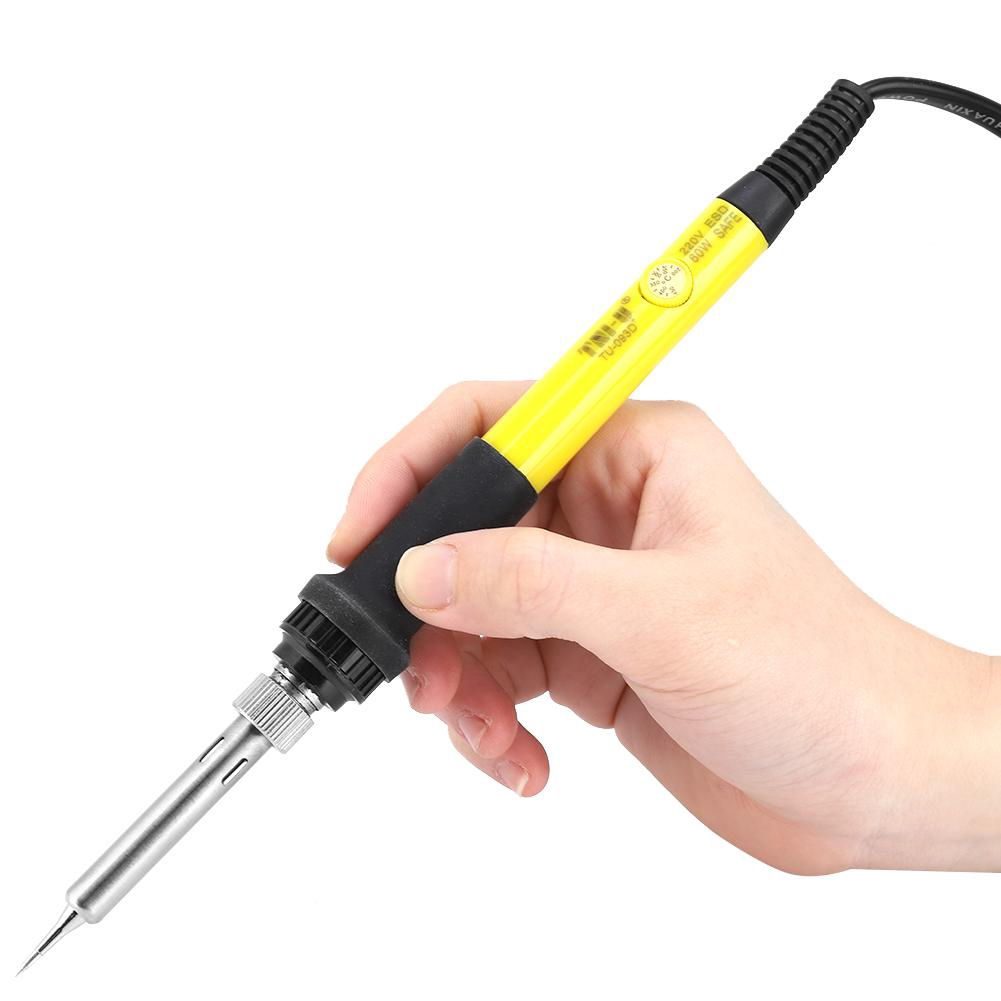
- variable 60W TNI-U iron — PKR 1,350
- 15W rechargeable USB-C soldering iron set — PKR 1,840
- KADA 936D+ digital soldering station listing — PKR 4,400
- KADA combined soldering and hot-air station listing — PKR 11,500
The first example requires an appropriate low-voltage supply. A rechargeable listing may have different charging and runtime limitations. Confirm everything included in the box, and do not compare a replacement heating element or tip with the price of a complete working iron.
1. Match the tool to the joint
Small electronic pads, thick wires and large connectors need different heat delivery. A fine tip may struggle to transfer heat into a large joint even on a high-powered handle. A large hot tip can damage a small pad. Tip geometry and control matter alongside nominal power.
2. Understand wattage versus temperature
Wattage relates to available heating power, not a direct measurement of tip temperature. Controlled stations use feedback to maintain a setpoint, while some basic irons do not. A printed temperature dial is not evidence of calibration; check how the particular product controls and senses temperature.
3. Check replacement tips and parts
Choose a tool with compatible tips available for your work. A small chisel tip is often useful for general electronics because it provides contact area without an excessively large working end. Confirm fitting dimensions and heater compatibility rather than assuming every similarly shaped tip will fit.
Newest in the store


4. Compare the complete bench cost
Budget for a stable heat-resistant stand, tip-cleaning materials, appropriate solder and flux, eye protection and effective fume extraction. A tool bundled with accessories may still omit essentials. Keep hot components away from combustible items and route the cord so it cannot pull the iron onto the floor.
5. Plan electrical and workpiece safety
Check supply requirements, plug condition, cable quality and grounding or ESD provisions where relevant. Do not open or modify mains-powered tools unless you are qualified. Work on unpowered equipment. Disconnect batteries where the manufacturer’s service procedure requires it, and keep heat away from lithium cells.
6. Treat smoke and residues seriously
Rosin-based flux fumes can cause health problems; “lead-free” does not mean fume-free. Use appropriate extraction and avoid leaning into the plume. Wash hands after handling solder, keep food away from the bench and follow the material safety information. The UK HSE’s soldering guidance explains the occupational asthma risk from rosin-based flux fume.
7. Buy for the repair, not a marketing label
For occasional through-hole projects, prioritize a stable stand, useful tips and appropriate heat control. For phone boards, assess temperature recovery, ESD provisions, magnification and the need for separate hot-air equipment. mobile-repair soldering tool guide explains those criteria without claiming that one untested model is universally best.
Common questions
Is a 100W iron always better than a 60W iron?
No. The best choice depends on control, tip size and the joint’s thermal demand. Excessive heat or dwell time can damage a board.
Can a USB iron replace a bench station?
It may suit portable light work, but verify the required supply, available power and compatible tips. Do not assume all USB ports or chargers provide the required output.
Should I choose the lowest listed price?
Compare a complete usable package and ongoing tip costs. A very low price may refer to a spare part rather than the whole tool.