


QMC5883L Compass Module: Identifying GY-271 Variants

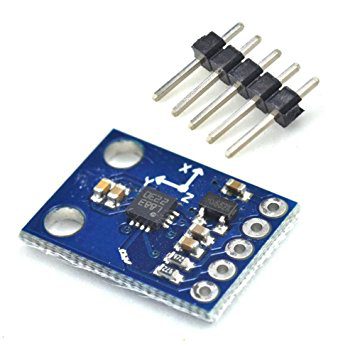
A QMC5883L is a three-axis magnetometer that can support a compass application. GY-271 is a board label, not proof of the installed sensor. The checked Epro listing names QMC5883L in its title but describes HMC5883L elsewhere, so confirm the actual supplied chip before choosing a library or wiring.
Resolve the chip identity before purchase

QMC5883L and HMC5883L are not interchangeable register-level devices. A seller may reuse a board photograph or legacy description. Ask for current part markings and a schematic or confirmed driver. The linked listing is an availability reference, not independent confirmation that a particular shipment contains either sensor.
Use the correct documentation and address
The QST QMC5883L documentation describes its own register map and default seven-bit address 0x0D. Do not treat an HMC library that compiles successfully as evidence of compatibility. A bus scan helps identify an address but is only one clue; verify the response and behavior against the actual device documentation.
Inspect power and logic levels separately
The QMC5883L IC operates in a low-voltage range, with VDD specified from 2.16 to 3.6 V. A breakout may add regulation, but pull-up rails and I/O limits still need checking. A generic board description saying three-to-five volts is not enough to approve five-volt logic at the sensor pins.
Choose magnetic range and sampling settings
The sensor supports selectable magnetic ranges and data-rate/oversampling settings. A stronger range reduces sensitivity compared with the smaller range. Nearby permanent magnets can saturate a channel, so monitor status rather than interpreting clipped numbers as a useful compass. The chosen configuration belongs in every recorded dataset.
Plan calibration in the final assembly
Hard-iron offsets and soft-iron distortion depend on the environment around the module. Steel screws, motors, speakers and current-carrying wires can affect the field. Calibrate after mounting, and repeat checks when the surrounding hardware changes. Factory sensor compensation does not remove every distortion introduced by the finished product.
Understand heading limits
A heading calculated from two horizontal magnetic axes assumes an appropriate level orientation and calibrated axes. Tilting changes their projections; full tilt compensation needs orientation information and a consistent coordinate model. Magnetic north also differs from true north. A board listing’s headline accuracy is not a guarantee for an uncalibrated handheld build.Newest in the store


Relevant Epro listing
Product information and prices were checked on 19 October 2026. This is a current snapshot, not a historical price associated with the publication timestamp. Stock, accessories and checkout prices can change. Listing claims are not independent performance or authenticity certifications.
| Product | Checked price | Stock |
|---|---|---|
| GY-271 QMC5883L Triple Axis Compass Magnetometer Sensor Module in Pakistan | PKR 450 | In stock |
Frequently asked questions
Does GY-271 prove the chip is QMC5883L?
No. Confirm the installed part; similar boards are sold with different magnetometers and inconsistent descriptions.
Can factory calibration remove nearby steel distortion?
Not necessarily. The assembled system introduces magnetic effects that require application-specific calibration and placement.
Related Epro reading
Review breadboard connections before assembling a prototype. For controller expansion, the Mega 2560 pin guide explains why pin names and electrical limits must be checked together.
Technical references and test limitations
This guide uses the documentation linked below. The procedures are for a controlled, low-voltage learning setup; no independent hands-on test of the particular seller board is claimed. Record the actual part markings, wiring and firmware version before drawing conclusions from a test.