


Exploring the Benefits of High Power Systems

Exploring the Benefits of High Power Systems
High power systems make modern performance possible, from industrial automation and electric mobility to advanced testing, energy storage, and heavy-duty tools. When designed well, they deliver more output, better control, stronger reliability, and improved high power efficiency without making equipment harder to use. This article explains where high power technology fits, what benefits it offers, and how to think practically about safety, components, and long-term value.
What makes high power systems valuable?
High power systems are valuable because they move, convert, store, or deliver large amounts of energy in a controlled way. That control matters as much as raw output: a powerful system must provide the right voltage, current, timing, thermal protection, and safety response for the job. In real applications, the benefit is not simply “more power”; it is more capability, faster work, better consistency, and the ability to support equipment that smaller systems cannot run effectively.
A high power setup may include a high voltage power supply, power converters, batteries, high power motors, switching electronics, cooling assemblies, protection circuits, sensors, and control software. In some systems, the goal is continuous output for long operating periods. In others, the goal is short bursts of high power energy for testing, acceleration, welding, pumping, or tool operation.
That is why high power solutions appear across so many environments. A laboratory may need a high voltage dc power supply for controlled electrical testing. A manufacturing line may need high power devices to run motors and heating equipment. A service technician may rely on high power tools that need strong batteries and efficient charging. The details change, but the core principle stays the same: useful power must be delivered safely, efficiently, and predictably.

The practical benefits of higher output
The most obvious benefit of high power systems is stronger output, but the practical advantages go deeper. More available power can reduce cycle times, support larger loads, improve response under stress, and help equipment maintain performance instead of slowing down when demand rises.
For businesses, this can translate into smoother operations. A motor with adequate power reserve may handle startup loads without stalling. A test bench with properly specified high voltage power supplies can reproduce demanding conditions with greater stability. A battery-powered tool with a capable pack can maintain torque or speed for longer rather than fading quickly under load.
High power performance is especially valuable when a system must respond quickly. Examples include robotics, traction systems, hydraulic pumps, electric compressors, and industrial drives. In these cases, a weak or undersized power system can limit the entire machine, even if every other component is well designed.
Key advantages often include:
- Greater workload capacity: Equipment can handle heavier, faster, or more complex tasks.
- Improved consistency: Output is less likely to drop when demand increases.
- Better productivity: Faster cycles and fewer slowdowns can support more efficient operations.
- Design flexibility: Engineers can support advanced features, stronger motors, or higher-performance control.
- Operational resilience: A properly designed system has margin for startup surges, changing loads, and demanding duty cycles.
The important phrase is “properly designed.” High power does not automatically mean better. A system that is too large, poorly protected, or inefficient can waste energy, generate heat, and create safety concerns. The real benefit comes from matching the power architecture to the application.
High voltage and high power are related but not identical
High voltage and high power often appear together, but they are not the same thing. Voltage is electrical pressure, current is electrical flow, and power is the rate of energy delivery. A high voltage power supply can produce high voltage with relatively low current, while another system may deliver high current at lower voltage and still qualify as high power.
This distinction matters when choosing components. A high voltage dc power supply used in research, electrostatic equipment, or insulation testing has different requirements from a low-voltage, high-current battery system used for tools or mobile equipment. Both may involve high power applications, but they need different wiring, insulation, control methods, and protective devices.
High voltage power supplies are commonly selected based on output range, stability, ripple, regulation, load behavior, monitoring features, and safety interlocks. High-current systems, by contrast, often focus heavily on conductor sizing, thermal management, connector integrity, and current protection. Overlooking these differences can lead to poor performance or unnecessary risk.
A useful way to think about it is this: voltage determines what kind of electrical environment the system must withstand, while power determines how much energy the system can deliver over time. A strong design respects both.
Where high power applications matter most
High power applications show up wherever equipment needs significant energy to create motion, heat, pressure, light, magnetic fields, or electrical stress. These systems may be stationary, mobile, compact, or massive, but they all depend on controlled energy delivery.
Industrial automation and manufacturing
Factories use high power systems for drives, robotics, conveyors, heaters, welders, presses, and process equipment. In these settings, downtime is costly, so reliability and maintainability matter as much as peak output. A well-designed power system helps machinery start reliably, sustain production loads, and respond predictably to control commands.
High power motors are a central part of many industrial systems. They convert electrical energy into motion and must be matched to the mechanical load, duty cycle, and speed requirements. If the motor is underpowered, the machine may run hot or struggle under load. If the system is oversized without reason, cost and energy use may rise unnecessarily.
Energy storage and portable power
Portable equipment depends on batteries that balance capacity, discharge rate, size, weight, and safety. A 3000 mah 18650 high capacity power source battery, for example, may be discussed in the context of compact electronics, flashlights, hobby projects, or battery packs. Capacity is only one part of the decision, though. The battery must also be appropriate for the required current, protection design, charging method, and operating environment.
In high power energy storage systems, battery management is essential. Cells must be monitored, balanced, protected from unsafe conditions, and integrated with chargers and loads that match their ratings. A battery that looks capable on paper may perform poorly or unsafely if it is used outside its intended limits.
Transportation and mobility systems
Electric vehicles, e-bikes, forklifts, rail systems, and marine equipment all depend on power electronics and motors. Here, high power efficiency has a direct impact on range, heat generation, charging needs, and component life. Better efficiency means more of the stored energy becomes useful motion instead of wasted heat.
These systems also need smooth control. Power must be delivered in a way that feels responsive but stable, especially during acceleration, braking, and load changes. The user may notice only the smooth performance, but behind it is a coordinated system of batteries, inverters, controllers, sensors, and software.
Testing, research, and development
Laboratories and engineering teams use high voltage power supply equipment to simulate conditions, evaluate materials, test insulation, power prototypes, and validate designs. These use cases often require precision and repeatability. It is not enough for the supply to reach a voltage level; it must do so in a controlled, measurable, and safe manner.
A high voltage dc power supply is especially useful when stable direct current output is required. Depending on the application, engineers may care about ramp rates, output stability, current limits, remote control, and protective shutdown behavior. Good test equipment helps teams collect useful data without exposing people or prototypes to unnecessary hazards.
Efficiency turns raw power into usable value
High power efficiency determines how much input energy becomes useful output. In any power system, losses appear as heat, noise, voltage drop, mechanical friction, or other forms of wasted energy. At low power levels, these losses may be inconvenient. At high power levels, they can become a major design constraint.
Improving efficiency can reduce operating cost, cooling demand, component stress, and physical size. For example, a more efficient motor drive may need less heat sinking. A more efficient power converter may allow a smaller enclosure or quieter fan. A more efficient battery-powered device may run longer on the same pack.
Design teams often improve efficiency by looking at the full system rather than one part. The best power supply in the world cannot compensate for poor wiring, mismatched loads, weak thermal design, or inefficient control logic. High power systems work best when every stage is considered together.
Practical efficiency checks include:
- Match the power source to the load. Avoid using a supply or battery that operates poorly in the required range.
- Reduce avoidable resistance. Use appropriate conductors, connectors, and contact surfaces for the current involved.
- Manage heat early. Cooling should be part of the design, not an afterthought added when parts run too hot.
- Use controls intelligently. Variable speed drives, soft starts, and smart charging can reduce waste and stress.
- Monitor real operating conditions. Lab assumptions do not always match field behavior, so feedback and measurement matter.
Efficiency also supports reliability. Heat is one of the biggest enemies of electrical and electronic components. By reducing wasted energy, high power solutions can help equipment last longer and perform more consistently.

Components that shape high power performance
A high power system is only as strong as its weakest critical component. The supply, conductors, switching devices, motors, batteries, cooling systems, and protection devices all need to work together. Choosing one impressive component while ignoring the rest often leads to disappointing results.
Power supplies and converters
Power supplies convert incoming energy into the voltage and current a system needs. High voltage power supplies may be used for specialized testing or industrial processes, while lower-voltage high-current supplies may support motors, tools, or charging systems. In either case, stability, protection, and control features are important.
Converters also help systems operate across changing conditions. They may step voltage up or down, convert AC to DC, convert DC to AC, or regulate output as loads change. In modern high power technology, these conversion stages are often where major efficiency gains are found.
Motors, drives, and mechanical loads
High power motors require compatible drives and mechanical design. A motor cannot deliver useful work if the drive cannot supply the needed current or if the mechanical system wastes energy through friction, poor alignment, or overload. Performance depends on the complete chain from power source to final movement.
Drives control speed, torque, startup behavior, and braking. They protect the motor from unsafe conditions and help the machine respond smoothly. In demanding systems, drive tuning can make the difference between rough operation and precise control.
Cables, hoses, and supporting hardware
Not every “power” component is electronic. In vehicles and hydraulic systems, a high pressure power steering hose carries fluid under pressure so steering assistance can operate correctly. It is not the same type of component as a high voltage supply, but it shows an important principle: power systems often depend on supporting parts that must withstand stress, heat, pressure, vibration, and movement.Newest in the store


This is why maintenance details matter. A loose connector, worn hose, undersized cable, or poorly cooled enclosure can reduce performance or create hazards. High power devices need strong supporting infrastructure.
Batteries and energy sources
Battery selection should never be based on capacity alone. A cell or pack must be rated for the discharge current, charging profile, temperature range, and protection strategy. The phrase 3000 mah 18650 high capacity power source battery may sound like a simple product description, but safe integration requires more than matching size and capacity.
For battery-powered high power tools, the pack, charger, tool electronics, and motor all influence the final experience. A tool may feel powerful because the system can deliver current efficiently, manage heat, and protect the battery while maintaining useful output.
How do you choose the right high power solution?
Choose the right high power solution by defining the load first, then matching the source, control system, protection, cooling, and physical design to that load. The best choice is not always the highest-rated product. It is the system that safely delivers the required output under real operating conditions, with enough margin for startup, environment, duty cycle, and future needs.
Start by identifying what the system must actually do. Does it need continuous operation, brief surges, precise voltage, high torque, rapid charging, or stable output under changing loads? A system designed for short bursts may not survive continuous duty. A lab supply designed for precision may not be suitable for a rough industrial environment.
A practical selection checklist includes:
- Load profile: Understand peak demand, average demand, startup surge, and operating cycle.
- Voltage and current requirements: Confirm both, because either one can become the limiting factor.
- Environment: Consider heat, dust, moisture, vibration, altitude, enclosure space, and airflow.
- Safety requirements: Plan for grounding, insulation, interlocks, fuses, breakers, current limiting, and emergency shutdown.
- Control needs: Decide whether the system needs remote monitoring, programmable output, feedback loops, or automated sequencing.
- Maintenance access: Make sure parts can be inspected, replaced, cooled, and tested without unnecessary complexity.
- Scalability: Leave room for future upgrades only where it makes practical and financial sense.
It is also wise to think about the user. A system that looks excellent on a specification sheet may fail in practice if operators cannot understand warnings, technicians cannot service it, or the installation creates avoidable confusion. Good engineering includes usability.
Safety is part of performance
High power systems require respect because they can release significant energy quickly. Safety is not a separate feature added at the end; it is part of high power performance. A system that cannot protect people, equipment, and surrounding property is not truly high performing.
Electrical hazards may include shock, arc flash, burns, stored energy, short circuits, and unexpected startup. Mechanical and thermal hazards may include moving parts, hot surfaces, pressure release, and fire risk. The higher the available energy, the more important it becomes to design for predictable failure modes.
Practical safety habits include:
- Use components within their ratings. Ratings exist for voltage, current, temperature, pressure, and duty cycle.
- Add layered protection. Do not rely on a single fuse, switch, software command, or warning label.
- Control stored energy. Capacitors, batteries, rotating loads, and pressurized systems may remain dangerous after shutdown.
- Label clearly. Operators and technicians should know what they are touching and what state the system is in.
- Plan service procedures. Lockout, discharge, verification, and inspection steps should be practical and repeatable.
High voltage systems deserve special attention because insulation, spacing, grounding, and enclosure design become critical. High current systems deserve equal respect because even low voltage can produce dangerous heat, molten metal, and intense fault energy when current is high enough.
Software and settings can unlock better power use
High power technology is not only hardware. Software settings, control profiles, and operating modes can strongly affect performance. A motor controller, battery management system, charger, or power supply interface may determine how power is delivered, limited, logged, and protected.
Even everyday computing includes power-performance choices. People searching for how to get high performance power plan are usually trying to adjust a computer’s energy settings so the device prioritizes performance over energy savings. That example is far smaller than an industrial drive or high voltage supply, but the logic is similar: power settings influence responsiveness, efficiency, heat, and runtime.
In larger systems, intelligent controls can reduce waste and improve equipment behavior. Soft-start profiles can limit inrush current. Variable speed operation can match output to demand. Monitoring software can warn users before overheating, overload, or battery imbalance becomes a failure.
A practical approach is to tune systems in stages. Begin with safe default settings, measure performance, then adjust only what you understand. Aggressive settings may produce short-term gains but increase wear, heat, or instability if they exceed the design margin.
The language of “power” can be confusing
The word “power” appears in many unrelated contexts, which can make keyword research and product searches messy. Someone looking for high power tools has a very different intent from someone searching for a high voltage power supply. A phrase like gap women s sky high rise power flare leggings belongs to apparel shopping, not electrical engineering, even though it includes the word “power.”
This matters because clear language prevents costly mistakes. In technical buying, small wording differences can separate the right component from the wrong one. “High voltage,” “high current,” “high capacity,” “high pressure,” and “high performance” describe different qualities, and they are not interchangeable.
When researching high power solutions, use specific terms whenever possible. Instead of searching only for high power, add the application, output type, voltage range, environment, or device category. This helps narrow results and keeps the focus on the actual engineering problem.
Helpful search refinements include:
- “programmable high voltage dc power supply for testing”
- “high power motors for continuous duty industrial use”
- “battery requirements for high power devices”
- “high power tools battery discharge and runtime”
- “high voltage power supplies with current limiting”
Specific language saves time and improves decision quality.
Common mistakes when working with high power systems
Many high power problems begin with assumptions. A component seems strong enough, a cable seems thick enough, or a battery seems large enough. Under real load, those assumptions may fail.
One common mistake is focusing only on peak rating. Peak output can be useful, but continuous rating, cooling, duty cycle, and operating temperature often matter more. A device that can deliver impressive power for a few seconds may not be suitable for sustained work.
Another mistake is ignoring voltage drop and connection losses. In high current systems, small resistance can create meaningful heat and reduced output. Connectors, terminals, cable length, and contact quality all affect performance.
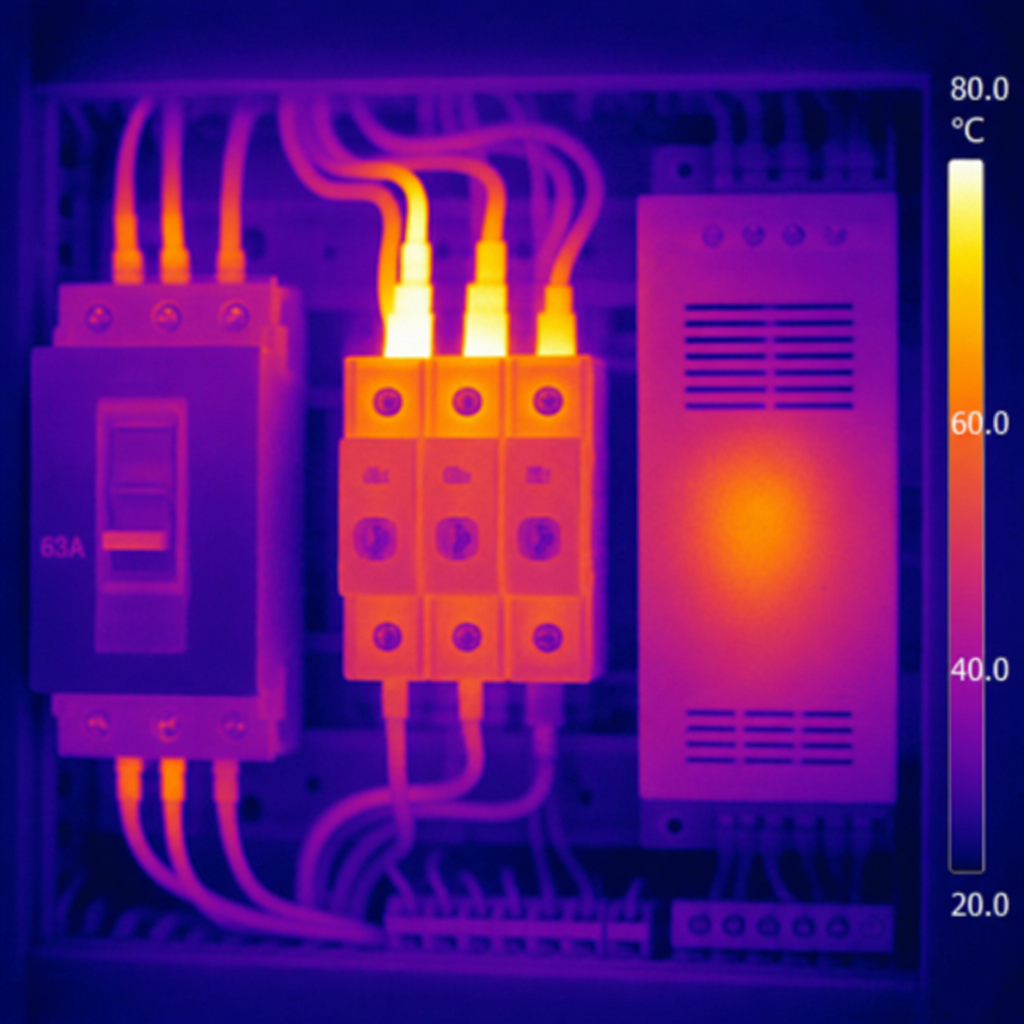
Thermal design is also frequently underestimated. If heat cannot leave the system, components may derate, shut down, age quickly, or fail. Good airflow, heat sinking, spacing, and temperature monitoring are essential in many high power applications.
Finally, teams sometimes treat safety documentation as paperwork rather than design guidance. Clear procedures, labels, inspection intervals, and training can prevent avoidable failures. In high power environments, disciplined operation is part of the system.
A practical path to better high power decisions
Better decisions come from connecting requirements to real-world use. Instead of starting with a product category, start with the work the system must perform. Then define the electrical, mechanical, thermal, environmental, and human factors around that work.
A simple planning process can help:
- Define the job. Identify what must move, heat, charge, test, power, or control.
- Measure or estimate demand. Include peak, average, startup, and emergency conditions.
- Select the architecture. Decide whether the system needs AC, DC, batteries, converters, motors, or a high voltage power supply.
- Build in protection. Include electrical, thermal, mechanical, and software safeguards.
- Test under realistic conditions. Validate performance with the loads, temperatures, and duty cycles the system will actually experience.
- Document operation. Make setup, shutdown, service, and emergency steps easy to follow.
This process applies whether you are specifying high voltage power supplies for a lab, choosing batteries for high power devices, upgrading high power motors, or evaluating high power tools for demanding work. The scale changes, but the discipline remains the same.
The future of high power technology is smarter and cleaner
High power technology continues to move toward better control, higher efficiency, improved monitoring, and more compact designs. Advances in power electronics, battery systems, thermal materials, sensors, and software are making it possible to deliver more useful energy with less waste. The most valuable systems will not simply be stronger; they will be safer, more efficient, easier to maintain, and better matched to their tasks.
This shift is especially important as more equipment becomes electrified. Motors replace engines in some applications. Batteries support mobile work that once required cords or fuel. Digital controls allow systems to adapt output in real time. As a result, high power energy is becoming more flexible and more manageable.
For users and decision-makers, the main takeaway is practical: do not evaluate power in isolation. Look at efficiency, safety, control, serviceability, and fit for purpose. The best high power systems help people do demanding work with confidence, not complexity.
Final takeaway
High power systems offer major benefits when they are designed around real needs. They can improve productivity, support demanding loads, enable advanced equipment, and turn high power energy into controlled, useful work. But the value comes from the full system: power source, controls, motors, wiring, cooling, protection, maintenance, and user understanding.
Whether you are working with high voltage power supplies, battery-powered tools, industrial drives, or specialized high power applications, the smartest approach is to balance output with safety and efficiency. Choose components carefully, plan for real operating conditions, and treat high power efficiency as a performance feature rather than an afterthought. That is how high power becomes more than a rating; it becomes a reliable advantage.