


PIR Sensor Price in Pakistan: 7 Module Buying Checks

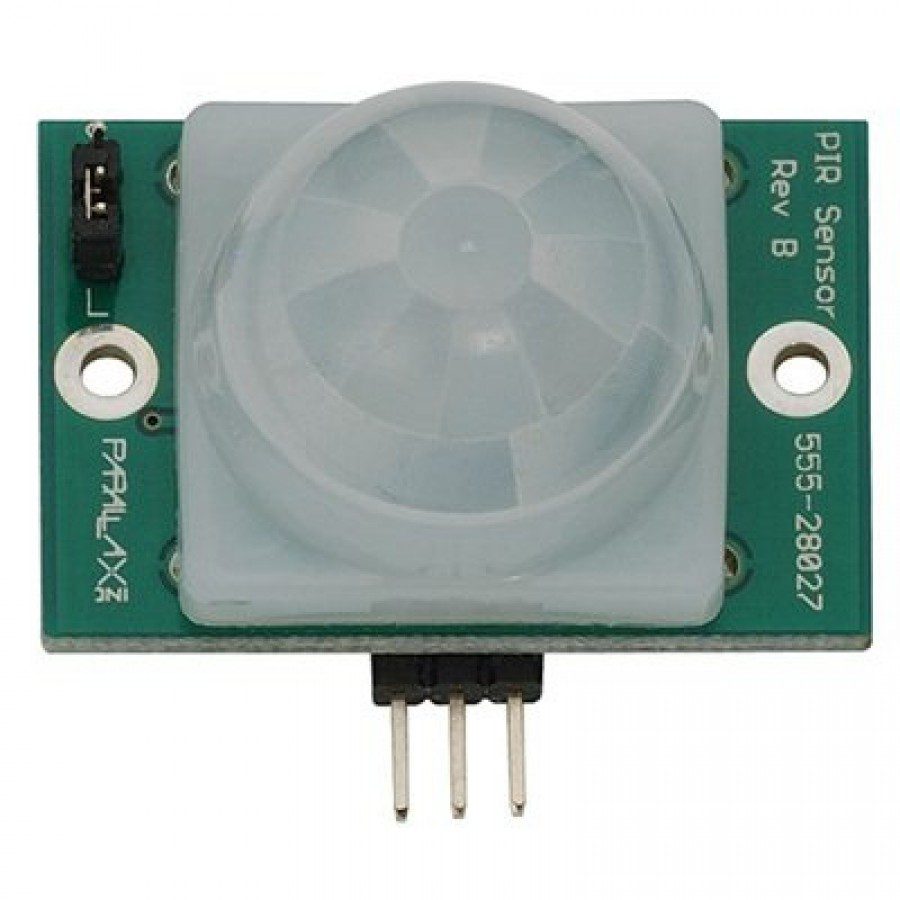
PIR sensor price in Pakistan varies because search results can mix small controller modules with complete light switches, wireless alarm accessories and mains-powered products. Those are different devices, not simple price alternatives for the same Arduino circuit.
This guide focuses on low-voltage PIR modules for electronics projects. It compares Epro listings and selection requirements, not independently measured detection range or certified security-system performance.

PIR sensor price in Pakistan: module comparison
| Listed item | Price (PKR) | Selection note |
|---|---|---|
| HC-SR501 HC SR501 PIR Human Motion Infrared Detector Sensor Module in Pakistan | 210 | HC-SR501 adjustable PIR module |
| Mini IR PIR Motion Sensor HC SR505 in Pakistan | 280 | HC-SR505 compact PIR module |
Price snapshot: Epro product listings checked on 18 October 2026. Prices and availability can change. Confirm the live listing, delivery charges and supplied accessories before ordering; these figures are not a quotation or a claim of independent product testing.
The HC-SR501 listing includes sensitivity and timing adjustments, while the HC-SR505 listing describes a smaller format with its own timing behaviour. Confirm the supplied revision and labels. A 220 V motion switch from a different category must not be wired using a microcontroller-module tutorial.
1. Understand what passive infrared detects
A PIR sensor responds to changes in infrared radiation across its detection zones. Moving warm bodies can produce a useful signal, but the module does not identify a person or measure their distance. A stationary person may not continue generating motion events.
Do not treat a PIR output as proof that a room is empty or occupied with certainty. For a project that needs distance rather than motion, compare a suitable ultrasonic sensor instead. The sensing method should match the actual question the controller needs to answer.
2. Separate supply voltage from output level
The HC-SR501 listing describes a supply range starting at 4.5 V and a digital output around 3.3 V when high. The power input and logic output therefore have different voltage roles. Confirm both on the actual module before connecting a controller.
Do not power an ordinary module below its rated input simply because its output is 3.3 V. Likewise, do not assume every PIR product produces the same output. Avoid bypassing onboard regulators or modifying an unfamiliar board as part of a beginner purchase decision.
3. Check timing and retrigger behaviour
A motion output can remain high for a configured hold time after an event. In a retriggering mode, continued motion can extend that high period. Non-retriggering operation follows a different timing pattern. The exact jumper labels and adjustment range depend on the module revision.Newest in the store


Choose an adjustable module if the project needs accessible timing controls, but do not infer the function of a trimmer from its position in a photograph. Read the actual board markings and test one setting at a time. A long output pulse is not necessarily a software fault.
4. Plan a stabilization interval
PIR modules generally need a settling period after power is applied. Adafruit’s reference example recommends waiting roughly 30–60 seconds for its sensor. Check your own module’s instructions and do not interpret initial activity as reliable detection.
If the controller repeatedly switches the module’s power, it can repeatedly restart that settling process. Keep the first bench test simple and stable before adding power-saving cycles or interpreting timing logs.
5. Mount for the expected movement
Detection depends on lens pattern, mounting angle, target movement and temperature contrast. A broad catalog range is not a guarantee for every room. Avoid pointing the sensor toward direct sunlight, moving heat sources or unstable thermal backgrounds, and validate the intended location.
A decorative enclosure can obstruct the infrared path even when it looks clear to the eye. Do not assume ordinary window glass or an arbitrary plastic cover will preserve performance. Use an enclosure arrangement appropriate to the sensor and environment.
6. Keep switching loads separate
The module’s digital output is a signal, not a supply for lamps, sirens or motors. Those loads need an appropriately rated driver and power design. This guide does not cover household mains wiring or using a hobby module as the only protection in an alarm system.
7. Choose the smallest useful first project
Begin with the PIR motion sensor Arduino code guide, which reports motion and drives only the controller’s built-in LED. The Adafruit PIR testing reference explains stabilization and retriggering on its own hardware. Use those principles while verifying your actual module’s labels and limitations.