


Stepper Motor Price in Pakistan: 7 Buying Checks

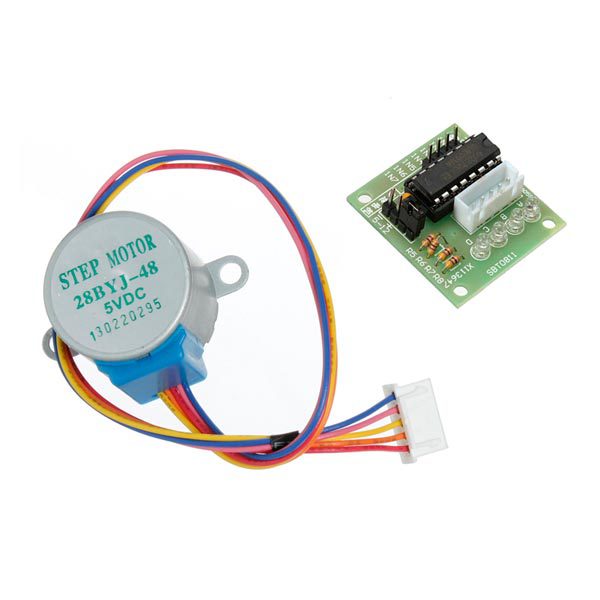
Stepper motor price in Pakistan is only one part of the motion-system budget. A motor still needs a compatible driver, suitable power supply and mechanical coupling. A small geared unipolar kit and a NEMA 17 motor are not interchangeable simply because both can move in steps.
This guide separates the actual Epro motor listings from driver accessories, then explains the selection checks for beginner robotics and CNC-related projects. It does not claim that any listing has been load-tested or calibrated by this guide’s author.

Stepper motor price in Pakistan: motors versus drivers
| Listed item | Listed price (PKR) | Role |
|---|---|---|
| 28YBJ-48 DC 5V 4 Phase 5 Wire Stepper Motor With ULN2003 Drive in Pakistan | 380 | 28BYJ-48 5 V motor plus ULN2003 set |
| Stepper Motor NEMA17 Stock Lot in Pakistan | 670 | NEMA 17 stock-lot motor listing |
| Stepper Motor Driver A4988 in Pakistan | 300 | A4988 driver only |
| DRV8825 Stepper Motor Driver in Pakistan | 560 | DRV8825 driver only |
| Stepper Motor Driver TB6600 in Pakistan | 1,650 | TB6600 driver listing, not a motor |
Price check: Epro listings checked on 18 October 2026. Prices are a dated snapshot, not a quotation. Confirm the current price, availability, delivery charges and package contents on the linked product page before ordering.
A lower driver price is not a cheaper complete motor system. Check whether a listing includes the motor, controller board, cables and connectors. Stock-lot wording also deserves attention: confirm condition, identification and supplied documentation rather than assuming the item is a new, fully characterized replacement.
1. Choose the motor family for the task
The 28BYJ-48 kit is a small geared five-wire unipolar arrangement typically used with a ULN2003 board. It can suit introductory demonstrations where speed, backlash and load requirements are modest. Its gearbox and drive sequence affect the effective output motion, so do not assume one universal steps-per-revolution number for every unit.
A suitable bipolar motor can instead use a current-regulating driver such as an A4988 or DRV8825. NEMA 17 identifies a mechanical frame family, not the electrical ratings or usable torque at your intended speed. Read the actual motor label and available datasheet before selecting the driver.
2. Check current and winding information
For a bipolar motor, identify the phase current rating and coil pairs. Measure resistance only with all equipment unpowered and disconnected. For motors with more than four leads, use an authoritative wiring diagram; colour codes are not universal and series or parallel connections can change the required settings.
A five-wire common connection is not automatically compatible with a bipolar chopper driver. Do not attempt a conversion merely to use a cheaper driver. Choose a matched motor-and-driver system unless you fully understand and can verify the electrical changes.
3. Calculate the mechanical requirement
Estimate load torque, friction, acceleration and any gear or belt ratio before choosing hardware. Holding torque describes a particular stationary condition; it is not the torque guaranteed at all running speeds. A motor that holds a load at rest may still miss steps when acceleration or speed increases.Newest in the store


Gearboxes can trade speed for torque but introduce backlash and efficiency losses. For positioning, consider shaft coupling, bearing support, leadscrew pitch and end-stop strategy as well as motor price. A motor should not carry an unsupported mechanical load that the assembly was not designed to support.
4. Match the driver and power supply
Check the driver’s motor voltage range, phase-current capability, cooling requirements and control interface. A board’s maximum headline current is not a universal continuous rating inside a small enclosure. Set a compatible current limit and follow the exact carrier’s decoupling requirements.
The A4988 setup guide explains why copying another board’s reference-voltage setting can be unsafe. A higher supply voltage is not a substitute for current regulation, and a larger driver nameplate does not make incorrect motor wiring harmless.
5. Include control and wiring costs
Budget for a controller, suitable connectors, power distribution and mounting hardware. A CNC shield is an interface accessory, not a motor or power supply. Check whether the chosen controller’s logic levels are compatible with the driver inputs rather than assuming every Arduino- or ESP32-based design is identical.
Keep motor-current wiring separate from delicate signal connections where practical. Do not route substantial coil current through an unsuitable solderless breadboard. Include a safe way to remove power before changing the motor connections.
6. Understand open-loop positioning limits
A basic stepper system commands steps without proving that the shaft moved. Excess load, resonance or an aggressive acceleration ramp can cause lost position. Microstepping can improve smoothness, but it does not create a guarantee of absolute positioning accuracy. Use appropriate homing, feedback or mechanical safeguards where the application needs them.
7. Verify before buying multiples
For a classroom, start with one matched 28BYJ-48 and ULN2003 set and validate the wiring and motion sequence. For a larger mechanism, confirm the exact NEMA 17 listing ratings and condition before choosing a driver. If the project needs limited-angle positioning rather than continuous stepping, compare the servo motor buying guide instead.