


HC12 Wireless Serial Module: Not Bluetooth or Wi-Fi

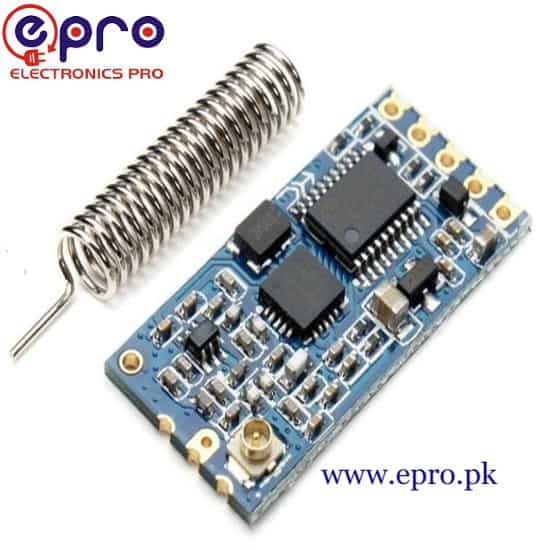
The HC12, usually written HC-12, is a sub-GHz wireless serial module rather than a Bluetooth or Wi-Fi device. The checked Epro listing uses Bluetooth in its title, but its technical description identifies a 433 MHz-family UART radio. Confirm the supplied hardware before buying; a phone cannot pair with an HC-12 as if it were an HC-05.
Understand the transparent UART model

A compatible pair carries serial data between hosts over a radio link. The module handles its radio section internally, but the application still needs message framing, error handling and sensible transmission timing. A wireless UART is not automatically a reliable packet protocol, internet connection or secure encrypted channel.
Check local radio permissions first
The manual describes hardware channels across 433.4–473.0 MHz and configurable transmit power. That hardware capability is not permission to use every channel or power level in Pakistan or another country. Check applicable PTA or local spectrum rules, permitted equipment and application restrictions before any transmission. Do not choose settings merely to maximize range.
Match supply capability and logic levels
The referenced manual specifies a 3.2–5.5 V supply for the module and notes transmit-current demands. The host supply must remain stable during bursts, not just while idle. Check the actual module’s logic interface before connecting a five-volt host or powering it from a small board regulator. Supply range and signal tolerance are separate questions.
Compare modes rather than range slogans
UART rate, air-rate/mode, channel, antenna, obstructions and interference all influence performance. Both modules need compatible settings. A seller’s open-field distance claim is not a measured guarantee for a building or a cluttered bench. Start with a short, lawful link and record delivery behavior under the intended conditions.
Plan antenna placement and installation
Use the appropriate antenna connection and a documented compatible antenna. Keep the antenna away from metal enclosures and noisy wiring, and follow the module guidance rather than transmitting through an improvised load. Secure the board and power connections. A compact breadboard experiment does not establish antenna efficiency or regulatory compliance.
Treat privacy and failure behavior as application work
Do not send passwords or sensitive personal information on the assumption that transparent serial radio provides security. Add a suitable application protocol and authentication where needed. Define what happens when data is lost or delayed; a receiver should not blindly continue a consequential action based on stale wireless commands.Newest in the store


Relevant Epro listing
Product information and prices were checked on 19 October 2026. This is a current snapshot, not a historical price associated with the publication timestamp. Stock, accessories and checkout prices can change. Listing claims are not independent performance or authenticity certifications.
| Product | Checked price | Stock |
|---|---|---|
| HC12 Bluetooth Transceiver Module in Pakistan | PKR 1,530 | In stock |
Frequently asked questions
Will a phone pair directly with HC-12?
Not as a Bluetooth device. HC-12 uses a different radio interface and generally needs a compatible counterpart.
Are all channels in the manual legal to use locally?
No such assumption is valid. Check the applicable spectrum rules and permitted equipment/settings before transmitting.
Related Epro reading
Review breadboard connections before assembling a prototype. For controller expansion, the Mega 2560 pin guide explains why pin names and electrical limits must be checked together.
Technical references and test limitations
This guide uses the documentation linked below. The procedures are for a controlled, low-voltage learning setup; no independent hands-on test of the particular seller board is claimed. Record the actual part markings, wiring and firmware version before drawing conclusions from a test.