


LM35 Temperature Sensor: Package, Voltage and Buying Guide

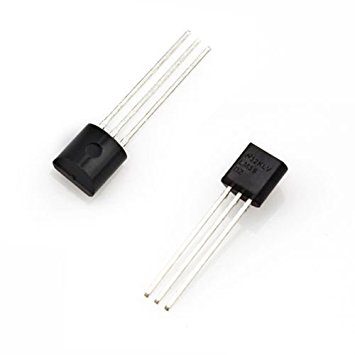
An LM35 temperature sensor produces an analog voltage that represents temperature in degrees Celsius. Choosing one involves more than finding a three-pin package: the part suffix, pin orientation, supply range and ADC interface all matter. This guide explains how to compare the current Epro listings without treating a seller’s authenticity wording as an independent certification.
Understand the analog output

Texas Instruments specifies the LM35 family’s nominal transfer function as 10 mV per degree Celsius. At 25°C, that corresponds to approximately 250 mV. This is not a digital data stream and does not use I2C or 1-Wire. The receiving circuit needs a suitable analog input and reference, and the total measurement error includes more than the sensor alone.
Read the complete part and package code
Different LM35 suffixes and packages can have different temperature ranges and pin arrangements. Verify the exact manufacturer part number rather than assuming all devices advertised as LM35DZ have identical documented provenance. The TI datasheet covers multiple packages; a diagram for one must not be applied to another merely because both have three leads.
Check orientation before applying power
For TI’s TO-92 package, use the datasheet’s stated viewing direction and numbered pin functions. Do not infer the order from an unlabelled flat-face photo. The datasheet identifies +VS, VOUT and GND, but its TO-92 drawing is a bottom view. Reversing supply and ground can damage a sensor and create misleading temperature readings.
Use a supply within the specification
TI specifies an operating supply range beginning at 4 V for the LM35. Do not assume it will operate correctly from a 3.3 V rail just because its output voltage is relatively low at room temperature. Check the exact part’s documentation and the target ADC input limits separately. A 5 V sensor supply does not mean its output should be treated as a digital 5 V signal.
Separate sensor accuracy from measurement resolution
A microcontroller ADC converts the output against its reference. Reference-voltage error, ADC quantization, ground noise and wiring affect the displayed temperature. Printing two decimal places does not create that level of accuracy. Use the specified grade and test conditions when discussing accuracy, and compare with an appropriate reference if the application requires a calibrated result.
Choose packaging for the environment
A bare TO-92 sensor is not automatically a waterproof probe. Keep it away from conductive liquids and use a suitable enclosure or purpose-built probe for the environment. Thermal contact, airflow and enclosure mass can change response time. Do not treat a reading near a warm regulator as the room’s ambient temperature without considering how the sensor is mounted.
Newest in the store


Plan a modest acceptance test
Begin with a documented low-voltage supply, a correct pin map and a short, grounded signal connection. Verify supply and output with a suitable meter, then compare the analog result with a simple ADC reading. An output inconsistent with ordinary room conditions calls for checking wiring and the reference voltage before inventing a calibration offset. Avoid using an unverified sensor as a medical, food-safety or critical over-temperature control device.
The listings below are price and availability snapshots, not laboratory verification. Ask about the actual supplied part, packaging and documentation if provenance matters. A lower price can be suitable for a learning exercise, while a validated supply chain and calibrated measurement system may be necessary for a more demanding application.
Epro parts and availability
These are relevant Epro listings, not independent authenticity or performance certifications. Prices below were checked on 19 October 2026; they are a dated snapshot rather than a historical price implied by this article’s publication date. Confirm the exact variant, included accessories, stock and current checkout price before ordering.
| Listing | Checked price | Stock at check |
|---|---|---|
| LM35DZ Precision Centigrade Temperature Sensors 100% Orignal in Pakistan | PKR 280 | In stock |
| LM35DZ Precision Centigrade Temperature Sensors Made In China | PKR 180 | In stock |
Frequently asked questions
Can I power every LM35 from 3.3 V?
Do not assume that. The TI LM35 specification starts at 4 V; verify the actual device and use a supported supply.
Is an LM35 the same as a TMP36?
No. Similar-looking analog sensors can have different transfer functions and pin details. Use the exact device documentation.
Related Epro guides
Technical references and verification
The guidance above is based on the manufacturer documentation linked here and the listed product information. Example procedures and sketches are provided for a controlled low-voltage bench setup; no independent hands-on test of your particular board or adapter is claimed. Check the markings and documentation for your actual revision.