


MLX90614 Infrared Sensor: Field of View and Buying Limits

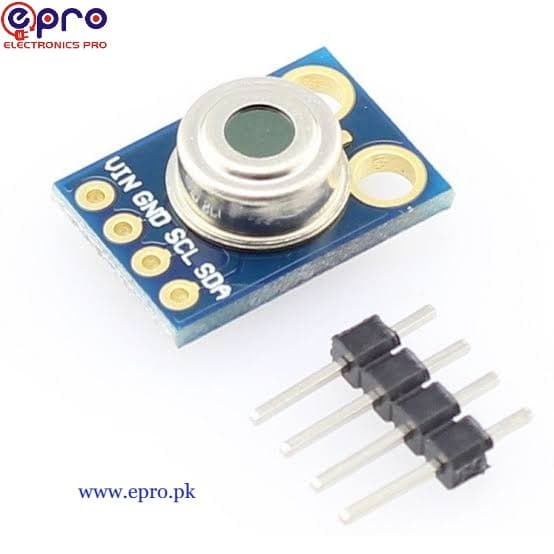
An MLX90614 measures infrared radiation to estimate an object’s temperature without touching it. Choosing a module requires checking the exact sensor suffix, supply option, optics and measurement conditions. A digital temperature display alone does not make a hobby module a validated medical thermometer.
Separate object and sensor temperatures

The device reports object-temperature estimates and an ambient channel related to its own die temperature. The latter is not automatically the air temperature at a distant object. A warm regulator, a hand holding the can or a sudden environmental change can affect the sensor’s thermal state. Allow stable conditions before comparing readings.
Identify the exact supply variant
Melexis documents nominal three-volt and five-volt versions with different operating conditions. A breakout may add regulation and pull-ups that further affect host compatibility. Read the actual part marking and board circuit; do not apply a supply value solely because a generic listing uses the MLX90614 family name.
Match the field of view to the target
Different suffixes have different optical fields of view. The reported object value reflects radiation arriving from the viewing region, not a laser-sized point. A small target against a different-temperature background may not fill that region. Determine the specific optical option before deciding a useful working distance or claiming a fixed spot size.
Understand emissivity and reflections
The standard factory emissivity setting is 1.0. Shiny, low-emissivity surfaces can reflect surrounding infrared radiation, so their apparent temperature can differ substantially from their actual surface temperature. Do not simply add a guessed offset or change nonvolatile settings until the result looks convenient. Use an appropriate measurement method and documented emissivity handling for the material.
Check the interface and pull-ups
The digital interface is SMBus-compatible. Verify SDA/SCL signal levels, clock settings and any library requirements for the actual host. Multiple devices need distinct addresses or another supported bus arrangement. An I2C scanner response establishes neither a correct temperature conversion nor an accurate optical measurement.
Use a modest, nonclinical acceptance test
Start with a large, stable, room-temperature target that fills the viewing region and keep the sensor away from heat sources. Compare repeatability under unchanged conditions before introducing warm objects. Never use this unvalidated hobby setup for fever diagnosis, food-safety certification or a critical thermal shutdown. No independent accuracy test of the listed module is claimed.Newest in the store


Relevant Epro listing
Product information and prices were checked on 19 October 2026. This is a current snapshot, not a historical price associated with the publication timestamp. Stock, accessories and checkout prices can change. Listing claims are not independent performance or authenticity certifications.
| Product | Checked price | Stock |
|---|---|---|
| Infrared Thermometer sensor Module MLX90614 in Pakistan | PKR 1,590 | Out of stock |
Frequently asked questions
Does it measure one tiny point?
No. The result depends on radiation within the particular sensor’s field of view.
Can this module diagnose fever?
A generic hobby module and this guide do not establish a validated clinical thermometer. Use an appropriate certified device for medical decisions.
Related Epro reading
Review breadboard connections before assembling a prototype. For controller expansion, the Mega 2560 pin guide explains why pin names and electrical limits must be checked together.
Technical references and test limitations
This guide uses the documentation linked below. The procedures are for a controlled, low-voltage learning setup; no independent hands-on test of the particular seller board is claimed. Record the actual part markings, wiring and firmware version before drawing conclusions from a test.