


Decode GPS Data from NEO6M: NMEA Validity and Stale-Fix Checks

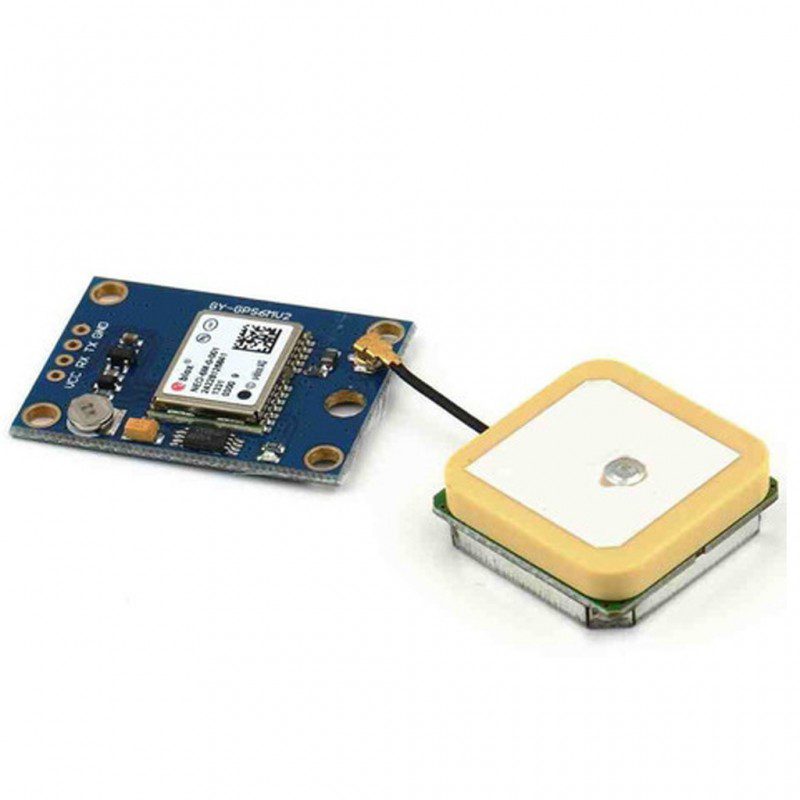
To decode GPS data from NEO6M reliably, first confirm readable UART bytes and then validate the navigation solution. A line of NMEA text is not necessarily a current valid position. This workflow separates wiring, parsing, satellite acquisition and application handling so a stale coordinate is not mistaken for a live fix.
Start with a receive-only serial observation

Use a controller UART or logic-level USB adapter compatible with the receiver output. Connect GPS TX to the receiving RX and connect the intended ground reference. Confirm the carrier’s supply requirement independently. Leave commands and receiver RX disconnected for the first passive observation when practical, avoiding accidental reconfiguration and unnecessary voltage exposure.
Confirm framing before changing firmware
Try the actual documented configuration; the u-blox default is 9600 baud, eight data bits, no parity and one stop bit. A board previously configured by someone else may use a different rate or message set. Readable sentences and consistent line endings demonstrate a useful serial path. Garbled data should lead to checks of baud, framing, signal level and grounding before changes to antenna position.
Use a parser that validates complete sentences
Choose a maintained parser supporting the messages being emitted, including checksum and validity checks. Feed incoming bytes frequently enough to avoid UART buffer overflow. Do not split arbitrary short serial reads as if each were a complete NMEA sentence; a sentence can arrive in several chunks, and several sentences may be buffered together.
Separate communication from the position fix
Log received-character counts and parsed-sentence counts separately from valid-location updates. A steady stream without a fix can mean the receiver is running but lacks sufficient satellite reception. Move the antenna to a safe open-sky location and inspect its connection. Do not keep changing serial settings when readable messages already show the serial interface works.
Track validity and data age in the application
Only display a current location when the parser reports a valid solution and its age is within the application’s chosen limit. Mark the last known position explicitly if retained after reception stops. Keep receiver-provided time separate from the controller’s local receipt timestamp, and do not assume every field in an output object was refreshed by the latest sentence.
Check units, coordinates and privacy
Understand the parser’s coordinate representation, hemisphere handling, speed units and altitude definition before calculating or exporting results. Test a stationary example against a sensible known location, allowing for normal scatter rather than expecting identical coordinates. Avoid publishing precise home, customer or personal location logs unnecessarily. This educational serial test does not validate a navigation or emergency-tracking system.Newest in the store


Relevant Epro listing
Product information and prices were checked on 19 October 2026. This is a current snapshot, not a historical price associated with the publication timestamp. Stock, accessories and checkout prices can change. Listing claims are not independent performance or authenticity certifications.
| Product | Checked price | Stock |
|---|---|---|
| U-BLOX NEO-6M NEO6MV2 GPS Module in Pakistan | PKR 1,200 | In stock |
Frequently asked questions
Why is there serial data but no location?
The UART can work without a satellite fix. Check the receiver validity fields and antenna/open-sky conditions separately.
Can the last stored coordinate be displayed as current?
Only if it is valid and recent enough for the application. Otherwise label it last known or unavailable.
Related Epro reading
Review breadboard connections before assembling a prototype. For controller expansion, the Mega 2560 pin guide explains why pin names and electrical limits must be checked together.
Technical references and test limitations
This guide uses the documentation linked below. The procedures are for a controlled, low-voltage learning setup; no independent hands-on test of the particular seller board is claimed. Record the actual part markings, wiring and firmware version before drawing conclusions from a test.